
[00:00:12] Barry O'Kane: Welcome back to HappyPorch Radio, the Circular Economy Technology Podcast.
I'm Barry O’Kane, and this is Season 10, which we've titled “Technology Isn't Magic” as we are looking into what actually happens when circular economy technology meets real business, real data, and real people. Stick around until the end to hear more about our plans to celebrate reaching Season 10.
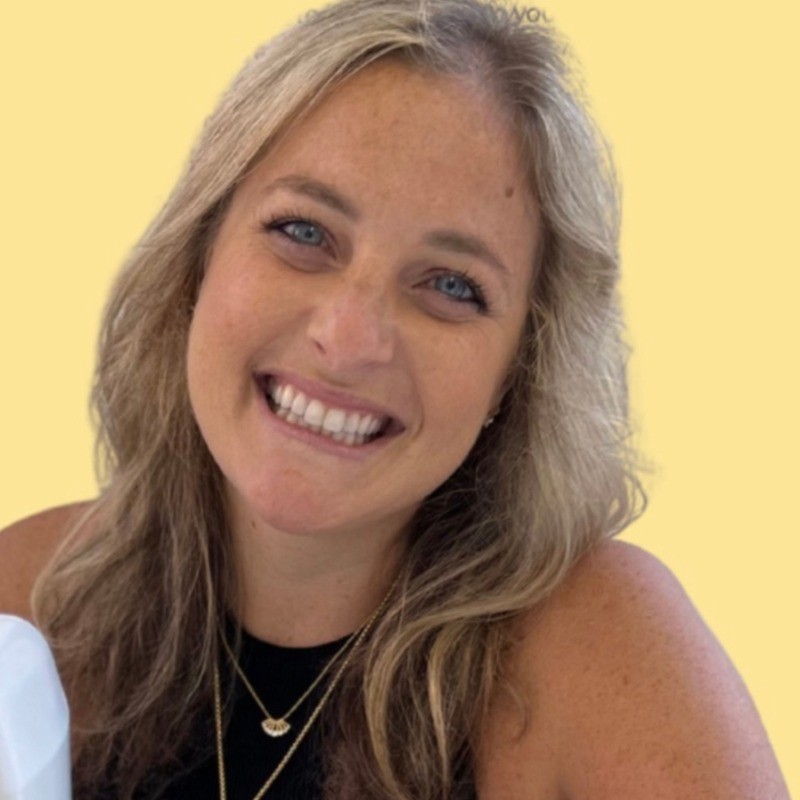
My guest today is Nancy Rhodes, CEO of Alternew, which is a platform embedding tailoring and repair into the fashion shopping experience. Nancy spent nearly two decades as a footwear designer, building products for brands from Costco and Target to Beyoncé.
Before reaching a point where she felt, in her words, like she was building a landfill with her name on it, what followed was a Masters in Sustainability, a Thesis on Democratizing Care and Repair, and what she describes as an invisible pitchfork, pushing her into building Alternew.
Alternew's core idea is deceptively simple: making finding a tailor as easy as ordering takeout. Nancy shares how this touches on so many different areas of business. US fashion brands spent $890 billion on returns last year. Customer acquisition costs are running higher and higher, and brands that offer post-purchase care and repair see repeat business increase by up to 73%. Her argument is that repair is not a sustainability strategy sitting at the edge of a brand's offering, it is a profit driver sitting at the center of the customer relationship.
We also talk about the technology behind Alternew where AI is doing real work and where the humans, specifically the tailors, cobblers, and repair specialists on the platform are the actual value.
As always, the full transcript, all the links and more are at happyporchradio.com.
So let's meet Nancy.
[00:01:57] Nancy Rhodes: I am Nancy Rhodes, CEO of Alternew. And so for me, a little bit of my background. I was a footwear designer for almost two decades. I built products for icons like Beyonce and Kenneth Cole, but most of my career, Costco, Target, Marshalls, TJ Maxx. So two things I found is, one, I was building a landfill out there with my name that I'm personally responsible for. And two, how much we left money on the table after the sale because we weren't engaging consumers. And so ended up getting my master's in sustainability and built Alternew, which is basically tailoring and repair guidance and services into the shopping experience.
So think of it as like an OpenTable for tailoring and repair, making it as easy to find a tailor to ask about getting stains out of your shirt as it is to order takeout. And we do it through a natural language model, so it makes it easy and fun.
[00:02:53] Barry O'Kane: Awesome, thank you. I'm really excited to have you on the podcast. So thanks so much for joining me.
Alternew is something that I've been following for a little while, but before getting into Alternew itself and some of the technology and your vision, I'd like to explore a little bit about what you mentioned there, your motivation.
So you talked about a landfill with your name in it and so on. But I think what's interesting is: so many of us are aware of these things but very few people step up and say, I'm going to create a thing to try and change this or impact this.
What's the story behind that? What led to that switch between I'm gonna start Alternew?
[00:03:25] Nancy Rhodes: I like to say it's the invisible pitchfork. There are some people who say they always wanted to be an entrepreneur. There are some people who say they were the hesitant one. For me, it felt very forced, like I felt compelled, you know, that sounds so much bigger than it is, but really it was as simple as I had been in the industry as a footwear designer for almost two decades, and I was feeling unchallenged. I wasn't as excited as I had thought I would be, and I'd wanted to be a designer since I was like three years old.
And so here I was in the industry. I kept growing in my career and yet the kind of excitement and eagerness to grow was not matching that. Basically, I was talking to a friend during my Master's and she said that when she was in college, she would do tailoring as a way to make extra cash. It was part of a longer conversation, but it was my kind of “aha” moment of oh, that's literally a way that I can support an industry I love without making new product and building out genuine opportunities to. And at that point, I hadn't done the research, but, a $20 hem repair replaces a $78 return on a $130 pair of jeans. Like we are spending more on acquisition than ever before as an industry, we're getting the highest churn.
And so I know what it looks like today, but back then it was just about, yeah, this is a huge problem to solve. I did my entire thesis on democratizing care and repair and I just followed the breadcrumbs knocking my head against brick walls every step of the way. I say it's my, like Shawshank Redemption, like I have my little pickax, my little rock hammer. And we're getting there. We're getting there.
[00:05:09] Barry O'Kane: Yeah that's an interesting thread to explore as well. Because one of the things I reflect often with circular economy founders, is you've got all the challenges of a normal startup, right? You need to validate and find your place in the market and build your product and build it.
But you are also pushing against the headwinds of linear commerce. Is that, kind of, what you mean?
[00:05:27] Nancy Rhodes: Yeah. I think, like we've built the business case. You look at Nordstrom, they're the highest employer of tailors in the US. You look at Patagonia, they've put care and repair into their core offering since the beginning. You look at all of these brands starting to offer it, and you're seeing that they continue to offer it because they see the value in doing so, and yet the brands that don't offer it, it's so hard to, go from, we are doing activities for tailoring and repair, and we are looking at it as a cost center, to where we are building a unified platform that takes all of those activities, offering tailoring, offering repair, activations, events, guidance, and using that to help you understand your customers: Their fit, usage, durability, insights, what are they interested in? How are they connecting with garments after they've purchased them? This is the place to do it. And so that's again, where technology comes in, but also this continuing to create the flywheel and I can get more into actually our vision as we grow.
[00:06:37] Barry O'Kane: Yeah. Much as I am very, obviously very deep into the technology and the role of the technology. I think it's so important for that to be in context of understanding the goal and the commercial case and the business. So tell me a little bit more about how brands are open to that.
How much of that is a sort of mind shift conversation that you need to have when you're saying, let's look at this aftercare and the platform you're talking about, versus brands who maybe are focused purely on you know, pile them high and sell them, sell as many as possible and move on.
[00:07:10] Nancy Rhodes: We've already done pilots with Faherty. We actually just launched a partnership with Primark, a global fast fashion brand doing advocacy and education in the US. We have small Shopify brands. We're creating opportunities for, we have next season Sisu, Piper and Skye, and then starting to onboard a few more.
But the idea is just creating accessibility. And so for us, we're getting momentum, we're getting excitement, but in order for us to scale, we actually have to build that pipeline even further. And I think this might be a time to say like our long-term vision, which is basically we believe that if we start by making it as cool to talk about your fashion care as your fashion haul, basically brands can create tailoring and repair as aspirational, fun, cool, popular. That then provides predictable demand, provides business to tailors, cobblers, jewelry cares, small appliances, home goods, right? These low margin trades have that, like if you look at AI, taking all the knowledge jobs, these trades are gonna be very much something that people go into.
By doing that, you then actually create pathways for this next generation of service providers to enter these, kind of overlooked, underserved trades. It's really lucrative to be in these trades, like the people who have done it for years have seen a ton of success, and yet because we've commoditized fast fashion so much it feels difficult, or they want to be a designer or they want to be this. And so for us, it's all about creating the FOMO, the excitement, the joy that comes into ownership and care.
The way I see it is, retail is optimised so hard on returns, never built infrastructure for care and ownership, and that’s what we're doing.
[00:09:16] Barry O'Kane: That's actually really fascinating. You've got sort of two of the sides there, like the retailers or the brands where you're telling the story about. And I know that you talk about some of the stats about increased retention and as you talk about that flywheel for building real customer care, understanding the products, improving the products from feedback and all of that.
But then you've also got this relatively recently challenged skillset like as you said, these small very skilled jobs were being pressured. And maybe what you're offering now is a route forward, a more positive rather than just chasing the small margins, but a more positive future for that.
Is that a fair summary?
[00:09:52] Nancy Rhodes: Yes, you said it exactly correct. I will add no extra value to that. Correct.
[00:09:58] Barry O'Kane: Awesome. That makes me feel good, I got it.
Tell me a little bit about then, what Alternew looks like. Where are you now? You talked a little bit about that broad vision. Where are you now and what is the platform vision that you're trying to build, in terms of more concrete, day-to-day functionality look like?
[00:10:14] Nancy Rhodes: Yeah, right now we're, and think of it as your care and repair concierge. It's an AI agent. You can ask questions around care. I got coffee on my shirt, what do I do? Oh, what kind of shirt is it? Is it cotton? The goal would be, next features - we can talk about that because this is a tech podcast - would be being able to have image search, they could actually take a picture of their label. Because they might not know what something's made of, but things can be cared for differently based on the kind of materials they are.
The goal would be for that, down the line, is we have an entire product catalog for a brand as part of our training and ingestion. So that it's, oh, is it this top that you have? This is how you would care for it. These are the tailors you can take it to. These are the ways that you can love your item for longer. So today it's an AI natural language provider where you ask questions and it's giving you answers in two specific places, care, guidance, and tailor matching.
We have about 500 tailors across the US based on our own networks as well as operational partners. And yeah, continuing to grow that, using that momentum to continue to bring more tailors on using who are using the agent to then continue to train it, ask questions that continue to give us our own proprietary data.
And then, 'cause we're a hybrid right now, part proprietary, our own databases, our own training, and then part Open access.
[00:11:48] Barry O'Kane: Oh, that's interesting. I'd love to come back and explore the Open access side. So what does that look like? I have a garment or a piece of clothing or textile that I love and I care about, so I want to repair it. I want to keep it going. What do I do?
Is that through the brand? Is that through Alternew that I then go and say hey, tell me a little bit about how or where I can get this.
[00:12:05] Nancy Rhodes: Yeah, so it’s through the brand. I'll make an example of a small brand worth talking about that we onboarded this morning. Her name is Elisa and her brand is Sisu and she's very excited about being part of the, our kind of, collaboration with small Shopify brands. But basically today along the header, there's a spot for care. You go to care, you have an agent. You can ask questions around fit, around care, around who's a tailor near me that I can use, and then she's getting that information back so she can know more about her customers. Now this agent becomes a tool that can be used across the shopping experience, right?
It is embedded into everything from, we're working on a marketing campaign, as a trust builder. Okay, I'm gonna buy something. Know that we can help you find a tailor if it doesn't fit, they're more likely to buy it. Ok, let's say you buy a pair of jeans through her site and they are too long. You go to return the item. You see a button that says Find a tailor. You click that, you are asked a few questions. You're connected with a local tailor. Perhaps the brand pays for all of it, or at least subsidizes some of it. You get a perfect fit, they understand you more, and they're getting that data back. They're getting an opportunity to really have your back, so to say.
[00:13:37] Barry O'Kane: Yeah. And that's really cool. As you're saying, that's allowing the brand to really build that relationship. It sounds like that's an amazing little brand. Are you finding it's people like that who, I know I'm making a judgment here, but who care more about their customers?
[00:13:51] Nancy Rhodes: I don’t think it's about care or not care. It's funny, I think it's hard to define the idea of textile repair because we've actually always looked at it as like textile recovery. So a lot of repair is done post use. A lot of brands do repair to resale or have some sort of warranty. But I would say that textile recovery doesn't happen at end of use. It happens at first disappointment. It happens when a pair of jeans are too long. It happens when that first button pops off. It happens if a zipper fails. And so you not knowing that about your customer and them just losing trust in you and not getting that done, not only are you missing out on immediate ways to support the customer that will keep them coming back for you, but you're also missing out on why they left you in the first place. And so this cognitive dissonance of they want to do good things for their customers, but again, they've looked at repair as activities or as a kind of a final decision versus something they can use to support their customers from acquisition through retention marketing.
[00:15:00] Barry O'Kane: That's very interesting. I mentioned before some of the stats I've seen you talk and use the number 20% increase in retention. Can you tell me a little bit more about, I guess, what are the results that you're seeing from that, both from, as you said, that holistic understanding of the customer and building out that journey rather than seeing as these point time events or activities?
I guess what I'm asking is what are the commercial cases around that?
[00:15:21] Nancy Rhodes: So offering care and repair can increase repeat business for up to 73%. Basically knowing a brand has their back makes you more likely to go back. And those are astounding numbers. Brands who offer post-purchase experiences and some sort of not a aftercare and I would say post-purchase experiences in general, people have a 60% conversion rate.
So the numbers are there, the opportunity is there, the network is there. It's just, it's partly, when you're trying to move a ship, like it happens slowly, and when you're looking at a linear economy and your only goal is growth, quarter of a quarter, you're actually like, there is a reason why we had $890 billion in returns as retail last year. There is a reason why we as a fashion industry have one of the highest acquisition costs, up to $130 a customer. There is a reason why we have one of the highest churn rates, which I always miss the number, I think it's somewhere around 56% if I remember correctly. But those three things like the math isn't mathing to create a better experience for consumers. They're spending more on acquisition, they're getting more churn. What is wrong with that? That kind of arc.
And so the answer to that is building on loyalty. But a linear economy is focused on growth. It's not focused on retention.
And so for us, a big part of our strategy is really focusing on fit and trust through acquisition channels. So people are like, are you post-purchase or purchase? Technically we're both. We're a network. We're creating a way to support your customers at different points of sale, through trust, through execution, through retention. Part of our, kind of, roadmap is going from tailors and cobblers, and a lot of those are cleaners, right? Imagine a brand coming to you in March and saying, “Hey, summer's coming, we know you bought a coat from us, we've actually partnered with a local dry cleaner who can check if there's any buttons that have popped off or little rips. And we can also clean it for you so that you can store it effectively for the summer and bring it back fresh as new.” Do you know how often people take their coats out when it's coming to winter and they're like, Oh, this is unwearable. And so doing that, you pull out this lovely coat in the winter and you're like, look at this amazing brand who helped me do this. I should shop from them more often. Like it is both the statistics are there, but it's also just, like, logical.
[00:18:11] Barry O'Kane: That makes complete sense, and you've articulated that really clearly. And the other phrase you mentioned as you said is like - as a somebody who hates shopping, what I care about is somebody who, you know, I want to get good stuff and have it long and keep it. And having a brand that cares, that demonstrates that for me, is incredibly powerful. And I can imagine that's even more powerful for people who are more fashion conscious than I am.
[00:18:34] Nancy Rhodes: And I would say I think, you have a very interesting thing you said, which is “good stuff.” I think part of the problem in fashion and part of the problem in sustainability is that we've shamed consumers to think that cost equals quality or sustainable equals quality and that's just not true and we all know that. And so good can also be going to Primark and getting something and wearing it over and over for 10 years. Good can be going to Gucci and buying a blazer and wearing it over and over for 10 years. This isn't about, like you must shop from these brands in order to be sustainable. This is about you must be conscious about what you buy, and you must be able to either wear it longer or have a plan on what end of use for you looks like. Does it mean reselling? Does it mean, swapping? Does it mean effectively using a take back program? Whatever that is. It's just about just don't throw it away. Don't have a button rip off and donate it because it’s never going to make it to a second use.
So those are the things I spend a lot of time advocating and educating. 'Cause most people are like, so you only work with premium and luxury brands? I'm like, no, a lot of brands are just trying to support their customers and at a time where differentiation becomes vital for a brand, offering post-purchase experiences is the first way to do that.
[00:20:04] Barry O'Kane: Yeah. Yeah. Putting my circularity nerd hat on, I love how that fits into the humanity of it. Like just saying, let's have something, keep it going and enjoy wearing or having that thing for a long period of time isn't just, Oh, I need to buy the most expensive thing ever isn't just, I do that per moral or values but it's a pleasurable, positive experience and a positive relationship business relationship, if you like, between me and the brand.
[00:20:29] Nancy Rhodes: Yeah, people say, the one-liner has been “buy better, wear longer.” I say “buy smarter, wear longer.”
Because buying better, what does better mean? And I get it and I do think we're at a time in society, like I have this thing I talk about a lot around fast fashion and I speak to a lot of young designers and I am older than some of these young designers will say.
And they're like, fast fashion is the worst. And now mind you that we're now in ultra fast fashion, so let's define fast fashion, right? The eighties, the nineties, coming into the 2010s, fast fashion didn't start this way.
In fact, it was the great equalizer. It created ways for people to be in rooms that they wouldn't have otherwise been able to be. However, when we look at systems and we look at feedback loops, those feedback loops of being the great equalizers supporting customers, that scaled. And as those feedback loops created scale, it became growth at all costs. And so that's where you come into how can we take those same systems to build feedback loops into smarter ownership. And that is the infrastructure we're building that supports the scale of care and ownership through infrastructure. And if you look at resale growing, you know, three times faster than regular commerce, at least in the US it's at least a signal because I can get into that too, which I will not, it's at least a signal that the interest in business models is starting to compound.
[00:22:09] Barry O'Kane: Yeah. So that's all incredible and really exciting, but let's bring it back to, as you said, the platform you are building. So we've talked about this, what you have now, the brand. You have this chat based interface where I can maybe find options to have my clothes lasting longer or maybe not have to return it or make it fit better.
What does that look like from the other side, from both the brand and from the local, repair or service provider?
[00:22:32] Nancy Rhodes: So starting with the brand, imagine having a dashboard that offers accessible and actionable insights that you can share with different divisions. So for us, I came from the industry. I know what it looks like to get an Excel sheet that gives me nothing. And I think one of the values of AI is being able to visualize data more effectively. So anything from understanding what kind of things people are talking about and being able to toggle different concepts. What other brands are they talking about? Okay, if this brand was able to do this for me, why couldn't you? What other brands are you up against here with this customer?
Other things that would be part of this could be a word cloud that goes directly to the marketing team. These are the words that your customers, and it's not “the”, “and” or “regarding”, but you know, strong words that become opportunities for XSEO and value.
So it's just about taking insights that are untapped and unlocking value where each transaction, each conversation becomes a loop that gives the brand ways to have hyper-local, hyper-personalized individual experiences for their consumers.
[00:23:53] Barry O'Kane: That's brilliant. And we can talk about the service providers in a moment as well, but that's a brilliant example of what you're talking about moving from, oh, I need to offer an aftercare or a point in time repair, or something into this is a whole customer relationship building that fits into everything you said - marketing into product design, I assume, because they're getting feedback about where the product's failing. You know, there's this whole holistic thing. Yeah.
[00:24:15] Nancy Rhodes: Another great kind of use case is, if you see that someone's getting the same thing done. An example would be having an arm hole pulled in. Because this happened with a brand that we were working with. We found that this got hemmed and it cost a lot to do it. Like why is it costing so much?
We realized the way it was being designed had too many layers of fabric on the underarm. So a couple things there, maybe it wasn't as comfortable for the consumer because it had too many layers of fabric. But moreover it was an easy design change that actually made it not just more repairable, but more alterable. And so for us, that's a big part of, you know, I will just dip my toes into talking about regulation 'cause that's a whole nother conversation. But if we're talking about needing to build for repairability, it should be just as important.
We don't want brands to spend millions of dollars on tailoring either. We actually just want them to build our products so that if my jeans are too long, you haven't put so much on it that I can't go get it tailored 'cause I'll just return them and I won't buy from you again.
[00:25:24] Barry O'Kane: Yeah. Yeah. Totally. And as you said, regulation is a whole other kettle of fish.
So then looking at, from the service providers, so if I run a repair or what does the experience look like from their side?
[00:25:34] Nancy Rhodes: Yeah, so for now it's almost like a GrubHub experience. They get an order, they have a consumer come in. They see that that consumer is there with this brand. We are working with operational partners and so what we've realized through so much research and hopefully as a technical expert, you can understand the value in this. You either do the UX really well and the consumer and brand facing, or you do the service provider side well and you do the service provider facing. This has happened in resale a lot with the companies that are offering brand facing resale. They are the UX and consumer facing.
So we are that for repair. So we have amazing operational partners and software partners that they're the ones helping us capture that data that then comes to the brands through our sources to be aggregated and put out in a more aesthetically pleasing way.
[00:26:30] Barry O'Kane: Yeah, that makes complete sense. And that segues to something that I did want to touch on as well, and especially from the technology point of view. What you pointed out there was you can't do everything. It's impossible for one, especially an early stage startup to be doing everything.
And one of your real challenges is prioritization. You've got 20,000 hats to wear, so you've got so many jobs to do and limited time and budget.
How have you faced that challenge? Where are the areas that you're most excited about or putting your energy in, especially when you think about the technology?
[00:26:59] Nancy Rhodes: I think we're just, we're most excited, the way my CPO says it is putting product through the pipe, getting more people to help us train the model and continue to learn from different kinds of services being used.
One of the brands that we're talking to right now, again, part of these kind of small Shopify brands, using this allow, our kind of partnership is what you get from us is acquisition through our channels, through our marketing new customers. What we get from you is to be able to test out features and learn from your customers because, maybe we have apparel, but we're actually gonna be launching with a handbag brand. Being able to start creating the flywheel that can turn tailor, care and repair into a unified platform versus singular activities.
[00:27:51] Barry O'Kane: And what are the biggest challenges in that? I know, obviously in a startup, everything, as you said, feels like a challenge, I'm sure, and an opportunity. And you described that sort of small hammer chipping away problem.
But maybe you have got some fun stories or examples of significant problems and hurdles that you've hit that you've had to push through or that you've learned from.
[00:28:08] Nancy Rhodes: So I think one of the biggest hurdles that no one really talks about, and if anyone is listening that is a founder or has a friend who is a founder, please listen carefully: Context switching is so hard. You are told every day to go out there and shove your name at anybody who will listen.
Talk about your doing. You only have this much time with someone. So your 30 second pitch. And then if they're interested, you keep going. And it's interesting 'cause I see a lot of technical experts, they're question askers. They're so curious. And I used to be curious and now, like I found myself walking into the rooms and pitching so hard without learning. So I've actually, having a CPO and a CTO who are both much more curious than I have remembered to be in a long time, they have reminded me and/or come into meetings with me and we can probably tell by this audio itself that I'm a pretty outgoing, extroverted, lots of hand movements, all the things. And I get very passionate and very excited, and I get on my soapbox, which I probably have already done like 30 times during this conversation. But yeah, just being able to listen to the problems that people have be okay to not be the right answer for some.
So that's been a big hurdle as you want to do everything for everyone. And if someone wants to pay you want to take their money. Some of the brands we've had to be like, this is not the right brand for us right now.
[00:29:49] Barry O'Kane: Wow. I feel some of that. You were talking directly to me.
This is season 10 of our podcast, which is incredibly exciting.
[00:29:54] Nancy Rhodes: Congratulations, You know how much I share your circular tech map. And you've adjusted it, I almost like the old one better. I’m such, like a funny person, because everyone’s like, check out our new features and you’re like no.
[00:30:09] Barry O'Kane: Constant work. Constant work in progress. The theme for this season is, I'm using the term “technology isn't magic” because for somebody who focuses on the technology, the thing that actually matters is the human technology interface, which is a lot of what you're talking about.
[00:30:23] Nancy Rhodes: Yes, but may I, just to go off of that, I think, use OpenTable. OpenTable didn't create chefs. It created predictable demand for restaurants. Airbnb didn't create hotels. It created ways for people to participate in hospitality. Technology is vital to support the enablement of better human connection.
And say what you will like, yes, I get like the idea of yeah, sometimes it's nice to turn off your phone and go into a yurt and have a weekend away, but at the end of the day, like we live in a society we live in, we are no longer in a position where we can as a world live without technology and so we might as well use it for good and not evil.
And I say that like funny but take it for what you will.
[00:31:20] Barry O'Kane: Yeah. I use that straight phrasing a lot. I actually think it's an opportunity and a moral responsibility for those who have the skillset to use technology and build technology, to be using that without feeling slightly self-effacing about it in a good way.
And I think that is what you're doing. That's one of the things I really admire about these conversations and what's fun about the podcast is to speak to people who are facing the reality of that. As you said, you've got these ambitions and this broad mission, but you're also at the coal face, you know, facing the day, the hard and making the decisions day to day.
Just as we're starting to wind up the conversation, what I'd love to hear is what's next? You've touched on the broader vision there, but what's next? What are the next stages of the journey for Alternew looking like?
[00:32:00] Nancy Rhodes: So we did an accelerator a couple years ago, which was a great kind of launchpad, right? So mid-2024. And now we just got into another accelerator called Scale Ready Studio, and it's actually funded through NYCEDC, the New York City Economic Development Corporation as well as women.nyc.
And it is that idea of okay, we have a product we've learned from our early pilots and our early testers, and now how do we continue to create that flywheel to support that demand? And I say, 99.9% of what I do is advocacy and education. I speak anywhere, anyone will have me. I talk about this idea of tailoring care and repair, being part of the consumer experience. It should be more exciting. It should be fun. We do repair workshops. We shouldn't expect everyone to want to repair their items.
There are several people, including myself, who have zero interest in sewing. I tried to be a fashion designer and I was like, nope, no sewing machines for me. Everyone's like, well, a lot of people will ask me to tailor something for them. I'm like, I can find you a tailor. Half the reason I started this company, you know, another part of my several different ways of like many “aha” moments is having a bag in the back of my closet that I had alterations in it. I was getting my Master's in sustainability and I'm like, looking at this bag that had been there for, I don't wanna say how long. And I'm like, we should go get this done. These are the things I'm more excited about that I haven't done anything with. And yet I have a bunch of just “good enoughs” in my closet that I'm using all the time.
So, we believe we are the last mile to perfect fit. And the goal for us in our future is really just getting brands to innovate and adopt and see that we're not just a sustainability strategy, but a profit driver.
And it's kind of some cognitive dissonance and status quo to find ways to drive value from things that they haven't driven value from before.
[00:34:08] Barry O'Kane: Yeah. That makes complete sense. And that harks back to what I was saying before about, I think what you're doing and everybody in similar positions is doing two jobs. One is a startup, that's a hard job. And two is the, as you described, this sort of awareness raising or educational piece where you're needing to demonstrate not just your value, but the value of the concept against the headwinds of what's a powerful, linear e-commerce. So thank you for all that work. That's amazing and for sharing some of that with us today.
Just finally, for those listening where can they go and find out more? And also anybody listening who you would like to speak to, who are they?
[00:34:46] Nancy Rhodes: Yes. Immediately if you listen to this: If you are a small Shopify brand selling apparel and potentially others looking to do a kind of a three month beta test to support us getting some learnings with some new features, that would be great.
Moreover, if you are an enterprise brand, fashion brand, apparel brand looking to support your customers and drive profit through reduced returns, increased retention, and supporting circular compliance, and we can get into the regulation of all of that and how we actually become a way to comply with some of the SB707 regulation, again for another conversation.
And you can find us at www.alternew.com. You can find me sharing all of our wins and a few of our commiserations on LinkedIn, Nancy Rhodes or Alternew, and if you're good at Instagram and you wanna be an intern and help me be better at Instagram and social media and TikTok, that's another one. Would take that anytime.
[00:35:49] Barry O'Kane: Awesome. Wonderful. Thank you so much. That's alternew.com for those listening. Please do reach out and connect. As usual, we have all the links, the full Show Notes, and all the information on happyporchradio.com.
Thank you Nancy. I appreciate you joining so much today.
[00:36:03] Nancy Rhodes: Thank you so much.
[00:36:07] Barry O'Kane: And that's all for this episode. Thanks so much to Nancy for joining us. Nancy is always fun to speak to, so I hope you enjoyed the conversation as much as I did.
Season 10 is a moment worth marking, and so I'd love your help to do that in two ways. First, we've had incredible guests over the years and I'd love to hear who you would like to hear more from. Or perhaps there's somebody new we should speak to. Let me know at [email protected].
And second, if you're based in the UK, we're planning an in-person event to celebrate the season, and we're looking for friends who want to help make it happen, whether that's with a venue, sponsorship connections, or just enthusiasm. Write to the same address, [email protected].
And finally, if you want to make sure you don't miss an episode this season, the best way is to join our email list. Head over to happyporchradio.com and we'll keep you up to date with everything.
Thanks for listening.