
[00:00:12] Barry O’Kane: Welcome back to HappyPorch Radio, the Circular Economy Technology Podcast. I'm Barry O’Kane and this is Season 10.
Season 10 is titled “Technology Isn't Magic” and that's because we're exploring what actually happens when circular economy technology meets the messy reality of real business and real people. And season 10 is a big deal for the podcast. So do stick around until the end to find out how you can help us celebrate.
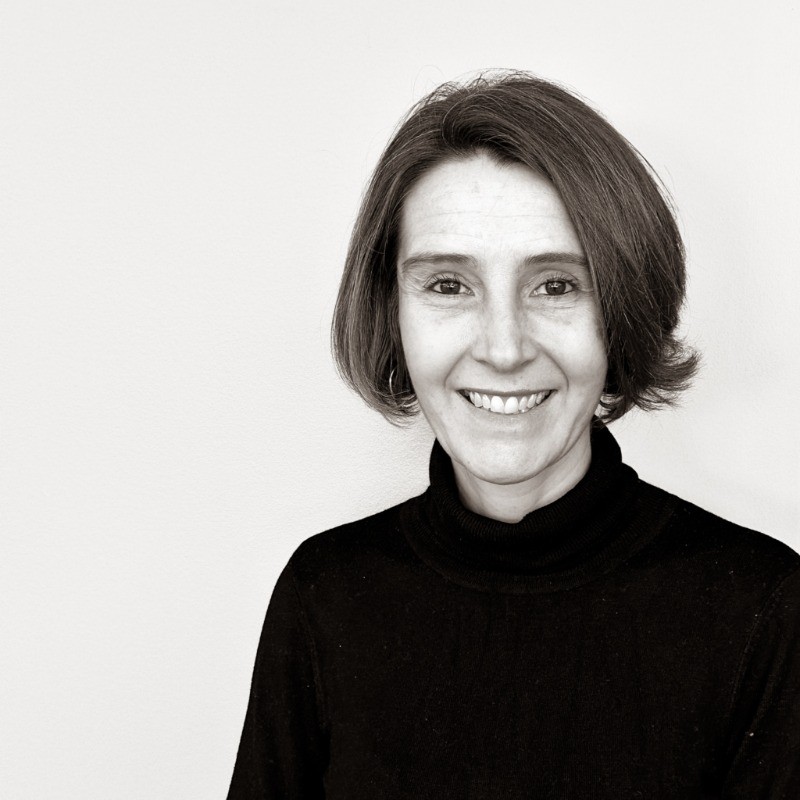
My guest in this episode is Cathy Benwell, co-founder of A Good Thing, which is a UK nonprofit platform that connects businesses with surplus physical items to local charities that need them. Cathy's husband and co-founder Richard, built the platform during the first COVID lockdown.
The idea is simple, but what took years of persistent unglamorous work was everything else. Convincing the first businesses to list something when there were no charities nearby yet, and convincing the first charities to sign up when maybe there wasn't much on offer. And doing all of that again, each time they grow into a new part of the country. And that is an example of the chicken and egg problem that doesn't get solved by software alone. It gets solved by showing up, building trust, and being willing to do the hard work. Sometimes one conversation at a time.
We also get into some juicy questions about what A Good Thing can and can't claim from a circularity perspective, including whether easy donation routes might subtly change how businesses think about procurement in the first place. And Cathy's openness and thoughts on this really resonated with me. We need to be able to ask the tough questions but without derailing ourselves.
As always, the full transcript, all the links and more are at happyporchradio.com.
So let's meet Cathy.
[00:01:54] Cathy Benwell: I'm Cathy Benwell. I am co-founder of A Good Thing CIC, which is a UK based online platform, nonprofit platform that allows businesses to give physical things away to their local charities.
[00:02:08] Barry O'Kane: And welcome to HappyPorch Radio. Thanks for coming along.
[00:02:10] Cathy Benwell: It's lovely to be here, Barry. Thanks a lot for asking me.
[00:02:13] Barry O'Kane: So you've described what A Good Thing is, but I think it's worth just really quickly talking about the story about why you started it and where it came from, to set the scene.
[00:02:23] Cathy Benwell: Yeah, of course. I love telling this story. So this was an idea that my husband and I had. A long time ago, probably 15 years ago, it sat in the background. Our lives were very full and busy. We had three young children. We had set up a software startup. There was definitely no time for anything else but it sort of bubbled away there. It was something we talked about often. And then really, this was one of the silver linings of the pandemic for us. In the sense that we suddenly realized at the beginning of that first lockdown in March 2020, that we would have a bit of time, unexpected time, evenings and weekends in which to maybe get this off the ground.
My husband and co-founder Richard originally trained as a software engineer. So he essentially spent his first lockdown building the platform that now powers all of the matching behind A Good Thing. We piloted it later that year. It was a massive success. Turns out businesses have a lot of stuff sitting around in cupboards, buildings, outhouses, warehouses, and turns out charities are really in desperate need of things and donations and support.
We had already done a proof of concept though before this opportunity came up with the time. So I was doing a lot of work at that point with a charity in Slough called Home-Start. He, as I said, was running this software startup in Maidenhead that we had launched in 2011, and we were chatting over dinner one evening and he mentioned a cupboard full of laptops at work. Very normal in the software industry, as you'll know, for developers to be issued with a new laptop every three years or so. So these really nice quality, not very old laptops were sitting in a cupboard that had been finished with.
And I was thinking about the people I was working with who were battling away on computers that took 10 minutes just to switch on. You'd go off and make a cup of tea while you waited for it to power up. And I felt like there's got to be a way that we can get those laptops from your cupboard to these colleagues of mine at Home-Start, which we did very quickly and easily to enormous effect. It's just, as anyone listening to this will know, we rely so much now on our devices. It's really transformative to go from waiting for 10 minutes for it to switch on to just a couple of seconds.
So as soon as that happened and we saw how easy it was, we just, really, that sort of inspired us further to make this available more widely. So that happened because he and I had that connection. That's great. We wanted that to be available to everybody, to every business, but also to every charity and many small and medium sized businesses and charities. They don't have somebody in-house whose job it is to go out and form these partnerships. They don't have anyone who has the time to do that. It's different maybe in a large organisation where you have a sustainability team or these days, a sustainability manager. But obviously lots of small and medium sized businesses don't have that. So we saw how easy it was, we saw the impact that it had, and we felt that it must be possible to make that available more widely.
[00:05:11] Barry O'Kane: And so you had this idea bubbling away. And then this opportunity came up to build it and to do it for real, like you said, you had this personal connection and did you go from build a platform over whatever that time period and then ta-da, everything's working or was there a sort of struggle to get launched and get the word out there and get started?
[00:05:32] Cathy Benwell: We started quite small because we decided to do this pilot in quite a small area in the Thames Valley where we were living at the time, where we both had a you know, good network. We thought that'd be a good place to start. Because it was a small area, word did spread relatively quickly. And the platform, we waited until it was ready before we launched it. Having said that, that was six years ago. We have since added quite a lot of functionality to it, but it was absolutely fully ready to use and go at that point.
We ran the pilot for about three months, were able to very much prove that it was needed, that it worked, that people liked it, that people were using it. And then as with anything digital, at the click of a button, we were then able to make it UK-wide overnight essentially.
But yes, of course it took time, we were starting from zero in terms of, on the first day there was nobody signed up. So that was really exciting. I can still remember that now. That phase where we had, Oh, we've got five businesses signed up. Oh, we've got 11 businesses signed up. And now we're in a great position of having just over a thousand.
So it's amazing to think back and mostly they were businesses that we knew, we had colleagues who work there, or friends who work there, or neighbors who work there who had heard about it and decided to sign up. But it has grown very fast. And I suppose that's what gives us, that's what encourages us, that it is a good idea and that it is needed and wanted.
The fact that the growth then has happened very quickly. And it's almost all been word of mouth. So we're a very small team operating on a shoestring, so we don't have big marketing budgets, for example. We've got a fantastic team of volunteers running our social media who are doing a great job and much of the word has been spread that way.
But I think because the idea is so simple. So simple for people to understand. That really helped us at the beginning. I would be out there talking to people and trying to spread the word about it. And it was just a real no-brainer because it is a no-brainer. It's a win-win really for everybody.
Definitely, a no-brainer for charities. They sign up for free and then get access to free stuff, takes them 30 seconds to create that account and then be alerted. And similarly for businesses, they were seeing these twin benefits of - we're going to be potentially saving things from landfill and creating this amazing social impact in our community at the same time.
[00:07:41] Barry O'Kane: Yeah, and you used the word no-brainer there, and you said it's a simple thing to explain as a no-brainer. Yet you've got this sort of early stage, you're starting things you need, you've maybe got businesses signing up and you don't have things, you know, it's a sort of two-sided marketplace.
Did you have those sort of, people were excited, but how did you get that sort of, groundswell going before it felt like people were actually getting the results that they were looking for?
[00:08:04] Cathy Benwell: Yeah, it's a good question and it is very much chicken and egg and it still is. So what will happen now is if we are trying to grow in a particular part of the UK where we have less coverage than we would like, I will go out to businesses and charities there and try to build the network and they will say to me, “Oh it sounds great, like You've got many charities signed up here” or “It sounds great, but doesn't look like there's anything on offer here right now.” And my message is always that we need you all to sign up in order for that to happen. So it is, you're absolutely right, it is very much chicken and egg and businesses are only interested if we can say, Look, we've got a thousand charities within a few miles of where you are. Then they're interested. That will capture their attention. Similarly, charities are like it's not worth us signing up. You don't even have anything on offer in, whatever town we're in.
So I think maybe persistence, persistence is one of my qualities that I've always had. And I just really kept going, especially at the very beginning. Whereas you say you do need something, some activity to be able to show people. So I just worked really hard on the, sort of, the contacts that I had in terms of the businesses that I knew of that I thought I might be able to persuade to list something.
And that worked. Even if you've just got a couple of offers, obviously, in the first week we only had one offer, we really did start completely from scratch. But then with that one offer, then you can go to a number of local charities. So then I'd find 20 local charities. I'd get in touch with them, either via social media, via email, share the offer with them, get them excited about the offer. So it was slow and it definitely wasn't easy all the time. And there were times when it felt tiring. And when it felt as though we wondered, will there be a moment where this does suddenly catch?
So yeah, it was definitely, I don’t know, how long was it tough? It's hard to remember now, isn't it? I would say, the first couple of years it was hard work to get both of those parties engaged. And it would've involved a lot of effort.
[00:09:54] Barry O’Kane: What kept you going during that period?
[00:09:55] Cathy Benwell: Like anything and I think if you talk to anyone if you think of some of the sort of really successful products in our world, if you really drill into it, they will always tell you that the truth is that it was very…I'm sure even the iPhone, didn't take off overnight.
So things definitely do, but you know, we'd been through this already. So we'd set up this tech startup in 2011. We'd been on this journey already in a different context because at that point, that was our livelihood. And that was a business that we were trying to run.
We had a couple of very difficult years with that as well at the very beginning. So I felt like Richard and I had been there, done this, we knew we could do it. We believed in the idea, we knew we could stick it out. We'd done that once before and seen it through. So I think that was also maybe that tenacity we had maybe learned the first time around with Squared Up with the software business.
And were able to then use that to drive us forward and encourage us.
[00:10:45] Barry O'Kane: Yeah. That's fascinating. And thinking about that, you've got all the ingredients from a startup point of view there. You have past experience, you've got two founders with two complimentary skillsets, it sounds like.
So before going into kind of the next stage of the business, it'd be interesting to explore your feelings about how important it was that there's the two of you with those skillset. Richard, you described building the platform. So obviously he has that skillset and then you describe your tenacity and desire to go out and have the conversations and make it happen. Am I accurate with that? And how important do you think having both of you was?
[00:11:20] Cathy Benwell: Oh, I think it was vital. I think it would never have happened without that combination of skills. And he says that as well, by the way, because I clearly couldn't have done it without his software skills. He absolutely feels the same way that he had, those extremely valuable crucial skills that were actually to create the thing. He says that he wouldn't have then been able to do with it what I have been able to do through, as you say, the sort of the outreach work, the big sort of charity network, the experience that I had working with charities, the ability to just keep persisting and keep going and really make something happen with it.
So no, I think it was absolutely crucial. And I guess I feel lucky because software costs for many organizations can be often some of your biggest costs, can't they? It's not a cheap service to buy. So I feel incredibly lucky that he was willing to volunteer his time and give up his time in that way and give us this gift. And continue to, of course, because he is still the technical brains behind the platform. Anything that we do now to improve it and change it and upgrade it, it’s all him and his weekends and his evenings. So we are very lucky and to have it in-house as well. So if anything goes wrong, he's right there immediately rather than something maybe that's outsourced or somebody that takes you a bit of time to get hold of, or that's moved on to another project, at the point when you have a problem. So no, I think it wouldn't have been able to happen without the two of us.
I also think, talking about those challenging first couple of years, that's when you need another person to spur you on when you are feeling a bit fed up one day and vice versa. And to encourage you. And I couldn't have imagined doing it without that. And even now, when we sit down and have dinner together every evening, it's what we talk about. It's like a fourth, we have three children, but it's like - Right, what's going on with them? Right, now what's going on with A Good Thing? It's like our fourth baby really that we want to nurture and want to see flourish and go out into the world and make a real impact.
So yes, I think the answer is, it was absolutely crucial. It needed the two of us. I really think it did need the two of us. Sometimes it feels as though his skills were the more valuable ones on paper. But he does say himself that it wouldn't have been able to get to where it has now without the input that I've had as well.
[00:13:31] Barry O'Kane: Yeah, I completely agree from the outside in my experience. Because obviously that's what we do, is build the software. But it's always underestimated how the value or the importance of everything else involved, like the software in itself can't do anything. You need that human interaction. It's one of the themes that is quite interesting about this season of the podcast is exploring that throwing the technology out there and expecting things to change or magic to happen just isn’t possible.
And actually the rest of the work is more important. I often say to clients, maybe we're the least important part, or don't spend too much money now. We need to get out there and do the sort of learning and the human interaction stuff, I think that's so important.
So I actually think the work that you're doing is more important in many ways. but I also acknowledge what I think, is incredibly powerful about the partnership you've got there, as you say, is complimentary skills, because not just the having somebody with the skills and not having a big cost at that stage, but also the level of trust which you obviously have so that you're not worried about communication or just not sure if they're aligned and interested in the same mission.
[00:14:35] Cathy Benwell: Yeah, absolutely. Yeah, you're right. And I've never worked with a co-founder who isn't my husband, so I guess, I don’t know how that would feel, but I think, you would imagine that it gives you just an extra, an additional layer of trust. And again, going back to Squared Up, to our software business, I think again, we had formed those bonds or tested those bonds already once during that process, kind of nine years before. And that trust was really needed at that point.
So I suppose we, yeah, we felt as though those bonds were really nice and strong by that point, and you definitely do need that. And you do need to trust each other and trust each other's instincts on what we should be doing now or let's try this particularly at the beginning.
But also now, any kind of changes or big decisions that we make now we definitely have to have that trust in place and trust each other and yeah, be able to accept those instincts that the other person has.
[00:15:27] Barry O'Kane: Yeah. And there is one major difference though, between your two, sort of, startup experiences. A Good Thing is a non-profit and has a different model.
So taking the story to the next stage, how did you manage to keep A Good Thing going when it relies entirely on yourselves and on volunteers?
[00:15:44] Cathy Benwell: We have both been willing to give up a lot of time to dedicate to it. And have been able to. We're lucky enough to have been able to do that. And we have been really lucky in terms of the volunteer interest that we've had. Because I've spoken to other charities who are having really big difficulties recruiting volunteers, so I don't know what it is. There's obviously something about it that is really resonating with people.
There are a lot of young people actually who've applied to volunteer with us, and that's something I get asked actually by other charities. I've been asked that in the last few months. How do you get young people to volunteer with you? Because I've been told that's actually relatively challenging for many charities. It's a demographic that they find hard to recruit as volunteers. So I think there's something about the mission that seems to really resonate, particularly resonate with young people. So there's lots and lots of people in their twenties that are applying to join us as volunteers.
And then I think, and again, I can't take any credit for this, because this is all Richard. He's the creative brains as well as the technical brains is the branding. People seem to really love the branding. They love the sort of look and feel that we've created with the website. We've tried to make it very warm, very friendly very inviting, very informal, very positive. And that again seems to be something that people are very attracted to. We get loads of lovely sort of compliments on that specifically.
So yeah, something about the combination of the look and feel we've created alongside the mission and what we're doing means we've attracted an army of volunteers, so that really helps. And, whenever I meet a new one or sort of interview a new one, I always say we literally wouldn't be able to do what we're doing without the volunteers. So it's fantastic that you're thinking about giving up some of your time to join us.
So like I said, we've got a team of volunteers running our social media. We have a volunteer running our website for us, managing the website. I've got volunteers writing up case studies, so every time a match happens, we write that up and demonstrate the impact and tell the lovely story of the item that was donated. We've got volunteers working on being moderators for us, so looking at the posts that come in and checking them and approving them before they go live.
We have volunteers doing outreach for us, so thinking about which of the UK businesses and charities that aren't currently using the platform and should be. We've got a volunteer running our email newsletter. Really, I don't know what I sit and do all day because all of these things are being done by, as I said this army of volunteers.
Yeah. I can't remember what your original question was, but I suppose we're all just I don't know and I sound so cheesy when I talk about this stuff, but it really is very genuine. We are just pretty motivated by what we're trying to do, the problem that we're trying to solve.
And it seems to be something that yeah, has resonated with a lot of people.
[00:18:15] Barry O'Kane: You mentioned some of the stories there, and I guess the motivation is coming from the success, like it's actually working, you're seeing thing’s impact having, what are some of your favorite stories about donations or things that have come through the platform?
[00:18:28] Cathy Benwell: So people used to say to me- What's the most unusual thing that's ever been donated? And I used to have an answer, and now I have a new answer. I might have told you this when we last spoke. So my new answer is that in December we had a life-size inflatable elephant donated via the platform. So this is like the size of a house, it's the size of an elephant. And it's not a cartoon effect. It's a realistic-skin-elephant. It's absolutely awesome. So this was donated by a branded merchandise firm that had used it for some event, some marketing thing and didn't need it anymore. It was used for that one event, maybe 20 years ago. That's the kind of thing that would've gone into landfill, I don't know. But they listed it on the platform and surprisingly they had a huge amount of interest from charities with all kinds of really imaginative ideas for how they would use it to essentially promote the work that they're doing.
So that went to a fantastic charity in Southeast London that's doing great work, mostly with children, teaching them about healthy eating and growing things and gardens and vegetables. And they had a really imaginative plan for how they were going to use this elephant in school assemblies when they go in and talk to children about this stuff. I'm waiting for a photograph. They've promised me a photo of the elephant in situ in a school hall, which I can't wait for.
That's a silly, funny example, but there are things every day and mundane things as well. You know, sometimes it's the smallest and also the lowest value things where you hear a story coming, things like envelopes, biros, post-it notes. People, charities will come back and say to us - That's just amazing, it's saved us X pounds that would've had to come out of our core budgets to pay for those. And now we can use that money on continuing to deliver our service.
There are lots of charities that take things for broadly, sort of, gift bags, so either gift bags for the people they're supporting, or gift bags to give to the volunteers that are helping them to deliver their work. So those I often find quite moving and they'll be happy to put almost anything into a gift bag. Anything from small toiletries, lip balms, mini tubes of sun cream, and moisturizer to pens, post-it notes. Just something that will go into a little bag, make somebody's day, make them feel as though they've been appreciated, they've been valued. There's lots of charities that we have signed up with us that visit people in hospital and take them, little gift parcels and gift bags and have said to us - It is just transformative for somebody's day, especially if they're having a really tough time. They've been hospitalized with something and then somebody turns up with this nice little bag of goodies.
And it's so funny because they're not things that we would think of individually as being valuable, a little tub of lip balm, but somehow it's the act of having, put them in a little bag with some other items and turned up and given them, that charities tell us is really, really powerful. So, yeah, it's surprising.
The warm and fuzzy stories interestingly don't come from the laptop donations actually, even though I know those are very powerful and impactful. It's actually more from , as I said, the smaller and seemingly more low value items that you get the really moving stories.
[00:21:28] Barry O'Kane: I guess that ties back to what we were talking before about the humanity of it. You know, what you're describing is a very human interaction. Having something that bolsters, or evidence that, I can see why that's a fun story.
One thing you've mentioned a couple of times is the sort of, maybe I'm reading into this, that there's still a human interaction part of the transaction. So how hands-off are these transactions? Is it a case of a business lists something or a charity asks for something and it all happens through the platform?
Or what's the sort of secret sauce behind the scenes? How much of it is the technology and how much is the human relationship or your time?
[00:22:04] Cathy Benwell: I guess I often use eBay as an example to help people understand how it works. So a business logs into their account just as you would in eBay. They create an advert, if you like, for what they have to give away. So they'll attach a photo. They do all this on their own. They attach a photo, they put a couple of lines of description -This is what we have, here's the picture. It must be collected by Friday, whatever other details they need. They then click to make that Live. Before it actually goes Live, it does, right now, it does have to come via a human. So somebody, one of us, either one of the core team or one of our volunteers has to look at that and approve it before it can be published.
We understand that won't happen forever. And as soon as we've got tens of thousands of listings, obviously we won't be able to do that. For the moment we are managing to do it and we do feel it's important. So we're looking out for things like, small things like typos and proofreading areas, we do try to correct. We then try to make sure all of the information there is clear and accurate. If it's a piece of furniture, it's really good if there are some dimensions, because otherwise that's something that a charity will come back straight away and say - This looks great, but what are the dimensions?
We don't currently have a chat function built into the platform. That is on our software roadmap, but it isn't there for now. So at the moment, if a charity comes back with a question, it then gets a little bit awkward because the business can't respond to them because they don't have their contact details at that point.
So yeah, so we try to make sure that the ad is as full as it can be, that they've definitely attached a photo, that it's a clear and helpful photo, that they're listing something that's appropriate, those kinds of basic checks. Then we click to make that live, and at that point it goes as an email alert to all of the charities registered with us within a radius of that business' postcode. And at that point we don't get involved again.
So charities then respond through the platform, direct to the business. The business picks a charity that they want to be matched with, and then a bit like a dating app when they've agreed to be connected with each other. At that point, we swap their contact information only at that point, and then they get together maybe via email or over the phone to work out the details of, when you're going to collect it. This is how you get to our building those, sorts of, details. We don't get involved either in any of that. So yes, I suppose, our end, the human bit is still important actually, I would say. And happens right at the beginning. So when that ad first pops up, one of us will take a quick look at it and make it Live.
That very much could be automated. And again, that's on our software roadmap because it will need to be at the point when, hopefully further down the line we're operating. Maybe even on a scale like eBay, who knows? But at that point, you know, it will need to be. And we think there's a very good opportunity there as well to use AI to help us to do that.
But yes, so for now, there is quite a human interaction. Also I would say the team and I are very much keeping across what is being posted at any point. We get alerted anytime something is published. We also get alerted every time there are, you know, all of the activities. So anytime a charity requests something, which at the moment again, we can just about keep on top of. And I find that really nice just to get a flavour throughout my day of what's happening, who's requesting what, how popular something is. It's always fun when something gets listed and then one minute later you see 12, 13, 14 requests pinging in immediately. That's always fun to see, the things that are really popular and get people clicking into them immediately as soon as they land in their inboxes.
[00:25:16] Barry O'Kane: And that's something worth picking up on actually. I noticed that you have got this sort of two-way, you know, there's a - I have this thing to offer or there's the charity site I have, or I need a thing and sort of ask and request. Have you seen that? And I feel like that's a little bit different from some of the other donation type options that are out there. But have you seen that, like how balanced is that? How much of a driver is the charity asking versus a business saying - I've got this thing and I want to get rid of it in a sensible way?
[00:25:43] Cathy Benwell: Yeah, so that's a new feature that we introduced pretty much this time last year. So last March we launched that. So we called it “charity need”. And as you say, the idea is that now, essentially the app is working in both directions. So you've got the business advertising what they have, but you've also now got the charity advertising what they need which was in our mind from day one.
It just took a little bit of time to implement it and we're really excited about that feature because we were getting lots of feedback from charities that they often end up in a position, not via A Good Thing, but just in general where businesses or organisations will give them stuff. They feel they can't say no because they don't want to seem ungrateful. They want to keep the relationship going with the organisation, but it's not really something they need, so they end up taking it on, putting it in a cupboard. And then one day themselves having to work out what to do with it or where to give it away.
I saw this myself when I was working with Home-Start. So one year we had some Easter eggs donated by a local chocolate company for the families that we were working with. That was great. But we had three times as many Easter eggs donated as we could distribute.
But at that point you're not gonna say, are you, “Well, we would like some, but we only want, you know, 300, we don't need a thousand.” No. So we just took all of these Easter eggs and then, I mean, it's not a bad problem to have, but ended up with this massive glut in this tiny little office. And that's a really good example of, whereas a charity, you do often feel that you're not in a position to say no or to be more specific or to be as specific as you would like to be.
So this is where the “charity need” idea came from.
And the other side of it is that I had found over the last couple of years that when I went to businesses and was introducing A Good Thing for the first time, this is what it is, this is how it works, they'd say - That sounds great, Cathy, we'll bear it in mind. If I went to them and said, this is what it is, this is how it works, a charity just down the road from you is on the lookout for some paint. Do you have any? Yeah, absolutely. We definitely have some paint.
Asking something very specific in my experience has been really successful. Pretty much any time I do that, even now, or if I spot a charity need and I just think actually I know someone who could fulfill that. And I'll just send a quick email just because I've seen it, it's popped up. I can't do it for every single one, but I've seen it and I'm gonna send an email today. Every single time they will come back and say - absolutely. Something about that sort of feels personalized, the request. And businesses really like that. And they like to feel, we are needed and we are wanted, and there's something useful that we can do here that's very specific. So I think it's those two things coming together.
I would say at the moment there is definitely more, same as there is when the app's working in the other direction, there are more charities publishing needs than there are businesses meeting them for now. I hope that will change over time. So there are hundreds and hundreds of needs and there aren't hundreds of needs being met every week. But I think we will get there and I think that's going to depend on just having more businesses. I think as soon as we've got more businesses on board, there will be much more opportunity for those needs to be met. Similarly, for now we have many more charities signed up than we do businesses. I'm working really hard on correcting that and evening that out which I believe will happen in time. But for the moment it means the demand side is greater than the supply for now.
[00:28:50] Barry O'Kane: So as a clear call to action to anybody listening to go and check out A Good Thing. I will make sure we leave contact, links and so, both in Show Notes and we'll mention them at the end.
But, just to change the tack slightly, one of the motivations you mentioned is that things going to waste and the circularity of that. But slightly challengingly is despite all the good work or the amazing impact that you're having. How much do you think the sort of - Oh, I have this thing so I can give it away and it's one part of the circle and then what happens to it next?
And how much does this kind of work that you're doing have an impact on that broader, very high level ambition from a circularity point of view of changing, reducing the material waste and the landfill and all that kind of challenges?
Is that something you think about in terms of where A Good Thing fits?
[00:29:36] Cathy Benwell: Yes, we do. We think about that a lot and we are conscious of a couple of things. I think we are conscious of the possibility that if a business knows they have this easy route to get rid of things, that they can maybe be a little bit more relaxed with their procurement. Maybe not think so carefully about how many of these do we need before we order them because they're like - we've always got a good thing in the background where we can just pass things on when we need to.
That definitely makes us uncomfortable. That's clearly not what we're aiming to do for businesses to be feeling like that. And we do talk about that a lot about whether we are enabling that as a problem. The other thing we talk about is whether people donating things that aren't technically surplus is fulfilling what we're trying to do.
So for example, with the “charity needs”, if a charity is asking for something and a business has it and can donate it, let's say, because they either sell or manufacture that item, but it wasn't surplus, it was on its way to go through their routes. That's not technically having either saved something from landfill or really been that circular.
So we talk about that as well. And I think that is much more coming up now as a result of the “charity need” function. Because businesses will see a request and think, oh yeah, we've got some of those. We make those, we sell those we could give a few away, which is different, I think, to it being surplus. And it being potentially saved from waste.
I don't have answers to either of those, but we definitely do think about those. I suppose what I would say is that when we first set up, Richard and I, our focus was very much on the boosting and supporting UK charities. And clearly there are two, like I've said, there are these twin benefits of using the platform.
I would say deep, deep down, that is our sort of deep motivation and that's what's driving us. And so for that reason, I think we feel that we're okay with charities receiving things. Possibly they weren't ever surplus or wouldn't have been surplus. But we are okay with it because as I say, we're all about boosting and supporting charities.
But yes, I think it's a very good question. And sometimes you think these things, so there were a couple of years ago there were a whole load of squishy kind of stress, those sort of stress balls, but they were in all kinds of different shapes, like duck shaped and taxi shaped, and London bus shaped, little squishy plastic things. And they were donated by a branded merchandise company. They actually had thousands of them. So they went to many different charities. And you think that's great. And they all had exciting reasons, things they were going to do with them and things they were gonna use them for. But at the end of the day, they're still out there somewhere. And at some point, presumably those charities won't need them any longer or the people, so I don't know, you haven't immediately solved something there?
So again, I don't really have an answer to that, but particularly with things like that, that feel really pointless dare I say, we do think well that thing is still just out there moving around the world. It's gone on and given someone else pleasure before it ends up, goodness knows where.
But yeah, I think it is a very complex question, isn't it?
[00:32:39] Barry O'Kane: A hundred percent complex, and I think you've answered the question there as well as any of us can, is that we're aware of it, we're thinking about it. None of us are the solution. It's not the right thing to avoid that or pretend that those problems and the potential downsides don't exist. But that doesn't mean, as you say, not staying aligned and focused on the mission and the impacts that you are having are looking to have. And that could be a much bigger conversation.
And just looking at time as we're starting to run out of time, one final question for you. We've talked about the whole journey and the story and some of the impact and the challenges.
What about the future, when you're looking forward now for where you would like A Good Thing to go? Is there like a clear mission or we're not needed anymore, what does it look like in terms of both short-term and your long-term vision?
[00:33:22] Cathy Benwell: Yeah a few sort of answers to that. We definitely want more engagement, so we don't see any reason why every business in the UK shouldn't be using this. We have seen that every business, no matter what sector they're in, somewhere in their business, they have stuff that they don't need that could be making an impact somewhere else. So that's the first thing is we really want to continue to broaden our reach.
And then there's kind of two other parts. One is a bigger expansion. So we've run a couple of pilots outside the UK that have again been very successful. We would love to launch A Good Thing in Europe more widely.
That's obviously going to be a very big piece of software work apart from anything else because at the moment we link in with the Charity Commission Database to verify charities. We use UK postcodes to help with the matching, so it'll be a big project whenever that happens. But we absolutely see this as something that is transferable, widely applicable.
I'm constantly getting people, I guess they find us on LinkedIn and get in touch from Norway, Spain, France saying - Does this work where we are? We've talked about some kind of, I guess federated model where you would have experts in those countries maybe running the platform who have the language and also the sort of local contacts, knowledge, expertise that's some way off, but that's something that we would love to do.
And then the other part is just expanding the offering in terms of what you are able to give. So at the moment we do just talk about physical things. Since Christmas, we've actually now started to have space being donated. So meeting space, working space, retail space, storage space, which is really popular. So again, this is something that charities are in desperate need of.
So many office buildings now are sitting empty for large parts of the week where people are working remotely. You've got these lovely, really beautifully refurbished ping pong tables, sparkling water taps, all of this lovely stuff. And then, charities that are super squeezed and working in small cramped conditions. So that feels like a big opportunity and something that we've started to explore and so far has been really successful in terms of the take up.
And then the other one is volunteering. So again, we've had businesses that are successfully using the platform to give things away that have got in touch and said, look, we'd actually love to do some volunteering. Can we use the platform to help us to do that? So we are beginning to explore how that would work. We know that people like to have a sort of a one stop shop rather than A Good Thing is where we get rid of our stuff. And this other platform is where we donate cash and this other platform is where we donate our volunteering hours as a company.
We would love to be the one stop shop for corporate engagement with charities, essentially. So yeah, that's our big master plan. Global domination plus one stop shop. Just keeping our ambitions quite small.
[00:35:59] Barry O'Kane: You've gotta reach out, what's the point, otherwise?
Thank you for sharing all of that, and thank you for joining us. There is so much more I'd love to explore. But we'll maybe definitely follow along and see as you go on that mission and where those things go.
And just finally as we finish up, for those listening who wanna find out more about a good thing or contact you, where should they go?
And also what are the sorts of things, who would you like to be reaching out to?
[00:36:22] Cathy Benwell: As I said, every business in the UK should be using this. So you know, mostly our audience is small and medium sized organisations as opposed to huge corporates. Although we do have a couple of those. Any business that you are working, I just say to people, look around you. There's always, certainly even just from your own chair where you're sitting you might be able to see things that have been sitting there for a while. They're gathering some dust. Your business doesn't need them anymore. Give it a try. Just, give it a try with something small, something easy, something quick. Get a flavour for how it works. See how quick it is and how easy it is. And we hope that you'll be inspired then to go on and to list more things.
It's incredibly quick and easy to use. Very fast to sign up. It takes you 30 seconds to make your account. We worked really hard to make it a very low touch experience. So our website is agoodthing.org.uk. There's a big red sign-up button and as I say, it'll take you 30 seconds to make the account and as soon as you've done that, you are off. You can begin listing things immediately and, potentially could be matched with a charity within minutes. It happens very quickly and is unbelievably easy and people come back to me and say - I've had that sitting in our warehouse for 18 months. We've just listed it on the platform and within 10 minutes it's gone and they're picking it up tomorrow. They can't believe that after all that time of sitting looking at the item, wondering what on earth to do with it, that it's just done and dusted in 10 minutes.
[00:37:40] Barry O'Kane: Outstanding. Thank you. So that's agoodthing.org.uk, as usual, we'll put those links along with the transcript and everything about this episode on happyporchradio.com.
Thank you, Cathy. I really appreciate your time. It's been a really fun conversation.
[00:37:54] Cathy Benwell: It has been lovely to chat to you, Barry. Thank you.
[00:37:58] Barry O’Kane: That's all for this episode. Thanks so much to Kathy for such a generous and inspiring conversation. Now, season 10 feels like a moment worth marking, and I'd love your help to do that in two ways.
First, we've had some incredible guests over the years, and I'm curious, who would you most like to hear an update from? Let me know at [email protected].
And second, if you're based in the UK, we're planning an in-person event to celebrate this season and we're looking for friends who want to help make it happen, whether that's venue, sponsorship connections, or just enthusiasm. Same address [email protected].
And finally, if you want to make sure you don't miss an episode this season, the best way is to join our email list. Go to happyporchradio.com and we'll keep you up to date with the new episodes and everything else we're exploring.
Thanks for listening and see you next time.