

[00:00:12] Barry O'Kane: Welcome to another episode of HappyPorch Radio, the Circular Economy Technology Podcast.
I'm Barry O'Kane, and this is season 10, “Technology Isn't Magic”, where we're exploring what happens when circular economy technology runs into the reality of how organisations actually work and how people actually make decisions.
In this episode, I have two guests, and fun fact - the subtitle for this entire season “Technology Isn't Magic” came directly from a conversation I had with one of them.
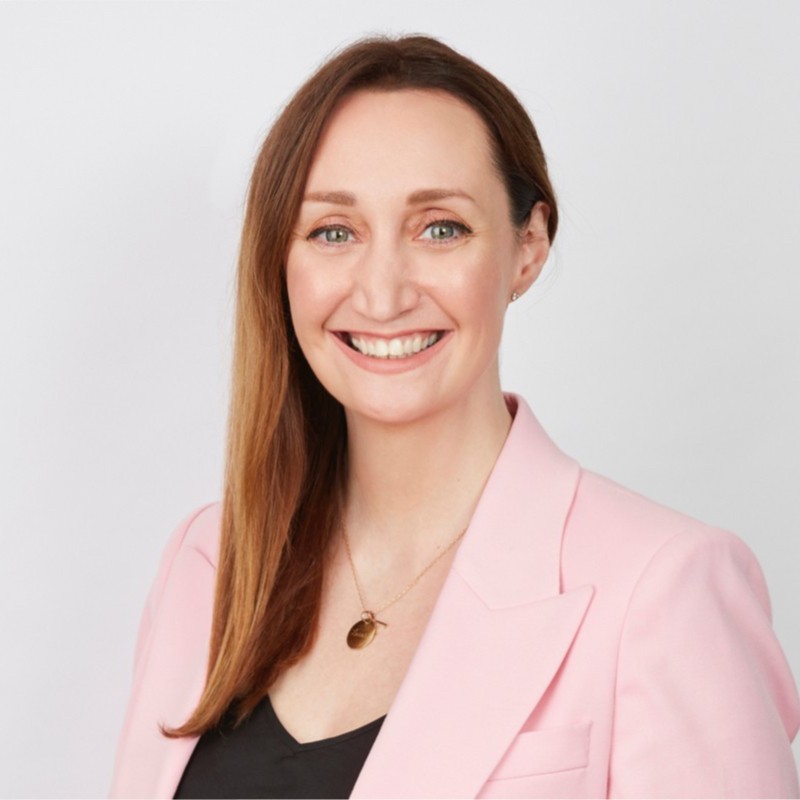
My guests are Amelia Woodley, a sustainability leader with close to 25 years of experience driving sustainability strategies and transformation programs across industries, including nuclear, defense, construction, rail, and retail.
And also Vin Sharma, a researcher whose doctoral work at the University of Exeter examined why the social dimension of the circular economy keeps getting left behind.
Together, they bring a framework that cuts to the heart of this season's theme. Amelia calls it logic versus magic. The logic is the systems, the KPIs, and the strategy, and magic is getting people to actually understand, buy into, and act on that. And what they keep finding is that organisations pour energy into the logic side and then struggle with serious change.
We talk about why circularity stalls within organisations, why external crises often do more to drive change than internal strategy, and we also touch on technology data and the financial constraints and opportunities.
As usual, full transcript and all the links at happyporchradio.com.
So let's meet Amelia and Vin.
[00:01:40] Amelia Woodley: My name's Amelia Woodley. I am a sustainability leader. I've been in the sustainability arena for, coming on to 25 years now, leading sustainability strategies and transformation programs across a wide range of industries such as nuclear defense, infrastructure, construction, rail, hire, and retail.
[00:02:00] Vin Sharma: Hello, I'm Vin Sharma, and I spent the last three years as a researcher embedded in these conversations with organisations that were kind of genuinely trying to transition to a more circular economy model. And what kept striking me was how consistently the social dimension, which is the people side, that was being very left behind. Through my doctoral research, this is what I examined of why that happens and what it looks like when firms start to get it right.
[00:02:26] Barry O'Kane: And welcome to HappyPorch Radio. Thank you both for joining me.
I'm particularly enjoying this conversation, we were talking just before, because I absolutely stole the theme, the subtitle for this season “Technology Isn't Magic” from a conversation, Amelia, that you and I had and that's why it's so exciting, I think, Vin, what you just mentioned about the research you're looking at. So I'm really keen to explore that technology-human interaction and what that means and what that looks like in circularity.
But first of all, let's talk a little bit more about the work you've been doing.
Vin, if you don't mind, let's start with the research you've been doing and talk a little about what that looks like, where it came from and where you are now?
[00:03:01] Vin Sharma: Sure, absolutely. So I think the circular economy has a very well-documented social blind spot, and I think it's very structural rather than accidental per se. The field itself grew out of industrial ecology and environmental economics, which are frameworks built to optimise material flows and resource efficiency. They're not built to accommodate the social complexity or the stakeholder subjectivity. So what we end up with is organisations that have very sophisticated environmental strategies but then genuinely struggle to answer the questions like "Who benefits from this transition?" and most importantly "Who bills the cost?" It's a very summary kind of a way.
[00:03:42] Barry O'Kane: Thanks. One of the things I'm enjoying about having the pleasure of having you both on the podcast is you have very practical real-world experience of exactly what we're talking about. So maybe you can build on what the work you've done with Vin and a little bit about why you came up with that “technology isn't magic” phrase.
[00:03:57] Amelia Woodley: Of course, Barry. The circular economy definition's been around for such a long time, but it's probably been less understood than other areas such as net zero carbon. And I think as we transition to that net zero world, what's become really apparent, I think it was one of the investors, Schroders mentioned it, there is no pathway to net zero without circularity.
So I think there's been a huge amount done in the construction world. So you know, I've worked in construction around circularity of building materials when I've worked on big infrastructure projects. I've looked at circularity when I've worked in the higher sector around the actual products itself.
So I think there's been a huge amount of work done within the net zero space, which has been amazing through different material types or clean technologies. But the area that's probably been a little bit more unknown is around the circularity piece. That stakeholders are starting to ask about it, whether that's investors or customers.
And I think organisations now are starting to look at what is circular economy, what does it mean to my business, and how can it help me achieve my environmental goals, and as Vin mentioned, my social goals. But it's a bit complex. Even the word itself, circular economy, sounds a little bit too daunting to lean into.
So a lot of the work that I've done over my time in my career and some of the research that Vin and I worked on previously was around how can you make it relatable to people. Because, as we mentioned before, the technology may be there, but the technology won't come to life without the magic of the people really understanding what is circularity, what does it mean to the business, and how can it help the organisation achieve not just its environmental and social goals, but its financial and commercial goals as well.
[00:05:32] Barry O'Kane: That’s something that so resonates and which is why I'm so much focused on this theme in this season of the podcast, because it's definitely something that we see building the technology to enable circularity, but then that feeling sometimes like it's disconnected or somehow not tied into the real world of the people working day-to-day in the businesses.
Is that fair? Is that kind of similar to what you're both talking about?
[00:05:55] Vin Sharma: My understanding, if I decode the logic and magic framework, the logic side is what I see organisations tend to focus on mostly, which is across all the companies that I kind of research. Most firms operate at what I call a foundational or intermediate level of social value integration, let's say. They are doing things like workforce training, some community engagement, supply chain transparency work. Now, this is not nothing, but it is closer to a traditional CSR than it is to what I term a circular business model enabled social value, where the circular business model itself, through its core operations, directly generates a societal benefit. So that societal layer or social layer, I think tends to get bolted on rather than built in. This is where I feel the magic side comes in, where things get a bit of stuck, where organisations do face a bit of this paradoxical demand, they have to get short-term operational survival versus that longer-term transformation goals. And that's where I think the formal hierarchies slow down exactly the kind of rapid response that stakeholders need.
[00:06:59] Barry O'Kane: And I'd love to explore that a bit more, but just to step back quickly, would one of you mind clarifying again or explaining more what we mean when you're talking about the logic versus magic?
[00:07:07] Amelia Woodley: Yeah, that's fine. I'll pick that up, Barry. So it's a formula I've used over a number of years in my career when I've looked at how do you create sustainability strategies, how do you get them embedded in the business to transform the organisation to deliver the environmental, social, and the commercial goals of the business.
So the logic is all about do I have a clear vision? Do I have a clear strategy? Do I have a management system framework that I can embed that strategy through? Do I have KPIs and monitoring metrics that enable me to look at how is that strategy moving through the business? And I think a lot of us will start at that point. I've got all of the processes and the systems, but actually a strategy won't come to life and won't deliver if you don't bring people with it, and this is where the magic bit comes in, and that's generally looking at what's my brand identity? What does sustainability stand for as a business?
What's its purpose platform? So what is the sustainability strategy saying to people inside the organisation and the external stakeholders outside? So it's all the branding, the communications, the story that you tell your stakeholders internally, externally, and that is then usually supplemented by upskilling and training.
Now, whether that's through formal training courses, so over my career, I've run many different training programs across all different types of roles within the organisation. But there's also training through what I call osmosis, so those conversational pieces when, say, for example, going back to the circular economy point, you're talking to supply chain innovation people. It's about that two-way conversation of “I have a product, how can I change the design of that product to make it more circular from an environmental, social, and financial point of view?” If you don't have those two component parts, you can't get what I call a sustainable change within an organisation.
And what I've found over the career, and I've been guilty of doing it myself, is focusing too much on the logic side. So I have all the systems and processes, and I've got all the acronyms, but not looking at how do I take people with me. And if you think about organisations they're run by people. They have processes and systems to support decision-making, but essentially they're run by human instinct and emotions and people, and that's the most important part when delivering sustainable change, is how do you tap into that to get those people to make balanced decision-making across the board?
[00:09:23] Barry O'Kane: Thank you. And Vin, earlier you gave us some examples of, in your research there was questions like what is the business benefit or who pays? And then you talked about that being the sort of people or understanding problem. But then those questions sound like some of the sort of logic side of that, you know, measurement and so on. Can you expand on that a little bit more?
[00:09:42] Vin Sharma: Sure, absolutely. I think internal tensions are where it gets a bit generally interesting and honestly where I spent most of my analytical energy during my research. So like I was saying, organisations, they face sometimes this paradoxical demand where they have to perform in the shorter term because of the reporting cycles, let's say. But whereas the vision is a bit of more longer term, which cannot be achieved in six months, one year, or two years sometimes. So that's where I think that formal hierarchies, like saying the logic side, KPIs, metrics, they then slow down exactly the kind of this rapid response that sometimes stakeholder needs in terms of, let's say, crisis or response immediate. Think that kind of creates this knowledge silos mean the social risks are invisible to the people making business model decisions sometimes. This is what I was trying to say. And what I kept finding was that when a crisis then hits, it exposes the stakeholder needs that systematic processes had entirely missed in the life cycle.
[00:10:37] Barry O'Kane: Can you give us an example of what you mean by those social risks and then the impact of a crisis?
[00:10:43] Vin Sharma: Sure, absolutely. For example, let's say there's a construction going in a public park, right? By default, construction work is always noisy, high sound, right? It disturbs the ecosystem, not just the people moving in the park. It could mean the birds and everything. But then let's say, it was used as a biofuel and a very low quiet, let's say, generator was being used, the social benefit is people carry on as normal then. There's no disturbance. The birds are not being disturbed. There's no day/night system, as well as you're using a biofuel, for example, for a generator. Things like this are like a hidden social risk that sometimes we might tend to miss, and that is not necessarily a social benefit. The company would have perhaps thought when saying, "Okay, now we'll use biofuel because of so and so social benefit as well."
[00:11:26] Barry O'Kane: Okay, so that makes sense. That makes me think about what you were talking about, Amelia, about the magic part about having people understanding things like that and being able to articulate them, and therefore, and this is my projection, have the motivation or the sort of, organisational permission to think about those things.
[00:11:44] Amelia Woodley: Yeah, I think there's two angles that you can look at things and you can look at the very black and white approach is will this solution cost me more money, whether that's a different type of building material or as Vin mentioned, a different type of technology that you use on a construction site.
So there can be quite a very black and white binary decision-making in that process. When you're looking at will that technology cost me more money in the long term, and you've got to look at the whole life cost of that technology or that change in material type. But then if you look at it slightly differently, through a different lens, or what I would call like a multiple lens, like a kaleidoscope kind of thing, you get different sort of fractions, is what I call like stackable benefits.
So will a change in decision-making bring about more benefits across the board? So as Vin said, you know, if you have a different fuel type, you have less emissions going into the environment, you lower air pollution. If you use a different type of technology, you lower noise and vibration, which has a positive impact on people and wildlife as well.
So you've got to look at, when I think about circularity and circular solutions, I look at it through a sense of: Can I change the design to make it more environmentally friendly at a cost-effective way over the long term? And in doing that, does it enhance the social benefit? So does it reduce air pollution, noise pollution? Is it better for nature? Is it better for the local environment, particularly if we're in built up areas?
So I think when you look at circularity, you've got to look at it through multiple lenses. Yes, it needs to financially wash its face and do your business systems work to or against circular solutions, but then you've got to layer in all of those benefits and make that solution more valuable over what would be a non-circular traditional solution that would previously be taken forward.
[00:13:35] Barry O'Kane: And thinking about the, sort of, as you describe it, logic versus magic And the challenge you laid out of, Vin, you mentioned the short-term reporting goals, you know, we need to keep the business going, and that can feel very pressured. Maybe you've got an example or a story, Amelia, about how you've seen or how you would approach using your, sort of, logic-magic process to actually have that happen, have people being able to step back from the minute to minute thinking to what you're describing, looking at these broader holistic viewpoint of it?
[00:14:04] Amelia Woodley: Yeah. Barry, I've done it in quite a few organisations, to be honest, in my past, and I think when you look at sustainability you have to look at a sensible, balanced business case. But as Vin mentioned, sustainability is more of a long-term program. It does deliver in points short-term benefits. You can get those quick wins. But when you're looking at circularity, you've got to look at, I think, through a number of different approaches.
You've got to work with suppliers to understand, Okay, you have a product or a service. Let's talk about products. You have a particular product, and we want to introduce more circular solutions into that product. It's working with those suppliers to understand what are the alternatives. Now, through my tenure in the hire sector, there were lots of different circular economy products out there, particularly around fencing and barriers. So you could take technologies and you could change the design of it to make it more circular.
So that has definitely happened, and that's really positive. So it's working with that supply chain to collaborate with them and understand how can I make a product more circular from an environmental perspective, a social perspective, and then obviously doing it in a really cost-effective way.
The other areas that you look at when you're looking at circular economy is that whole internal piece. Again, going back to the point that I mentioned the term itself is very complex. I've been in the industry for such a long time, and it's taken me quite a number of years to get my head around what does circular economy actually mean.
It's actually quite technical from the outset. So you just have to break that down into really simplistic conversations in terms of, is it a product that is designed to include recycled materials? Is it a product that can be recycled at the end of its life? Is it a product that you could essentially extend the life of the product so that you have less of an impact?
Does that product, going back to the social benefits, reduce air pollution or noise pollution or have a positive impact on nature?
So it's simplifying those conversations and moving away from circular economy and acronyms like, you know, regenerative nature and things like that which can be thrown into the circular economy conversation, and just keeping it really basic.
Can it reduce emissions? Can it reduce waste? Can it increase recycling? Can it have a positive impact on the environment and the local community? And that's the way that I've always moved conversations. Take out the technicalities of it and the acronyms and the complex terms, and just get down to the basics of what can the product do in a more positive way from an environmental and social perspective, and can the product be designed in a way that it financially washes its face at the same time?
[00:16:36] Barry O'Kane: I'd like to come back to the financial question, but just before we do that Vin, my understanding of what Amelia was saying there is that you were seeing a lot of things stumbling or those conversations not reaching beyond the language or to action or to real understanding because what you're seeing is folks or businesses stuck in that logic side where they've just got basic structure that's disconnected. Can you talk a little bit more about that?
[00:17:00] Vin Sharma: Sure. I can share three patterns from my research without naming the company or the organisations. Let's say, I see these as nascent, emergent, and mature companies, depending on where they are in their journey towards circularity. First, the nascent stage firm, discovered through a major customer issuing an ESG ultimatum rather than through any strategic foresight that the supply chain working conditions were a material risk to their business. In that way, that crisis forced a bit faster capability development than any voluntary program would have achieved for that organisation.
Secondly, for the emergent stage organisation, it won a very large contract precisely because of its sustainability credentials And that commercial return was very direct and significant, which I think then changed the internal conversation about whether this work around sustainability circularity was real business or peripheral.
And then in the third, a bit of a mature stage organisation they described to me the cognitive shift from asking things like, "How cheap can we get this?" To more of "But why is it so cheap? What are the working conditions behind that price?" Obviously, that shift must have taken years, and it's not just the policy change that happened for them overnight. So that’s the kind of the contrast I'm seeing between organisations at different scales of the transition.
[00:18:14] Barry O'Kane: That's really interesting because the first two examples you give there hark back to what I meant about coming back to the finance side because both of those are financial or business, very business, directly business, commercial, pivot points. Amelia, how much in this - logic versus magic and all that, building the story and understanding the holistic impact of a product or a service, how much of that absolutely needs to be driven by the finances or could be completely undermined by the finances?
[00:18:44] Amelia Woodley: I think it's a bit of a balance. It depends on the organisation, to be honest. I think going back to what Vin mentioned, the stakeholder has a very important role to play. So in the absence of any kind of clear government policy or regulation around circular economy, which I know and the government is doing a lot of work, they've got the Circular Economy Task Force, and they're looking at their circular economy strategy. The stakeholder plays an important role, whether that is an investor asking questions around an organisation and their circular economy principles. And I've seen that come through over the last few years in terms of what investors are asking for. And going back to my earlier point around, I think it was Schroders, that said there's no pathway to net zero without circularity.
So they're starting to notice it's actually quite an important part of an organisation. So organisations are starting to shift into circular thinking. You then will have other stakeholders such as customers. So if you think about the construction and infrastructure industry in general, which I've been part of for a long time, they are always seeking out circular solutions, whether that's through the materials they use, such as, you know, they're looking at low carbon steel, they're looking at low carbon concrete.
I did a lot of work in rail where we were continually regenerating materials, particularly around track systems down to the plant and equipment that you would hire on site. So the whole construction industry is looking at circularity in its entirety through the buildings and infrastructure they leave, down to the tools and equipment and plant they use on site during that construction phase.
So the stakeholders play a role, and if you have a stakeholder that's very strong and directive, it makes it easier for businesses to come up with those solutions. Now, where the finances come in, it's like any sustainability business case. I think you have to look at it, looking at it from a case-by-case basis, whether you're looking at it from a material perspective or you're looking at it from a product perspective in terms of equipment that you have on site.
And you've got to look at does the financial system in which you're operating work for or against circularity? So am I operating in a way that's gonna allow me to unlock those opportunities? And sometimes it does require very different ways to think about it and how you build up that business case and how you make that product, not just environmentally, socially advantageous, but commercially advantageous as well.
They've gone through with net zero, trying to find cost-effective ways to decarbonize, whether that's through your vehicle fleet, your property estate, or your supply chain. The same thing now is happening with the circularity and it starts on a product by product basis.
And then as you grow the intel and the experience of how it works, and you can start to scale it up across your organisation and look at the whole way that you financially manage your business and are there opportunities to unlock circularity in that as well.
So I think there's - and I'll bring Vin in a bit because I know he's done quite a lot of work on this space - I think organisations are starting to look at circular solutions, and they're starting to realize that actually they need to bring circularity and financial management together to make it commercially viable. Now Vin, what's your views on the financial side?
[00:21:52] Vin Sharma: It's like businesses are here to make money, and they shouldn't shy away from it. That's the very baseline. And at the same time, like I have grown up in business schools reading, a business is something that serves customer needs profitably, and only now we are adding the word profitably and responsibly, right?
And this financials thing, even now a lot of people have confusions around ESG, sustainability, circularity, and they use it very interchangeably, not knowing what's very specific or term like that. And the financial side has been here for decades. The circularity, social accounting, social policy is very, very recent.
So we are in that learning phase still for this, I feel. So it's very natural that, you know, we haven't fully matured in this like how we have matured the balance sheets or profit and loss or income statements. This is something still in the learning phase. So I think it will take time in that regard to mature in this sector as well.
So there's no wrongdoings, but just like how fast can you learn now- and then mirror the legend of financial.
[00:22:47] Amelia Woodley: And going back to the actual word circular economy, economy is in there. It has to financially make sense, right? And I think, you know, sustainability professionals going on what Vin says, and it's something that him and I always talk about, is you have to balance those three Ps. You have to balance the planet, the people, and the profit, and you have to design products and services that deliver all three. And I think with circularity, sometimes we can look at it too much from an environmental and social perspective. So do I have to change the design of this material or this product to make it more environmentally friendly and therefore it costs me more money?
No, that wouldn't be the right decision. You have to design a product that's more environmentally friendly and has a social benefit in a way that is cost-effective as well. And I don't think we should forget the economy bit in that conversation because that was the whole point of it, keeping materials in a system to reduce their environmental and social impact, but to be more financially efficient at the same time as well.
[00:23:44] Barry O'Kane: There's a dual meaning to sustainability as well. Like it needs to be long-term sustainable for economically as well as the environmental impact. I think that's very apt. One of the themes or one of the threads that I wanted to quickly touch on is the sort of external pressures versus the internal.
Amelia, you talked about the external, in terms of circularity and thinking about suppliers and customers, but then also internally. But one of the things that I noticed, Vin, when you were describing the three levels of maturity is the first two trigger points were external things, and then the maturing level was when it had become internalized to the organisation, and they become the driver potentially around them.
Is that fair, and does that reflect what you saw?
[00:24:25] Vin Sharma: Sure. Absolutely. So in my research, external pressures were the most reliable triggers for social integration. There's no doubt. And customer requirements, regulatory pressure, investor scrutiny, you know? But, and this is important, that they tend to generate reactive rather than proactive responses.
What I mean is, and I ended up theorising this as a reacting capability, which I propose as a kind of a fourth dynamic capability alongside what Teece had said in his original framework of sensing, seizing, and reconfiguring kind of a framework. The critical insight here is that reactive responses, even when they feel chaotic or unplanned, they do generate a bit of experiential learning and that within an organisation builds more systematic capability over time.
So a mature organisation who is far along the right-hand side, they progressed, and they are the ones that treated their crisis responses as learning events rather than just episodes to recover from and move on. That's what helped them build that capability muscle of reactiveness.
[00:25:25] Amelia Woodley: I think, just picking up on Vin's point through my time of, I've done three major sustainability transformations in the last kind of 10 to 15 years in different organisations and they will all start with a bit of a push externally. And then as the organisation gets mature and as the sustainability strategy and the commercial business case is embedded and refined within the operations of the business and the supply chain, so they're going through that journey moving away from, "I've got a strategy," to, " I've embedded it in my business that delivers both environmental, social, and financial outcomes."
As that organisation matures over time, then they become independent in their decision-making, so they actually drive it from the inside out, and they actually are prepared with solutions before they're asked. So you see that, and it's really interesting that Vin's picked that up because, Vin, you've obviously looked at it from a very research perspective.
And being in organisations where I've built strategies and then done the operational gearing, those models do reflect the different maturities of the organisation, where they are in their journey. And it's not to say an organisation will sit at that maturity level, forever. It moves over time.
So you definitely, you start, from my experience, I'm not saying it's the same for every organisation, but it starts with a bit of a push from a stakeholder, whether that's an investor or a customer or a regulatory demand. And then over time, you build up that skill set, people start to understand, people start to get more comfortable in the conversations and the decision-making, and they solutionse themselves. And that’s where you see that maturity come through. But that maturity will only ever come through if you've taken the step from moving it from a strategic place into embedding it with an organisation in a way that is commercially sustainable at the same time.
[00:27:19] Barry O'Kane: Which ties back to what you were saying about that embedding being with the people, because organisations are people, and if you've just tacked on a, sort of, logical process and yeah, that ties it all together again. I wanted to just quickly segue, obviously one of the things that for this podcast and at HappyPorch we're particularly interested in is the role of technology, and particular digital and software. So I have a two-part question here, one is about the data, and the second one is about the digital tools that are used. And my question basically is, how much of an impact do those things have? Do they come first? Can they be one of those drivers or trigger points, or do they need to come after organisations start to work out - Okay, this is what we need to do, and then reach for the tools and the data to do them?
[00:28:02] Amelia Woodley: Okay, so I'll go first. I'll give you my view and I look through three lenses, Barry. I look through data, technology, and people. Now I find that sometimes the technology and data bit can move around. So for example, you can bring a technology to market or a solution to market, but you might not be able to enable that solution to be successful if you don't have good data.
Now, data in my view is king. So what I've found is that in bringing sustainable solutions to market where they have struggled to materialise, then you've got to go back to the data. You've got to understand the data. You've got to look at what the data is telling you from a positive and negative perspective. You've got to be able to present that data to have that conversation. Because I think where I've seen things move in the sustainability arena is that there is a preconception that sustainable solutions cost more money. There's what you call a green premium. And I agree to a point and I disagree to a point.
And the reason I disagree is that when you look at the data and when you have good data, and it has to be really good, clean data, then it does actually financially wash its face. So going back to the original point that Vin made around short-term versus long-term you can't push sustainable solutions using short-term outputs. You have to look at the whole-life cost. And I did this in the rail industry years ago. We did whole-life cost engineering. It was just part of what you did, and it's the same thing now. So the technology and the data is intertwined with each other. And you can get the data first, you can get the technology first or vice versa.
I've seen it on both points. Where you bring in the people bit is that to get people to really understand and buy into it, you have to stick to the facts, and the facts sit in the data.
You could say, "I've got this great sustainable solution," and some people think that's brilliant, or some people will think “actually I'm quite happy with what I've got."
But without the data, you can't convince them to change their behavior. So I've seen situations where we've presented whole life cost data to say "This solution reduces your carbon and your cost." It takes away the perception, I call it the perception reality gap. It takes away the perception that the product or service has a green premium because you're going back to the data, and that's really important in getting people to move their decision-making into traditional solutions versus more eco-green sustainable solutions.
But you can't make that shift if the technology isn't there either. So you've got to get those two points, technology and data together, to shift the mindset and the behavior of the person making the decision.
[00:30:37] Barry O'Kane: Language I would use in that context is, my question, I guess, was a bit binary. It was a bit, you know, the technology or the data first. But actually what you're talking about is they need to grow and mature together in order to be complementary to take us all, not just individuals and organisations, but to take the system as a whole on this journey.
[00:30:55] Amelia Woodley: Yeah. And you will go back and forth. I've seen sustainable solutions come out that have not had the appetite that was expected and you go back years ago to low carbon concrete, for example. It's still something that the industry is working through.
Sometimes you have to go back to those data points and refine it and get more information, and Vin and I have talked lots about good quality data. That is absolutely key. If your data isn't credible, you're not gonna get the output that you want. Once you've got that, then you can have a different conversation.
So it moves around, and what I find is I keep going back to data to have a conversation to push the sustainable solution. I can't just push the solution on goodwill, or it's a sustainable solution, therefore you should take it. I've got to be able to show what are the environmental, social, and financial benefits for that technology to be beneficial going forward?
[00:31:46] Vin Sharma: So technology kept appearing in the data as an enabler of the capabilities I was studying. So in none of my cases, technology was driving the transition. It was more of amplifying the capability that already existed or was being built.
So across my cases, I kept seeing technology playing three distinct roles. One, if you say operational backbone, one more of a just for measurement infrastructure, and then more of a thirdly could be like a stakeholder interface. And the interesting thing was how these different roles played out depending on where the organisation was in its circular economy journey.
[00:32:18] Barry O'Kane: That's really interesting. And I'm aware of time, so I don't want to take us down another hole, another avenue because maybe that's another conversation. Particularly from those of us who are building those tools or myself and clients who are building these tools and looking at ways of where they fit in the market and needing to say what’s the trigger point at which my tool becomes useful, or this feature in my tool becomes beneficial?
And I think that's an interesting thought experiment for the listener and for me to take away.
But as we're coming up on finishing on time, the questions I'd like to start to wind up on is - we've talked a lot about what's happening and the work you've done, but looking forward, what makes you feel hopeful or what are you excited about for next?
[00:32:58] Vin Sharma: What gives me very genuine hope is that the organisations doing this are not doing it through very grand strategy documents. They're doing it by taking seriously the question of who is affected by the business model decisions and building, kind of real relationships with those stakeholders, and then learning from the moments when things go wrong, rather than treating those moments as kind of embarrassments. And obviously, as an academic, the theoretical frameworks matter, but then the underlying shift is more fundamental, treating people as central to the circular economy rather than peripheral to it. And in the organisations where I saw that shift happen, it changed kind of everything. Over to you, Amelia.
[00:33:33] Amelia Woodley: Thanks, Vin. I think for me, it's going back to my earlier point. I think the net zero agenda is much more mature. It's had a lot of time and attention, and obviously it's still a way to go, but it's definitely so farther forward than it was 10 years ago. And I'm starting to see that movement now with circularity, and circularity has been around as long as carbon and net zero have. It's just never had the time or attention on it.
So you're starting to see the government move, you're starting to see the task force in place. They're developing their strategic approach, and I think that will give organisations, Barry, a bit more of a regulatory push if it's supplemented by things like grants and funding and incentives. Because to get green solutions or sustainable solutions out there, you have to have incentives. Otherwise it just stays a premium and you're in this, excuse the pun, circular conversation of, is it more expensive or not.
So I think the policy regulation is heading in the right direction. I'm hopeful that it will be supported by economic incentives. I'm hopeful that the government will start looking at putting circular economy into public procurement. I think that's really important. You've started to see under certain procurement notes, carbon's come in and social value's come in. I've not seen circularity as a conversation in there as much.
And the thing that's missing for me, which may be the next evolution, is going back to the whole premise of this podcast around “technology isn't magic” is where is the people in that discussion of that circular economy strategy that the UK government is designing? So how do we ensure that in that shift from a non-circular to circular economy, how do we ensure that we are transitioning people to understand what that shift means, not just from an environmental and social perspective, but from a good business perspective as well. So I'd be quite hopeful to see that come through in the strategy as well.
[00:35:26] Barry O'Kane: Yes, thank you both. That's a positive place to start to wind up our conversation, which feels really good, and is why in a technology podcast we're talking about the importance of everything else that's not the technology.
And just finally, for those listening who wanna find out more about the work you do or perhaps get in touch, what can they do?
[00:35:42] Amelia Woodley: So they can reach out to me on LinkedIn and follow me with the work that I'm doing.
[00:35:47] Vin Sharma: Likewise, I think LinkedIn is a good platform to connect. Obviously can be via yourself as well for any other future podcast or any other research works.
[00:35:56] Barry O'Kane: Brilliant. Thank you both for joining me. As usual for those listening we'll link everything we mentioned, and there'll be Show notes and a full transcript over at happyporchradio.com. Thank you Amelia. Thank you, Vin. I really appreciate your time today.
[00:36:07] Amelia Woodley: Thank you, Barry.
[00:36:07] Vin Sharma: Thank you.
[00:36:11] Barry O'Kane: That was a really rich conversation. Thanks again to both Amelia and Vin for joining me.
A quick reminder, we're planning an in-person event in the UK to celebrate Season 10, and we're looking for people who want to help make that happen, whether that's with a venue, sponsorship, or just coming along. Drop me a line at [email protected].
And if you want to make sure to catch every episode this season, head to happyporchradio.com and join our email list.
Thanks for listening, and I'll see you next time.