
[00:00:12] Barry O’Kane: Welcome back to HappyPorch Radio, the Circular Economy Technology Podcast.
I'm Barry O'Kane, and this is Season 10, entitled “Technology Isn't Magic”, where we are exploring what really happens when circular economy technology meets the reality of real business and real people.
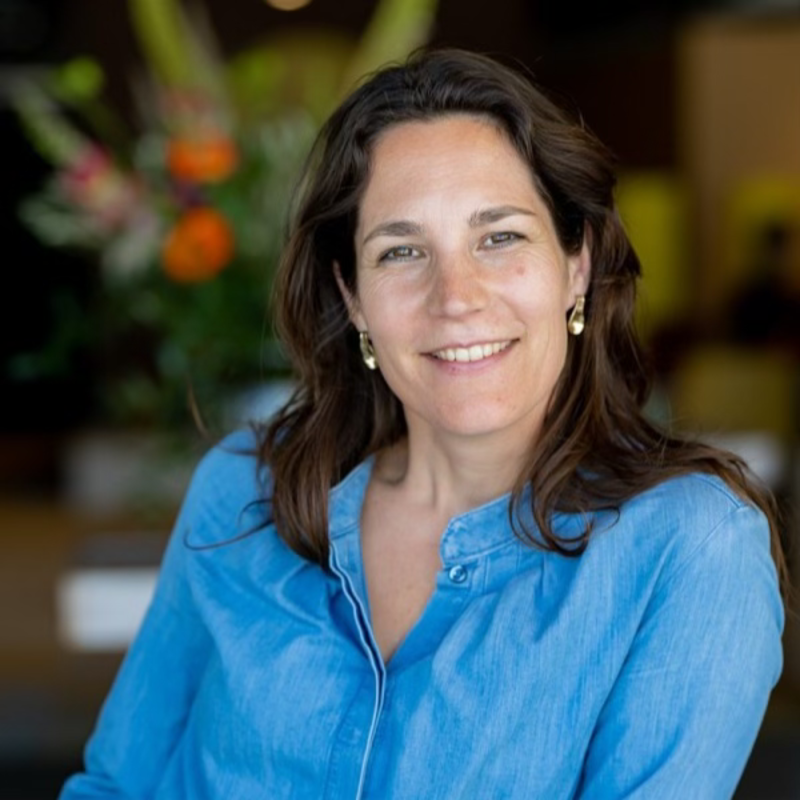
My guest today is Lieke van Kerkhoven, co-founder of Green Pulse, which is a company based in the Netherlands that helps hospitals decommission used medical equipment in a sustainable, circular, and financially attractive way.
And this is actually Lieke's second time on the show. She was on, back in Season 5 when she was working with FLOOW2, a company building sharing platforms. And since then, Lieke and her co-founder started Green Pulse, where they are collecting, inventorying, photographing, and selling used medical equipment to an international buyer network.
In under two years, they are working with over 25 Dutch hospitals, which is more than a quarter of the market and they built an AI tool that lets warehouse workers inventory 20 devices an hour instead of four or five. They run the whole operation on a commission model, so their incentives are completely aligned with the hospitals.
One of the things I find most interesting in this conversation is where the technology stops and the human work begins. Trust is the backbone of their business on both sides. Hospitals trust Green Pulse to handle compliance, patient data, and transparency and buyers, an example of one is shipping equipment to Syria, trust that what they were buying is what was advertised. And that trust is built through personal messages, warehouse visits, and long-term relationships, and not through a platform feature.
We also got into Lieke's thinking on what she calls integrative business and why she thinks donating medical equipment to developing countries is often “waste dumping 2.0”, in her words. And we talked about what keeps her going through working in a cold warehouse and all the startup challenges.
So let's meet Lieke again.
[00:01:59] Lieke van Kerkhoven: My name is Lieke van Kerkhoven. Great to be here today. I'm the co-founder of Green Pulse. It's a company based in the Netherlands and we help hospitals decommission used medical equipment in a sustainable, circular and financially attractive way.
[00:02:13] Barry O’Kane: Wonderful. Welcome to HappyPorch Radio. Thanks for joining me again, because this is the second time we've had you on the podcast.
[00:02:17] Lieke van Kerkhoven: It is, it's good to be back.
[00:02:19] Barry O’Kane: Wonderful.
The last time we spoke you were working on FLOOW2 which you've now pivoted to Green Pulse.
So why don't we start with a bit of an update of that journey, what's happened over the years and what has resulted in Green Pulse?
[00:02:32] Lieke van Kerkhoven: Yeah, sure. When we last spoke, FLOOW2 is a company that makes platforms in the circular economy space, sharing platforms that help organisations or networks of organisations optimise the usage of all the capacity that they already have. So we've made a number of successful platforms including PharmaSwap. That's a platform where pharmacists exchange medication that’s otherwise going to expire within the pharmacy. So it's never been to a patient. It has always remained in the pharmacy stored under controlled conditions. But that pharmacy doesn't have a patient for that particular package of medicine. And then they can sell it to another pharmacist who does have a patient. So they prevent the wastage and they also save a lot of money.
But we also run a platform, or we, I'm saying we, but I'm not there anymore. It still feels very mine, for a Danish health government. It's a very big organisation. 40,000 people work there, and they have a platform to optimise the usage of the furniture they have. So they're recycling their own furniture and they are crossing the threshold because they spend millions of Danish Krones on furniture annually, and they have crossed the threshold of value in recycling rather than buying new. And that's also very impressive.
And in that COVID period, we also created the platform for the Dutch healthcare organisations because we saw the mismatch between supply and demand. Everyone was looking for protective items and ventilators, et cetera, et cetera. And very often, the supply was not even in healthcare, but not in the right place. So we made a platform that could help the healthcare organisations create transparency on the available supply and demand so that they could efficiently match.
That was very successful in the sense that during COVID it was used, obviously, and after that we kept it available. And it was mainly used by long-term care organisations to exchange the lower value goods that they have to provide the care. So furniture, bicycles, daycare or activity goods. But not really by the hospitals because they said it's too time consuming for us to upload everything we have. It's just not efficient. It's always different. It's too valuable.
Also, there is specific laws and regulations particularly when it comes to medical equipment. And we got that specific question at some point from the hospitals “Can you help us with this medical equipment?” because of the MDR regulations in particular. And since we've been doing the work on PharmaSwap exchanging medicine is also under very strict regulations.
So we had experience in implementing that in a platform and in a workflow. So we tried to also do that for the medical equipment and we succeeded. But then we ran into the issue that there was a very Dutch marketplace crowd. So there was a supply, but there was not really demand because the used equipment is not needed by another Dutch hospital. Usually it goes abroad.
So I got in touch with my current partner in this, in Green Pulse, and he was working in one of the major auctioning companies. They're an international company and they were trying to copy a British model to the Netherlands for auctioning medical equipment. But they ran into the issue that auctioning in the Netherlands is mainly to do with bankruptcies. It's cowboy business. So they had an image problem but they did have the international buyer base. So we tried to collaborate, but that didn't really work.
So we said at some point, Okay, let's just sit down and look at what the hospitals really need. So then we said we have to do it. We do have to do it ourselves because we want to provide the service because that's what they're looking for. They don't need another platform because they don't have time to manage that. They don't want another account or another dashboard. They have a core job. This is not part of that, but it's still work that they have to do. So we have to take it off their hands and we have to do it for them and then report back to them.
[00:06:19] Barry O’Kane: Yeah. That's really relevant and one of the reasons why I wanted to speak to you was because the title or the subtitle for this season is “Technology Isn't Magic.” And I think what you're describing there is a good example of that. It's like you said, they don't need another platform. They need a job done for them.
So you're at that stage. How did you go from, Okay, we're beginning to understand what they need done to actually building Green Pulse and solving that problem?
[00:06:42] Lieke van Kerkhoven: Yeah. We partnered up with a logistics company and we went to talk to the hospital. So to get their problem very clear and so, what they said is they have three options currently for medical equipment. Either they traded in with the supplier who is not very likely to bring it back to the market. So they will usually destroy it. They can sell it to a traditional broker, but they will not give the hospital the best price, of course, because that's their business model. They will only take away the beautiful pieces, the most financially valuable pieces, or it sits in a basement or a storage room until someone has had enough and decides to throw it all away.
And it's always scattered because they have a replacement cycles of seven, eight years depending on how it's depreciated. So every time it's something different. So this time it's ultrasounds, next time it's blood pressure or it's infusion pumps. And it goes to different channels so that you have to reinvent the wheel because in seven, eight years, the market changes.
So we say to them - We collect everything for you. You don't have to worry about it anymore. So leave it in that room. We come and collect it. We make an inventory, we take pictures, we check if there is patient data remaining. Because very often there is, and that's obviously a very big risk for the hospitals. And then we sell it to the best buyer. And we use our own platform. So there still is a platform. It's just on the supplier side, it's just us. So we put it on the platform. We sell directly, but we also have regular auctions and we connect the international buyer base. We have 500 registered buyers worldwide, but we also use other platforms.
So we reach like thousands of buyers in total and we connect them to our warehouse. And also because technology isn't magic, a very huge aspect of our business on both the hospital side as well as on the buyer side is trust. So it's the human aspect of the relationship. For the hospitals, it's trust that we will do it in a proper and compliant and transparent way and to build a continuous relationship for the long term.
But on the buyer side, it's also a trust relationship that we sell. What we advertise very often they have very specific questions because they're looking at a very particular client who is looking to buy that piece of equipment. And sometimes it's worth tens of thousands of euros. So you really want to know who you're buying from.
So even though we use a platform, there's a lot of personal contact with the buyers as well. They come to our warehouse, they inspect stuff in advance. They come here regularly just to walk around and take the beautiful pieces. So trust human relationships on both sides of the platform is essential.
[00:09:13] Barry O’Kane: So trust is so important there. Where do you start to build that? As you said, you've got these relationships.You've spent that time, you've got people physically coming to see the products.
But when you started, how did you start to build that trust? Did you start with a community of buyers through your co-founder, for example? Where did it start?
[00:09:28] Lieke van Kerkhoven: Yeah, we started from scratch basically. So my companion, he had a number of buyers in his network from his previous work. But what we've always had at the center of all communication and everything we've done is transparency. We are in it for the long run. And if we have new buyers and they have questions we really try to answer it as best as possible. We make videos of the device, we take proper pictures. They can call us, they can WhatsApp with us, which they do very often. So we've really invested in those relationships.
But, yeah, we did have to start from scratch. But the good thing is that there's a huge demand for secondhand equipment in the world. So they're also very opportunistic, willing to buy. If you do that in a proper way and you show them, you make the pictures of the software versions and of the critical parts of that equipment then you can build quite fast.
[00:10:18] Barry O’Kane: Yeah. What role does the technology play in that, as you said, you're using the platform for videos and images and so on. How crucial is that? Could you be just doing it with WhatsApp? How crucial is the platform and the technology that you've built?
[00:10:31] Lieke van Kerkhoven: Yeah it's essential actually. It's the backbone of our business because it's so diverse. Not one piece of equipment is the same you know, we've worked with Excel files in the beginning. Nearly killed me. No, we started building our own platform pretty early on in our journey. It was not the intention when we started actually we wanted to use existing auctioning services and marketplaces that are available. But we find that they don't match our level of service.
And also, because trust is so important, we really want the people to be in our platform and be in direct contact with them because not all platforms allow you to communicate with buyers in advance or afterwards even.
Yeah, we built our own platform to have our own actions under our own conditions. But we've also integrated smart tooling, AI tools that help us make the inventory of the equipment that we get because that's very time consuming and it requires expert knowledge because it's so diverse. And it's also very prone to making mistakes. If you have to type in the serial numbers, which is just a random combination of letters and numbers and your companion is dyslexic, that's just not very helpful. So we created an AI tool that allows us to upload the technical details of any given device with just a couple of pictures.
And we are now piloting that and we now have a student working in our warehouse at this moment. He had some training now, and in the hour he does 20 devices instead of four or five. Yeah.
[00:11:57] Barry O’Kane: So the fascinating thing about that is, you've described, so we've got a sort of, two-sided marketplace, that's finding the people and so on. And they've got the crucial importance of trust. And then you've also got just the operational, like doing the work to both that you mentioned logistics partner and then the technology and building the tooling to help you to do all of that. Like any startup or any early stage business, that's a lot of different hats to be wearing and so on.
What is the biggest challenge? What's the thing that sort of keeps you awake and you go - This is the thing that I'm really struggling with to make this work?
[00:12:28] Lieke van Kerkhoven: Right now, we had a discussion this morning. We're now in the situation because we've been growing this with two of us now. We have a student that's helping us in the warehouse. But we're doing a lot of operational stuff, like you say, we also have to organise logistics. Sometimes it's, like, taking over an entire department of a hospital. We take care of that.
Also it's a lot of planning, et cetera, et cetera. But it's also doing the marketing, brand positioning, and it's so diverse. So we're at this point that we can do it all but it prevents further growth.
So we're in the situation where you, do you want to hire someone, but maybe they don't have enough work yet. But if we don't, then we won't be able to grow enough to hire that person. So it's the Catch 22, I guess, every growing startup is facing at some point. And also the skills and the talents that we as founders have is not necessarily what's needed for the day-to-day work at this moment because we are builders and groundbreakers.
And you just need someone who's keeping the train on the track.
[00:13:28] Barry O’Kane: Yeah. What keeps you going then? Since the last time we spoke, you've been through this big transition, moving away from that previous platform, which was successful and were working with for a long time.
And then pushing through starting a new thing and juggling all this work. From your own point of view, what keeps you going? What motivates you?
[00:13:43] Lieke van Kerkhoven: Yeah, what motivates me is the new things. So I like doing new things. I spoke to your friend in Scotland last week and that was very inspiring and we have a lot of cool ideas, but I am not able to share them yet. So new, but that inspires me.
And I've been to ambulance services recently. It's a completely new source for equipment, it's completely different because they operate in a very different way than hospitals. But, I would be so excited if we could get a couple of hot ambulances and get them to Eastern Europe or to Africa.
So the new things, looking at new markets, maybe go to other European countries, that's what motivates me.
Also, when I see, when you're so invested in the day-to-day business, sometimes, it feels like it's going really slow or you're rowing against the stream. But then if you can, have some time for reflection. I had the opportunity to pitch at a conference last week for a Future-Proof Award, and it's always a great time. You get to tell your story in four minutes. If you tell that story, then I'm thinking, Wow, I'm really proud of what we've achieved in less than two years. Because we've been struggling. It's been hard, in our previous warehouse it was so cold. We've had hard times and we said to each other, this is why so many startups feel, because people are just not prepared to do it.
And we did and we're in a good warehouse now, and I have heating.
[00:15:05] Barry O’Kane: So a chance to step back and then celebrate that, two years of work, yeah.
[00:15:09] Lieke van Kerkhoven: Yeah. And we are, both my companion and I, we're not very good celebrators. So when we achieve our next, nearly achieve the target, then we've already pushed the line. If both of us have that, then you know, we really have to stop and celebrate. It's a conscious effort for us to do that and look back and see what we've achieved. Yeah.
[00:15:27] Barry O’Kane: This conversation's another chance to do that then hopefully.
[00:15:30] Lieke van Kerkhoven: Yeah, exactly.
[00:15:33] Barry O’Kane: And just wanted to step back to a couple of things you mentioned there. One was the buyers. So you describe people in Eastern Europe or in Africa, but what does the buyer profile look like and what is the story behind them getting this technology?
[00:15:46] Lieke van Kerkhoven: Yeah, so it's really diverse. Some of our buyers are very high-end niche buyers. So they're really looking for very particular brands, very new equipment for example, or only lasers or only microscopes or that. And you have more broad, more generalist buyers. And they tend to have warehouses in their country of origin where they employ medical technicians that can actually do something with the equipment, make repairments or upgrade software and then resell it with training, service contracts, spare parts, et cetera, et cetera. So really service, like new.
And the newer equipment, the closer to home, it stays. It goes to Germany, Belgium, France, Italy, Poland. And the older it is, and the further away it goes, the more buyers want to buy because they try to fill up a container before they ship it.
Yeah.
[00:16:39] Barry O’Kane: Okay. That is really interesting. I often hear stories about how, Okay, here, I've given this piece of equipment or this item a second lease of life and there's a sort of element of pride, tying back to your success story of being able to make the technology available in places where maybe they couldn't have afforded it or whatever the story is.
Is there an element of that as well? Like some stories that you enjoy about these products going to places?
[00:17:00] Lieke van Kerkhoven: Yeah, very much. That's why I like if buyers come to our warehouse because if they don't send a driver, you can just talk to them. So last week we had a really great story: We thought they were Germans and they bought between 10 and 15,000 euros worth of a lot of equipment. And they came with a truck but they turned out to be Syrians. And all the equipment was going to be donated to Syria, so I asked, but who's paying for this then? But the money is coming from Qatar and Dubai and then they buy a lot of medical equipment to donate it to one of their brother countries, I can imagine. And they are really looking to buy more, so they're really invested in the relationship right now because we have a lot of stuff that they want to have.
So I think that's one of the cool stories that you really speak to the people who are going to bring it to that country. And that you know that it's going to have a good reuse opportunity.
[00:17:50] Barry O’Kane: Yeah. I don't know if this is true, so I'll phrase it as a question. Is that only possible through, like, the fact that it's a secondhand product that it's a circular business, that level of trust?
Would that be different if you were selling a new product? Maybe it would be different buyers.
Is it because it's a circular business that you have that kind of feeling?
[00:18:08] Lieke van Kerkhoven: Not necessarily because it's circular, because honestly, sustainability is not really an item for our buyers. Usually it is for the hospitals that we get the equipment from, but not for the buyers. For them, it's usually the difference between having equipment or not having anything at all.
So buying new is not even an option. Sometimes they like the older products because they are more easily repairable, they're less high tech. And very often they already have a couple of that particular model. So if they buy an extra one, they can repair the other ones. Or people are trained on that machine so they know how to use it. So the older models, yeah, they're very popular in second and third world countries.
[00:18:45] Barry O’Kane: Yeah, I have heard horror stories of people donating these equipment to certain parts of the world and then them sitting in the room somewhere because they haven't got the, you know, the right software or the skills or the people with the knowledge.
[00:18:55] Lieke van Kerkhoven: It's why I'm not a big fan of donating.
Been in Africa a lot. I've worked in Ghana for a year, but previously, I've been in a lot of health facilities and it's a beautiful piece of equipment and it was donated with the best intentions, but people don't know how to use it or they don't have the spare parts or the software licenses are run out, so they can't use it.
Sometimes it's even so silly as that the plug doesn't fit because it's a different electricity. And in my opinion, that's just waste dumping 2.0 because you're not helping them. You're just giving them another problem and they have to deal with it. And what you do, every time you bring in a container of free stuff, you out market the local entrepreneur.
So the guy that is trying to build a business, maybe employ some people to actually do some work on the equipment, also buy the spare parts or the disposables that are required for that particular machine. So I'd rather sell to a local trader than donate it for free.
[00:19:53] Barry O’Kane: And that's a pretty powerful story as well.
Tying that back to what you were saying about, often from the hospital point of view, sustainability, as in not just throwing these machines away is part of the story, but presumably they're also getting some value back. But sustainability isn't maybe on the agenda for the buyers.
I wanted to segue to something that you've written, a little bit about recently, that you call “integrated business”. Am I understanding correctly that's where that thinking is coming from, and can you tell me a little bit about what that is?
[00:20:18] Lieke van Kerkhoven: Yeah, that's exactly it actually, because I've been in the sustainability space for a long time. But I have a medical background. I've studied medicine before. And I was trained as a Western doctor. And the western theory is quite arrogant in the sense that it thinks that it holds the holy truth.
So the western way of performing medicine is “The way”, and then we want to ignore everything that we call alternative, which is sometimes centuries old traditions. But there is a lot of wisdom there, of course. But because it's alternative, it has a ring to it. It makes it less serious or less evidence-based or whatever. So you have something called integrative medicine and that is trying to take the best of both. So the best of western medicine, but also the best of some of the, what we call alternative, evidence-based everything, and they integrate it into what they call integrative medicine.
And it looks at a person as a whole, including the body, not just systems, the body as a whole, but also lifestyle, social environments, purpose, all the things that are very important for someone's health, perceived health. And they make the patient the owner of their health and the doctor a coach rather than the hierarchical relationship that they traditionally might have. And I thought that was brilliant.
And coming from the sustainability space, circular economy, et cetera, et cetera, I've also seen that we are talking past each other because there's traditional business, also the western holy grail, so to say, commercial way of looking at things. Then there is sustainability, there's impact, there's circular economy, there's ESG, et cetera, et cetera, et cetera. Best intentions, but that doesn't match not good enough. Because if it would've been an immense success and we would not have a problem anymore. So it's not, you have these huge conferences and if you look at how many people are there, you would think you know that it would be a great success, but it's not.
And I think because people are talking past each other, it's just two different languages and all the terms in the sustainability space, they also have a ring to it. It's soft. It's not core business, it's not commercial. So it's always the first thing that gets scratched off the agenda if things get tough.
So inspired by the integration medicine story, I thought we should have something like that in business as well because very often these commercial and sustainability aspects, they can be beautifully integrated like we do with Green Pulse. Circularity is in our design. And with technology coming up, particularly AI, that is going to take over a lot of the rational thinking, the cognitive intelligence that is made so important in the Western commercial way of looking at businesses. That's mainly driven by cognitive intelligence.
So if that is taken over by technology, then that frees all those people up that are doing work behind the computers, that can be done by machines. So what can you do then? What are you as a business if that is taken away, if that work is done by machines? It means that people are freed up to do the human work. So like we're doing in Green Pulse, we're integrating the circular and the commercial. We're using a smart AI tool that frees us up to do the relationship building with both our hospitals and our clients. So it's allowing us to be more human because the machine is doing the repetitive work.
[00:23:33] Barry O’Kane: Yeah. I like the fact that you finished that with an example. Try and bring it to life is what you're doing with Green Pulse.
I remember when we spoke, which is now 5, 6 years ago about the challenges, like, of having to explain and spending a lot of the time educating and defining what sustainability and circularity is. And then COVID, we had maybe a slightly different context, but is some of what you're describing coming from the frustration of constantly having to sell or explain why sustainability or circularity matters?
[00:24:00] Lieke van Kerkhoven: Yeah, of course. Because I didn't see it really improving. Of course when I started in 2012 with FLOOW2, the circular economy was very young. So it's logical that you have to explain it. But the further away along the road we got, I didn't have to explain it anymore, but I also didn't see it translate into action on the workplace.
And I think we also spoke about that back then, I already said the circular economy is in fact a rational framework for a spiritual revolution, because the problem isn't the business models and the technology because it's already there. The problem is the way we perceive that we are separated from each other, or nature or whatever, that there is a duality there because it's not, we're all integrated but the fact that we don't feel that, that's the root of the problem.
To talk about spirituality in a business environment, sometimes it gets very inspiring conversations, but it can also make your audience like, completely turn away.
[00:24:57] Barry O’Kane: And that's interesting because you said often people are speaking past each other. I think though, the thing that stood out for me in what you were saying is that aligning, is integrative, is thinking about those things as a holistic whole. And I'm wondering if in, for example, Green Pulse, what you've managed to do is you've aligned those incentives. So from the buyer and seller point of view, you've aligned the financial incentive with sustainability incentive. And also there's, This is easy for me, you're saving me time and helping me so there's sort of all these positive things and I wonder if that is what makes it work.
You need to find those magic ingredients of where those things can align. And that maybe that only works in certain places, like maybe for expensive equipment or for specific types of industries. Is that fair?
[00:25:41] Lieke van Kerkhoven: Yeah, I guess so. If you're talking about the reuse, yes, probably it's about, you know, that we take away the problem. It only works because it's a controlled market and people don't have time to do it otherwise. If you look at the consumer market, it's completely different.
And the integrative model, it's a huge opportunity for new businesses to build from scratch. But for the bigger, already running commercial companies, what you see now is that they approach AI, for example, very often, strictly from an efficiency point of view. So how can we optimise processes, save money? What you also see is that, I thought it was like 60 or 70% of the accounts that are being used in the workplace, is personal accounts for Chat GPT, for example.
So it means that the marketing department is doing something completely different from the sales department that is writing tenders, for example. And the more you put into each model, the bigger the distance will be. So marketing will have a completely different story from what's written in the tenders.
So as a company, I think integrating AI is a huge opportunity to just step back. And think, Okay, so what do we want to be in a world where we have automated the cognitive work. What human aspects do we want, what do we want to be for the world? Like really your purpose. How can we humanise our company? So what will be our strength? And that you have to really invest in your values. And then from that point, you have to look at how are we going to use AI to be that kind of company?
[00:27:12] Barry O’Kane: It feels like a huge, difficult, big, especially if you have the big ship of a linear company, whatever, that's well established and moving in a certain direction. That feels like a big ongoing task.
But what I like about what you're doing with Green Pulse is you're not saying to a hospital like, “We're going to rethink what a hospital is or rethink everything.”
I guess for me, this harks back to no one individual organisation or company or anything can be circular. It's a system, but we can play our parts in that system so the language I might use is about aligning incentives and for example, finding the piece of the jigsaw that you fit into that circle. companies like Green Pulse. As you said, it's a hard journey for you to have created that and to be there, but you are playing that role and that's, I think, admirable, and as we said, something we're celebrating.
That's my language, is that kind of along the direction of what you're talking about with integrative or does it slightly differ?
[00:28:03] Lieke van Kerkhoven: Yes. So integrative is also about seeing a company as a living being. Like the human body consists of thousands of cells and they are communicating and creating the whole. The company is of course also cells, human beings inside and also interacting with it. And if you look at the circular economy, then very often, people think that it means that the company producing the stuff, for example, also needs to be responsible for taking it all back and closing the loop. But that's not what's happening in nature. Different parts get done by very different, sometimes very unlikely players. So I also think that indeed, looking at the hospital, we're taking up this small piece for them and there's millions of opportunities for other companies to do the same. It can be within the hospital or it can be outside.
So, we have to let go of these rigid frameworks that things have to be in a certain way and let the creativity flow and opportunities, is that what you meant with your question?
[00:29:04] Barry O’Kane: Yes. I think that is exactly what I meant. And it leads me onto another thought around to use your, sort of, biological example that often there's two-way feedback loops. The waste of a tree leaf getting broken down by all the various insects and processes. But that actually then feeds the soil and comes back into the plants. Now, maybe that's getting a little bit spiritual, as you were saying earlier, but what I think is, from a circularity point of view, one of the things that I'm interested in that's analogous to that is if you're producing the product that you're getting feedback from the real world about how it's being used and then potentially thinking about how to make it more repairable or more long lasting. That is an additional thing, I think to what you were saying.
[00:29:44] Lieke van Kerkhoven: That would be very integrative, but that's not what's happening, of course now. Because most companies are not integrative. They're just stimulated by growth. Every quarter there has to be more growth. And in medicine, if something grows endlessly, it's either cancer or it's a parasite, and yeah, that's what it is. And that growth is terminated if the host dies. But in this case, the host usually never dies because this economy is built to grow inevitably. So it's a very unnatural phenomenon actually.
And for that feedback loop to change I don't know what needs to happen. We all have our own buying power of course, but I think that's going to slow. Because at home people have a certain consciousness. People try to make conscious decisions, not on every aspect, but either on healthy food or reducing their waste or traveling different or whatever. You don't have to do them all. You pick one that resonates with you. But if you could bring that personal preference to the workplace. Because somehow in the morning we get up and we put on a certain code and we leave all of that behind and we go to our work. We talk about it maybe at the coffee machine, but when it really matters, at the board meeting or at the quarter meeting, then you know, we forget all about it and we focus on the Excel sheet. There's a huge gap there. And I find that really weird. I can't be a different person at work and at home.
So if we could integrate that more in the workspace, what makes you tick? What do you want to be in this world? And that starts on a very small personal scale, that should grow into something that is really driving the company.
[00:31:18] Barry O’Kane: Tying that back to what we were saying before about it's the humanity and not having a machine-like experience while at work and then being able to say “Well, I went outside and enjoyed the beautiful outdoors in my personal life.” Those two things are connected even if we pretend they're not.
And I'm just looking at time, because obviously I could keep talking about this forever.
What we can maybe as we wind up the conversation is segue towards, given all of that and what you've achieved already with Green Pulse building on all your previous experiences. So that's where you are now. What's your vision? What's next? What would you like to see happen in the next two years or longer?
[00:31:52] Lieke van Kerkhoven: For Green Pulse, I would love to see it grow further. You know, we're working with, well, over 25 hospitals in the Netherlands now, which is more than 25% of the market. Also we're really deepening the relationship that we have. So we already see that the hospitals are sharing their replacement agenda, so we know what's coming. That's already very different from last year, for example. So we really want to focus on the relationship we have and grow to other hospitals. And we're also starting to look at surrounding countries because we've built a model that can be copied to other markets as well. And that will be awesome. And for me personally I like that Green Pulse is this flagship integrative business. Living it, so to say. And I would like to give more awareness about this concept and take away the labels or the taste that sustainability and ecological, et cetera, et cetera, have with the people that eventually make the decisions.
So we have to take away that reaction, that emotional reaction to those kind of things and make it a more neutral model that can really help make the shift.
[00:32:53] Barry O’Kane: Yeah. So that's Green Pulse and you described it as a sort of, as a lead, as a flag for that. What would be the perfect way of that happening, and what would actually that look like in concrete terms, say over the next few years?
[00:33:05] Lieke van Kerkhoven: I would love to get 50% of the Dutch hospitals to work with us just to become the standard. And you probably know that in healthcare things can go really slow. Once it has shifted, it's not going to shift back to something else.
So, the 50% or the market leader position in the Netherlands, that would be really awesome for us.
And I guess if we could copy it to one other country.
[00:33:27] Barry O’Kane: Yeah. And just to touch back, celebrating what you've already done, the fact that you are moving from reactive stuff to the hospital is starting to plan and think about their end of life or like it's coming up and we can use Green Pulse. That's another thing that's totally worth celebrating in my opinion.
That to me is a sort of an indicator of mind shifting that is going beyond even just the practical work of moving the physical items around that you're doing day to day.
[00:33:52] Lieke van Kerkhoven: Yeah, it really means that they're seeing us as a partner rather than a commercial buyer or something because then they would not have that sense of trust because of our commission model. I didn't even mention that, but we only work on commission basis, so our incentives are completely aligned with the hospital and that makes it that they want to share this kind of information with us. And work on the long term. They are happy if we earn because it means that they also earn.
[00:34:17] Barry O’Kane: And you used aligned incentives there. That to me, I think, is the beauty of everything you're describing there, aligning the incentives through the whole journey. So for the hospital, for the buyers, from your own energy and enthusiasm and the things that you're learning there and adding there. Thank you so much for sharing all of that. As I said, I would love to, maybe in shorter period than five years, we can have the conversation again and see the next great success.
But just finally, for those listening who want to find out more about Green Pulse or reach out to you, where do they go?
[00:34:42] Lieke van Kerkhoven: They can go to the website, which is greenpulse.health or find me on LinkedIn or send me an email. Yeah.
[00:34:50] Barry O’Kane: Excellent. Thank you so much again for joining us. As usual, all those links, a full transcript and everything we've talked about will be on happyporchradio.com. Thank you again for joining me.
[00:34:58] Lieke van Kerkhoven: Thanks Barry for having me and let's not wait five years indeed.
[00:35:01] Barry O’Kane: Let’s not!
So that's it for this episode. A huge thank you to Lieke for coming back and sharing what has been an incredible journey since we last spoke.
If you are based in the UK, we are looking for partners to help us celebrate our 10th season with an in-person event. So if you have a venue, ideas, or just want to be part of it, get in touch, [email protected].
And remember to join the email list at HappyPorch Radio to keep updated with every episode.
Thanks for listening, and see you again.