
[00:00:12] Barry O'Kane: Welcome back to HappyPorch Radio, where we look at circularity through a technology lens. This is season 10, “Technology Isn't Magic” where we're exploring where technology actually meets the messy reality of how people and organisations work.
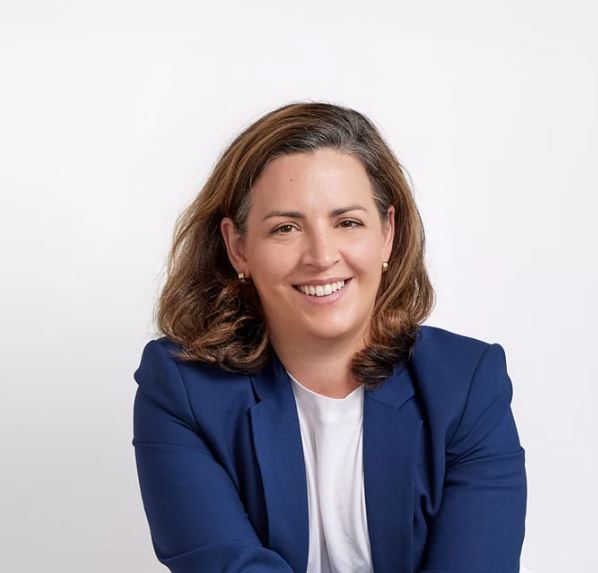
This episode, my guest is Emily Watts, founder and CEO of Coblr, a company building the digital infrastructure to connect and power the repair economy. In plain terms, software that runs a repair business end-to-end and plugs repair into brands' existing processes so that fixing something you own becomes as easy as buying new.
Emily spent years in corporate operations, was COO of a scheduling startup called “Sling” that then sold to “Toast” and she then went on to run her own mail-in repair business for two years, partly to understand the repair problem from the inside.
She describes her thesis by comparing it to resale, where the only option used to be sorting through racks at a charity or a thrift store until technology removed much of that friction and the pre-loved apparel market went vertical. Emily thinks repair is sitting exactly where resale was. The demand and the interest is there, but the intent dies because of the hassle. So remove that friction and repair will grow.
In this conversation, we get into why repair software needs modernised, how Coblr routes a repair to the best local artisan, the aligned incentives that means brands, repair shops, and the planet can all win at once, and also an AI diagnostic tool called “Sal” that aims to tell you what fix is needed from a photograph.
As always, the full show notes and links are at happyporchradio.com.
So here's Emily.
[00:01:46] Emily Watts: I'm Emily Watts. I'm the CEO and founder of Coblr. And at Coblr we're building the digital infrastructure to power and connect the repair economy for the first time. So for repair providers, we provide them with an end-to-end software to run their business, so it's fully purpose-built for repair providers and the unique needs of their businesses. And then we embed into the omni-channel experience of brands so that they can easily operationalise repair without complexity and having to build it in-house. We also can power in-house as well, but the main point is to make repair easy and accessible so that we can make repair as easy as buying new, kind of like how resale is now.
[00:02:33] Barry O'Kane: Welcome to HappyPorch Radio. Thanks for joining me.
[00:02:35] Emily Watts: Yeah, it's great to be here.
[00:02:36] Barry O'Kane: So one of the things that I love, that you use the term “digital infrastructure” 'cause that's a term that I use a lot as well, and it's one of the reasons or one of the fun themes of this podcast obviously is the role that technology plays in circularity.
So I'm very excited about this conversation. But almost before jumping into that, I think it's worth maybe taking a little step back and talk a little bit about your own journey and how you ended up running a software company focused on repair.
[00:03:00] Emily Watts: Yeah. I have been a consumer of repair my whole life. My dad, when I was young, taught me how to shine and clean my own shoes, and it just was very much part of the culture that I grew up in. I also have always shopped secondhand. And I have that as a backdrop. But, I was actually just in corporate America for a very long time at Fortune 50 companies doing all sorts of generalist, like strategy and operations work. And prior to this, I was the COO at a B2B SaaS company called “Sling” which did employee scheduling for shift workers, which we ended up selling to “Toast.” And while I was at Toast, it gave me the opportunity to think about my next steps.
And I decided I really wanted to dig into this pain point that I had experienced for decades: It's like every time I went to a cobbler or to have something tailored or even have, you know, actually my engagement ring fixed, it was very much an experience of you know, one, hard to find someone, and then once you do, it's just very much this, manual, opaque process where you drop it off, you get a paper ticket that's handwritten, and then you just have no idea when you're gonna get things back.
Which for my engagement ring, for example, it's really stressful 'cause there's a lot of monetary value there. But even just for goods that you love and are in your rotation it just felt like it could be a better experience. And I saw what Toast has done for the restaurant industry and those small businesses and just wanted to dig in and see how we could make repair easy and accessible. And as I was saying earlier, as easy as buying new. So when I was at Toast, I started my own mail-in repair business. I was not doing the repairs myself but we worked with a repair artisan in Boston and basically just ran our own mail-in repair business for two years to really understand the perspective of repair businesses, their pain points, the perspective of consumers beyond myself. And then also we brought on some very early brand partners to also understand that perspective.
So in addition to running the business and eating the dog food as they say, we also did a bunch of market research and talked to hundreds of repair providers and brands. And what we found is that you look across the entire market and there is no infrastructure that connects and powers repair end-to-end. So repair artisans are using software that's very legacy, so built-in like the early 2000s, and it's not even cloud-based, which is just wild. Or they're using generalist software that is not built for their unique needs. And then in talking to brands, we saw that most of them are running repair manually, and that's from, like very small boutique brands all the way up to multimillion-dollar fashion brands as well. And from that experience and like running our own business in the industry and then also all that market research, we decided to launch Coblr.
That's where kind of that digital infrastructure idea was born.
[00:06:29] Barry O'Kane: And was that always part of the journey? Like you described the mailing business as almost as if that wasn't the end goal, like that was a research project almost. Is that how you viewed it during that period?
[00:06:39] Emily Watts: I think we just had the vision of making, like “how do we make repair easy and accessible?” And we started there and then realised "Oh, this is a much bigger thing. It's not just about having a digital intake for repair. We need to fill a gap across the entire industry."
So it was more just like us starting in one place, learning a lot, and then realising that there was a really, much bigger gap than we had originally expected and so we pivoted.
[00:07:12] Barry O'Kane: Yeah, that makes complete sense.
And, so let's talk a little bit about what Coblr looks like 'cause you've mentioned several different groups or stakeholders so can you describe how that joining works? Where do different people, different groups fit in?
[00:07:24] Emily Watts: Yeah. So we started with repair providers because, you know, have a repair program without the people who actually do the work. And so we started there and really just building software to help them run their business end-to-end in a modern way. So obviously we're cloud-based. But then also help to automate a lot of the tasks that are very burdensome for these companies. So for a lot of repair providers, they spend a minimum of eight hours a week just on administrative work, which can be automated. And a lot of that administrative work is customer communications and follow-up. And so we wanted to basically streamline their digital kind of whatever they had cobbled together in terms of products into one and automate as much as possible so that they just could improve their business operations.
And we always talk about like shoe put, right? How can you increase the shoe put of these repair businesses or for a tailor, you know, we would just call it throughput or whatever it is.
[00:08:32] Barry O'Kane: And just before we move on, that feels like a really valuable piece because these, particularly the smaller repair providers, my impression is that they're under real pressure. Like, there's fewer of them on the high street than there would've been a few decades ago.
So is that kind of the starting point for solving their problems? Let's just help you be more efficient and potentially add to margins and so on?
[00:08:51] Emily Watts: Yeah, exactly. Exactly. And then, the more we scale having these repair providers run on our software gives us a really stable kind of supply base when we open up to our larger enterprise brands because we can, you know, it's all anonymised data, but we can understand if a repair provider wants to be in our network where we send them demand from our brand partners, we can see, kind of, quality metrics and KPIs because they're running their whole business on our software, right?
So that means we can understand, do they actually have capacity? What is their kind of average turnaround time? Are they meeting the KPIs that we set? Which really helps with, obviously quality control, which in any marketplace is the top metric that you wanna keep an eye on.
[00:09:44] Barry O'Kane: And then you mentioned the brands and you described, at the start, two different approaches. Can you talk a little bit more about that?
[00:09:50] Emily Watts: Yeah. For brands, they…a lot of brands already offer repair or they want to offer repair, and just the complexity of standing that up is often the barrier to doing it. and then if a brand already has a repair program, it's typically very manual and leaves a lot of the, kind of, the onus of the repair on the customer. And, the whole kind of impact of repair is really, it's a CLV driver, right? It helps with loyalty and retention from the, kind of, the consumer perspective. And if you're, having a consumer come in and you're just like, "Oh, these are our preferred partners. You can reach out to them” or “Send it in to us and then we'll bring it to them." But there's, again, it's kind of this opaque experience. You're not actually reaping the reward of having a repair program. There's a lot of value that's being left on the table. And so we wanted to fix that and really make repair and warranty and care a modern experience so brands can actually reap the benefits of those programs.
So what we saw in working with a bunch of our early brands and then doing market research is that every brand is unique in their needs. But generally they want an omni-channel experience. So in many cases we will start with their customer service team. So that customer service team is fielding calls every day, emails, chats of customers wanting to repair and going to their brand to, hopefully, get a recommendation or something happened to their item and they go to the brand first.
And before Coblr, there's no solution or it's a solution that the consumer has to basically do all the work. So we can embed into the customer service experience so that team can just order a repair on behalf of the customer or direct them to the branded experience that we have for brands and their customers to order repairs. And then we also embed in retail because a lot of brands really use repair to get foot traffic or get their customers back into store. Because obviously if you're in the store, you're gonna look around and do some window shopping and probably make a purchase. So it's a great way to re-engage the consumer authentically. And then obviously we have an online experience as well.
So really trying to embed repair where there's the highest intent for a brand. And then we also have a few partners on, like the return side. So this isn't customer-facing, but it's the ability for brands to recoup value from their damaged returns. And basically if a damaged return comes in, our network of providers can repair it, and then it can be basically supply for a resale program or however the brand wants to resell it.
[00:12:59] Barry O'Kane: That's really fascinating. What I haven't mentioned yet is that in this season of the podcast, our subtitle is "Technology Isn't Magic." And I think what I'm driving at with that is like the human interactions and just looking at the technology as a one-dimensional thing isn't magic.
And what you've just described there is really interesting because you're talking about more than just, you know, “Hey, there's a button on the website” or something, but with things like the customer service and the in-store experience and the branded on, and that full journey. And I assume that also means when you're building out your service and the technology, you're needing to think about like how the customer service, you know, they're a user of that platform and how that works in store.
And so that's a little bit more, maybe I'm putting words in your mouth now, but that feels like it's a more holistic than, “Hey, I just built this platform and you can log onto the site” or whatever.
[00:13:46] Emily Watts: Yeah. I think repair, even if you have technology behind it or the post-purchase experience, it's an experience, right? So it's something where humans are involved, and if it's done well, it has huge impact for the brand and the consumer. So our whole goal is just, making it easy, and embedded at any point in the experience where there is intent to repair from a consumer.
I was going to say the other side of it too, so we have our network of repair providers that we route. So that kind of omni-channel experience, an order is placed, because these repair businesses run on our software end-to-end, we're able to intelligently route that demand to the nearest and best provider. Or we’re constantly looking at the metrics and capacity to really understand where to send it. But there are also examples of brands and we see this a lot with heritage brands, they actually have an in-house repair team. And the software that we have for repair providers can be used for that team as well.
So there’s a flexibility in the infrastructure that we're building that- it's very much a shared infrastructure that can be used in a bunch of different ways.
[00:15:08] Barry O'Kane: Like, as somebody who builds technology, I find that a really valuable deep understanding that you've built up to be able to say, "I'm not just building this tool, but I am fully understanding who and where it plugs into the existing infrastructure."
That's really important, I think, especially given the rate of change of, like the way software is developed now. We're commoditising large chunks of the building a tool process, and so the really valuable part is what you just described of understanding this is the vision for the tools, these are the problems we need to solve, and these are the touch points that we're really plugging into.
And so my feeling is that that flows directly into, like literally into the code that you're building out.
[00:15:45] Emily Watts: Yeah. Because we're so deeply integrated into these workflows and we're gathering millions of data points, it gives us a really strong defensibility, right? It's like everyone talks about the SaaSpocalypse, And which is totally true. But it's exciting because our software, it's a vetted marketplace, so it's hard to replicate, but also we're so deeply entrenched in these workflows. And we do have this large data set that is allowing us to continuously improve how we do business. So one thing that we're really excited about and this is in alpha right now but we have an AI diagnostic and quoting tool. His name is Sal. It just one pain point that we saw when we were running our mail and repair business is that a lot of consumers don't know exactly what they need, especially when it comes to complex repairs like footwear and handbags.
A lot of people know with apparel, it's like, this needs to be hemmed. It's obvious it's too long or there's a hole. But when it comes to other things, a lot of consumers just don't know what to choose. And so the diagnostic tool just allows a consumer or even a sales associate in a retail location or a customer service team member, it allows them to upload a couple images, a description, and it will essentially use computer vision to assess, and diagnose the problem.
So it needs a resole, there's X damage, and then also this is a range of how much it will cost.
[00:17:21] Barry O'Kane: And that feeds neatly back into what you were saying before about at the moment, repair often feels like a job, me as the customer like it's an extra, massive extra task for me. And not just the, I need to go and find who can, you know, where does it repair and I describe it and there's a lot of jobs.
So the easier you make that, the more it will be used and the whole thing can join up.
[00:17:41] Emily Watts: Exactly. So just trying to remove friction, right? Because, I think one thing we always talk about at Coblr is, you look at resale and, shopping secondhand. And this still exists, but for most of my life, shopping secondhand has been going to a Goodwill or a small secondhand boutique, and you just sort through the racks. And now all that friction has been removed because of technology, and we've seen the industry, whatever, like 10X. So there was the demand, but it was held back by friction, and once that friction was removed, the industry skyrocketed. We think that the exact same thing is happening in repair, right? It's like people want to do it, but the intent to repair dies because of the friction, right? It's like people want to do it, but oh my God, this is painful.
So that's our whole mission is just let's remove all the friction as best we can. And that's where Sal comes in. That's where kind of embedding into the omni-channel experience comes in. And then even, if a consumer goes in person to one of our repair providers using our software, it's a modern experience, right? And so it's just basically, every time someone repairs and Coblr is involved, it's gonna be just like buying a new T-shirt online or whatever it is.
[00:19:04] Barry O'Kane: Can you talk a little bit more specifically about that? 'Cause you described that as a modern experience, and then earlier in the conversation, you talked as well about it being opaque. Like you said "I don't know where my thing is and how it's coming back." What does that look like for me now if I do take something to repair or pass it through the brand? How does that look like to me?
[00:19:20] Emily Watts: Yeah. So you basically place an order, you get a text confirmation with the order number. I like to say it's a little bit like a Domino's Pizza Tracker. Like a repair provider has all their orders in one place. And so every time the status is updated, the consumer is notified of the update too.
And then when it's ready and shipping back or if it's ready for pickup, they're notified as well. And then we actually are about to launch two-way SMS so that it's easier, if there is an issue or the repair provider has questions, they can just easily communicate back and forth with the customer, and it's all, for the repair provider, it's all in one place. But for the customer, it's just text, right? And it's ubiquitous. Everyone does it.
So it's just easy in terms of the communications, but then it's also very transparent for the consumer as well. And then also all those status update comms are automated, so managing that customer relationship for the repair provider, there's no burden for them.
[00:20:22] Barry O'Kane: And that's, like you described, not easier to make it as easy as new, not just for the customer, the person with the item to repair but for everybody in that chain. Because that is what it's like if you're doing traditional linear retail, for example. All these tools exist. They beautifully integrate with delivery systems. I get emails and predictions of when things are gonna come to my door and so on. And therefore, that's my expectation, not just as, but as everybody involved.
[00:20:47] Emily Watts: Exactly. Exactly. And I think with repair, it's an art, right? So you can have this transparent modern experience, but I just feel like there's a little more grace, too, with the ease of the communications for a repair provider to basically communicate any changes to a consumer, right?
So a lot of times there'll be an estimated completion date based on a photo, but then once the repair artisan opens up the item, it's like, "Oh man, this is really bad." And so it's just "Okay, this is actually gonna take two weeks longer," or whatever it is.
Historically, sometimes that wouldn't even be communicated, or it wouldn't be communicated until the completion date had expired and the customer was reaching out or showing up in store.
[00:21:36] Barry O'Kane: You answered my next question already, but thinking about the scale there, because what's one of the differences with any circular business model or approach is that you do have the “one of one” problem. Every item is unique in some way, and therefore, the journey needs customised or it needs so much flexibility built in.
And whereas for linear, I can do the same process for, you know, the whatever three million items I've got, and it's all the same thing just repeated.
Is that or would you say that's one of the biggest challenges you're facing? Or how far is that mastered, if you see what I mean?
[00:22:07] Emily Watts: I think it does add complexity, but I think it's also a really beautiful reason for technology, right?
So there is, every item is unique, is a snowflake. But with data, there's a certain amount of just standardisation you can do for the process. And with Sal, for example, that helps us learn each item and be able to, basically better predict how long something will take, how much it will cost so that you know, something where there was no detail, now there's at least guardrails of “Okay, this item is gonna cost this much, it's gonna take generally this long” and we have a consistent experience to manage that.
[00:22:56] Barry O'Kane: Just to step back to something else that you mentioned and I'd like to explore a bit, and that's I guess the “why. “There's got to be a commercial story for all of your actors in this 'cause, it's fairly complex, your stakeholders and users are fairly varied.
So I'm interested in, one thing you touched on, is the brands are interested in customer loyalty and retention. And that feels like that's a potentially really nicely aligned story. So I'm interested in exploring a little bit about that, and then also the same question for the repair providers and me as a repairer.
Where the friction points or what's the pitch look like to those different groups?
[00:23:31] Emily Watts: Yeah. So for brands, and well, increasingly there's also a regulatory pitch as well, so you don't wanna, not be compliant. But yeah, I think the pitch is real, at least for us, we will embed it into your experience. We're building out basically a Shopify app to do that so that all they need to do is basically flick the switch on, and then they have access to our entire network.
So it's basically a repair program with no operational complexity and that is omni-channel and because of the platform that we're building for brands, there's also the data behind it for them, so they can understand which customers are repairing in which channel, and then what they're repairing, right?
So what's the SKU level data, which has a really lovely feedback loop into product development and understanding, you know, quality and kind of the life cycle of an item. So that's the brand pitch for the consumer repair side. But then there's also, recovered value side of things as well for brands.
So, you know, this doesn't work for really cheap products, but it's hey, if you have an item that has an MSRP of $200 and it's damaged, it depends on the repair. It could be $5 to $40 depending on what it is, and you can sell it at 80% of the MSRP versus in many cases, I guess not in the EU anymore, but in the US those items often are sent to landfill then burned, which not enough people know about. Or it's liquidated.
Repair offers a really nice path to recover that value, especially for higher value items, and it fits really nicely into brands that already have a branded resale program 'cause that basically in many cases ends up being like their supply if they're not doing peer-to-peer. So that's the pitch for brands. And then for repair providers, there's a few different pitches but one of them is like, you know, this is a purpose-built software for your business, so instead of having to run your business on five to ten different solutions, it's an all-in-one solution for you.
Oh, and by the way, if you're accepted into our network through our vetting process, you can make additional revenue for your business monthly. As repair providers that are using us right now are making 20% more than they would be in the past on a monthly basis.
[00:26:06] Barry O'Kane: Which is an obvious ROI on paying for the tool, I assume.
[00:26:10] Emily Watts: Yeah. And I think, a lot of repair providers that we've spoken to, they've been wanting to scale and have just that consistent revenue so that they can grow their team. But there's seasonality to repair and they've just never had enough kind of consistent work through the year to justify growing their team, and now they can.
Several of our repair providers in our network have scaled their businesses, have hired more people, which is very exciting for us. There's a lot of, kind of, like positive impacts of what we're building. Obviously there's the keeping items out of landfill side of things but the other side is the economic development for these small businesses that I am very jazzed by. So…
[00:26:58] Barry O'Kane: Quite rightly too. I think that's such a beautiful example to geek out about the circularity stuff a bit, right? Those aligned incentives are going well. There's a material sustainability story to be told about things not going to landfill, keeping things in use at their highest value, and the local economic impacts.
And I emphasise local because you're not just talking about something distant, but you're talking about a network of these people in different locations. So that's a powerful story to be telling.
And I'd love to keep going and exploring that even more, but I'm just looking at time. And there's one last question I wanted to explore a little bit, which was then looking forward to the future.
What are you excited about for Coblr next?
[00:27:31] Emily Watts: Yeah. So we have some big news coming down the pipeline soon, but it's not public yet which I know is kind of a cop-out of a response but I'm excited about that secret news. New big brand partnerships and really just tech build that we have lined up for the rest of this year is super exciting. We launched this product a year ago and very much started on the repair provider side, but now we're really building out the full infrastructure, to connect everyone digitally and leveraging obviously like, AI and machine learning. So yeah, the roadmap I'm very excited about and these upcoming partnerships and then some other news which I'm sure you'll see on LinkedIn.
[00:28:21] Barry O'Kane: That gives us a chance to talk about where people can go and find out about that big news and also just to reach out and learn more about what you do?
[00:28:28] Emily Watts: Yeah. So you can go to coblros.com to find out more about what we do for brands and repair providers. Our Instagram is Coblrshop, and we're Coblr on LinkedIn as well. And then again, I'm Emily Watts, I'm the founder, so you can just search me.
[00:28:47] Barry O'Kane: Awesome. And that's C-O-B-L-R-O-S.com for Coblr the same spelling everywhere else, I assume. As usual, all those links, full transcript, everything we've talked about will be in the show notes to wherever you're listening and also on happyporchradio.com.
Thank you so much. I really appreciate your time today.
[00:29:04] Emily Watts: Thank you. It's great to be here.
[00:29:09] Barry O'Kane: So that's it for this episode. Thank you again to Emily for joining me. I'm really looking forward to seeing where she and the team at Coblr take their solution.
You should definitely go and join the mailing list at happyporchradio.com. That's how we keep you in the loop.
Thanks for listening, and see you next time.