
[00:00:12] Barry O’Kane: Welcome back to HappyPorch Radio, where we look at circularity through a technology lens. This is season 10, “Technology Isn't Magic” where we're exploring where technology actually meets the messy reality of how people and organisations work.
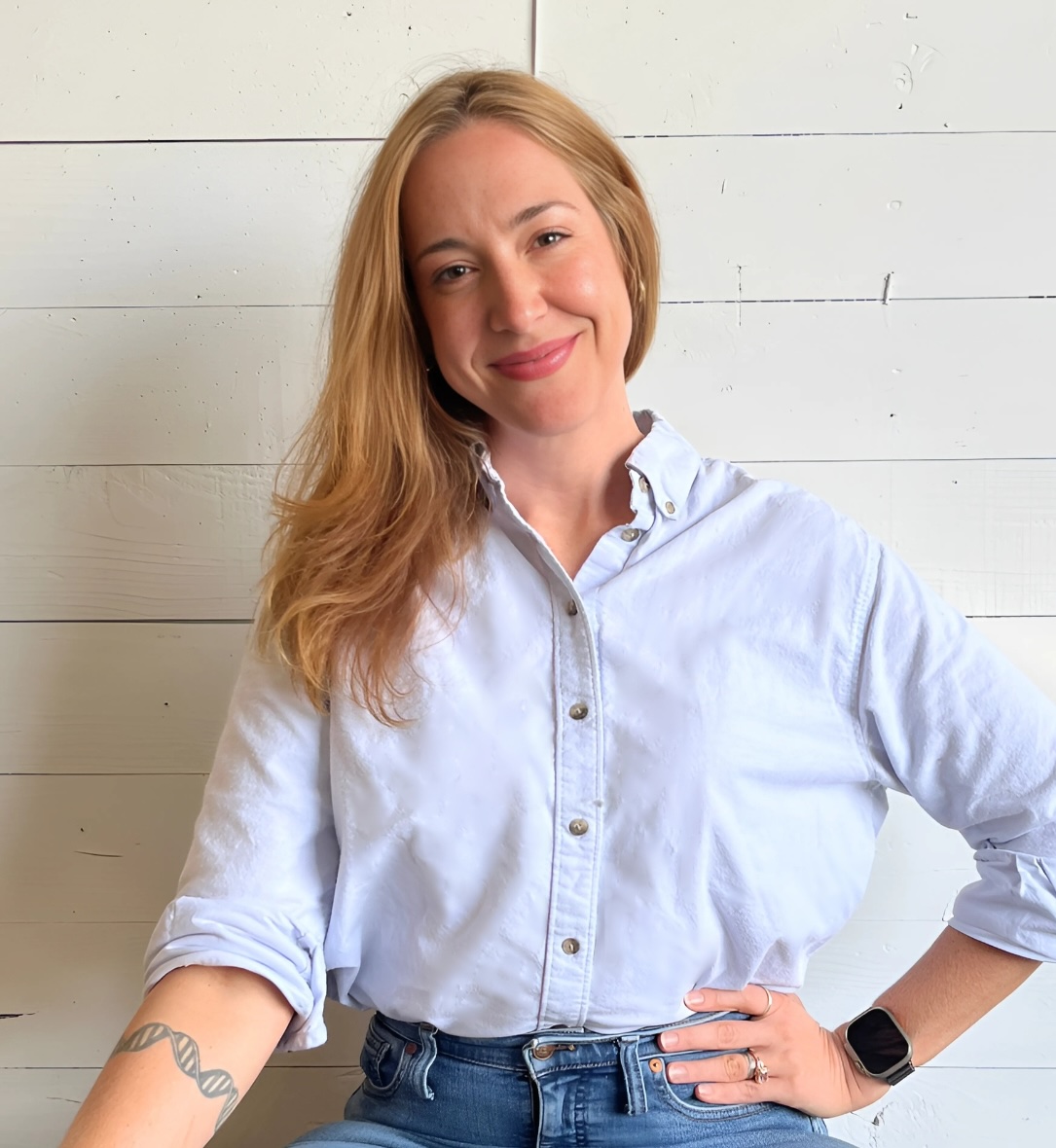
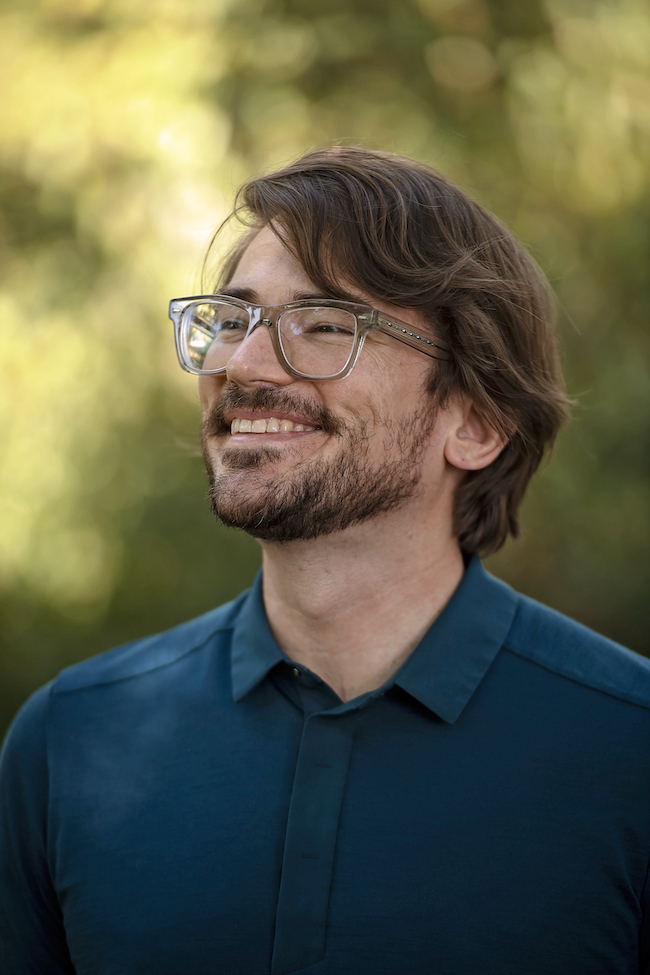
My guests this episode are Robin Atkinson and Cash Acrey, the two founders of Upkept, an online repair and alterations platform based in Arkansas.
What you mail in clothes you want fixed, they repair them in a central facility, and they send them back. Robin says this should be as easy as ordering delivery. Often we talk about repair as the sustainable and the more circular option. Robin and Cash talk about it as a skilled, creative, well-paid work that people actually want to do.
Robin's line is that professional sewing is as hard as welding, and that people doing it would rather fix a one-off garment than sew the same seam 10,000 times, making new stuff.
That sits right at the heart of this season. The technology isn't the product. Repair is the product, and the software exists to reduce friction so the human craft can scale.
In this conversation, we get into the journey to repair, why their workforce prefers repair, and the tension between repair and being one of a kind and needing to run at scale, how they built a whole platform from scratch on a shoestring using AI coding tools, and why turning down the wrong kind of money is part of keeping the whole thing aligned and successful.
As always, everything we discussed, the full show notes and links are at happyporchradio.com.
So here's Robin and Cash.
[00:01:43] Robin Atkinson: Hello, I'm Robin Atkinson. I am the founder and CEO of Upkept, which is an online apparel repair and alterations platform.
I have nine years experience sort of innovating in the sewn trade space and have become obsessed with getting the unit economics of repair to work in America
[00:02:01] Cash Acrey: And I'm Cash Acrey. I am the CFO and CTO of Upkept. I build out all of our tech and financial models and things like that. And I am also in my day job a finance professor at the University of Arkansas.
[00:02:16] Barry O'Kane: Welcome both of you. Thank you so much for joining me. I love the fact that you're all wearing seven different hats. It's very difficult to write up.
[00:02:22] Robin Atkinson: He didn't mention his most important job, which is actually to be my husband. I can't believe that got left out.
[00:02:30] Barry O'Kane: That could be taken as read. That's just assumed to be the most important job.
Now regular listeners will know the title for this season of the podcast is Technology Isn't Magic.
And so very much as we're looking at circularity from a technology point of view, what I'm really interested in is the human technology interaction and where the technology is actually impactful and useful. So I'm really excited about digging into that.
But first of all, let's set the context. Tell me a little bit more about what Upkept is and where it came from.
[00:02:56] Robin Atkinson: So Upkept is an online apparel repair platform. We have a centralised hub in Northwest Arkansas where we're based, and it's a mail-in program that's serving the entire US, so we've shipped now to 26 different states. And the thesis really is, in order to get repair to the American closet in a way that is accessible, affordable, and efficient, it really must be done in a centralised facility.
So what we're wrestling with is all of the complexity of sewn trades, the labor elements, the logistic elements, it's very infrastructure-heavy, it's very hands-on, but we're trying to bring it into a sort of modern era and make it something that is most importantly accessible, right? I think that for us, the main problems we wanted to solve was getting the price barrier down, and then also making it easy enough that people will do it.
If I have to go physically to 16 different places during business hours, or I can't get an appointment, I'm never gonna fix my clothes, and so we wanted to make it, we like to say as easy as delivery or DoorDash. So that's where the thesis of the company is.
Where it came from, I'll try to be very brief, which I'm terrible at doing, but basically, I spent several years trying to figure out how to build jobs in sewing in the United States in a way that would meet demand where it's at and get to be financially viable. And over many years of trying to build this business model out, the thing that I learned was the demand for new production was not where it would need to be for that model to be successful, but there was the potential that repair would actually be an interesting and potential growth area.
And also the workforce that we would tap to do this, these projects, were more interested and more capable of learning the repair skill set than the in-line manufacturing skill set. So it was a moment of like, “Listen, the folks we're working with want to be doing this work instead, and there may be actually customers for this work instead, so let's look at what the market looks like.”
And I remember when I came home the night that I had the idea, and I came home and modeled the financials on just for funsies, what does it look like if repair becomes a viable option? And I remember, I don't know if you remember this, Cash, like me just turning the computer around to you and going, "Maybe we should look at this as an opportunity." Because I'm married to a finance professor, then we were in the numbers forwards and backwards.
[00:05:26] Barry O'Kane: So one thing that's interesting about that for me is that you're coming at that from the skill set, from the job, from the workforce point of view, rather than from like a repair specifically.
And just to be really clear, you're not talking about Upkept as a matching service to existing business repairs, seamstresses, and that kind. Actually, you have a warehouse and you're looking at the operations, right?
[00:05:48] Robin Atkinson: Yeah. We have built the capacity from the ground up. I have nine years experience running a nonprofit that specifically focused on sort of sewn trades education and workforce development. So I feel of the things I'm confident of, one of them is building workforce programs and opportunities specifically in sewing.
So I think having that background is really important. I don't know that I would have the confidence to step into this if I hadn't seen so much of how those programs and opportunities play out and really understanding how truly complex the projects are, and understanding that I am an evangelist for the value of sewn trades.
There is no such thing as unskilled labour, and professional sewing is as hard as welding, and I could just go on every platform in the universe and say that. And I think that part of what makes Upkept tick is our absolute obsession with how complicated the problem is and our all day every day is solving that problem.
And because it's not rocket surgery, as Cash would say. It's solvable, but it's going to take the intersection of workforce development, technology, and capital. We're just gonna have to get all these things aligned correctly. And luckily I quite enjoy that problem.
[00:07:02] Barry O'Kane: So you used the word there, it's a “complicated problem”, and I'd like to explore that a little bit briefly. Complicated in so many different ways, like you're pushing against headwinds economically. This is the kind of thing that used to be a mainstay on and still is in some places of the world, a mainstay on the you know, as a sort of tailor on the high street kind of thing. And that's in, both your country and mine, has largely massively disappeared.
And I'd like to explore that a little bit. But also then, and really interestingly, you mentioned that the skill set or the engagement with repair is different or more than with making new. So can you talk a little bit about that in more detail?
[00:07:40] Robin Atkinson: Yeah, absolutely. You're absolutely right. The workforce that would be capable of tailoring or repairing your clothes has fallen out in the United States. I think there's 30% fewer tailors today than there were 20 years ago. I might get that statistic wrong, but there were recently a few articles in the AP about it, which I was thrilled to see, right? Because nobody's been talking about tailoring for quite some time, so it was great to see that in the headlines. And then, when I first started building programs that taught people to sew, the goal was for them to sew, to design their own projects, and to build their own fashion lines, right?
I was involved in a fashion organisation, and I began to learn was one, how complicated this skill set is, but then also even if you were to become a fashion designer who was capable of designing and producing your own garments, you then had zero opportunity to get it produced anywhere else.
So you were either stuck with making one of ones, which is financially not viable for a designer to do, or you had to ship overseas and drop $10,000 minimum to produce 100 units of something that you are only gonna be able to sell seven units of. And when I learned that, I just thought “There has to be a better way to do this. This seems like we're missing some steps in the equation" So we began teaching people to sew for the manufacturing of products that were designed by regional, US-based designers. And we had an incredible amount of difficulty onboarding the skill sets of in-line manufacturing from first class all the way to graduation through production.
And I can identify several reasons why that is but I think that ultimately it comes down to mass production is more like engineering than it is like art, right? If you're going to sew 20,000 units of something, this is not an art problem, this is an engineering problem. This is something that requires an incredible level of precision, mathematics and replicability, right?
And the folks that are coming into sewing with interest are people who are craftspeople. They are using their hands as a utility, and those people tend to have a kind of haptic understanding of work with a kind of problem-solving mindset, and they took much more quickly to "Here's a pair of pants.” Fixing this pair of pants is going to be similar in every instance, but also different in every instance. So it's onboarding a skill set that you're then able to utilise rather than onboarding a mathematical, precise one seam at a time. So it was really interesting to me because if you're going to employ creative people, which is ultimately what we aim to do, you have to give them jobs that can feel fulfilling at the end of the day, right?
None of us wanna go to work…
[00:10:21] Barry O'Kane: Miserable.
[00:10:22] Robin Atkinson: And be miserable, yeah. Whether we are or aren't is sort of capitalism's problem, but I was really thrilled to look at this problem from that perspective and say, " Oh, so it's not that it's impossible, but it's varied and it allows for creativity to exist in the answer every single time."
But it also allows for a skilled manufacturing process that, I don't watch the folks in our warehouse get bored, right? If anything, it's more like "Could I get more of the same thing, actually? Could you, could I have two hours of hems only before you send me on another zipper fiasco?"
So it is varying. It's very much a problem-solving skill.
[00:10:58] Barry O'Kane: That sounds really positive. As you say, it's not just treating it like the manufacturing line, where I'm just spending all day doing one action.
But, is there a direct conflict there between the “We need to operationalize this, make it cost-effective, particularly for something like repair?”
[00:11:13] Robin Atkinson: Yes, absolutely. When Upkept is functioning at full capacity, what you'll see is niched downlines where we will have folks who get to do denim all day, right? And they'll be denim experts, and they'll get certain kinds of denim projects, and the machines will be set to denim, right?
And through that, we can get an efficiency that allows us to have a price point that's accessible. You'll get folks who are zipper experts and they're working on outdoor apparel, and it's like removing zippers and putting zippers in all day. Cash and I were at the warehouse the other day, and he asked me how many machines we would need to have with colour thread set so that we weren't having to change the threads out, and my response was, "How many colors are there, Cash?"
The answer is quite a few. I don't know that we're gonna need a magenta-only machine for quite some time, but there will be a day where you've got color stories and you have textile categories and it's a very different pair to do Lululemon than it is to do Levi's.
So there has to be some streamlining and some niching down, otherwise it won't be financially viable. But at the same time, every single repair is one of one. Every single garment, it's a different color, it's a different size, the hole is in a different place. And so we are seeing significant efficiencies that we're able to find when we can batch them out.
And for some reason, the universe likes us in, so far as when we get things in, we tend to get a bunch of the same thing at once. So a couple weeks ago it was seat repairs, like 10 different orders of seat repairs came in, and there were multiple seat repairs at a time, and the whole rack was seat repairs, and we're like, "Oh, fantastic. This is the week of seat repairs. We're gonna learn a lot about how to do this fast." But for everything that we can streamline, and Cash is working on this right now the number of edge cases, it's all edge. It's that thing you can't measure a shoreline because the more specifically you measure the shoreline, the more shoreline there is to measure, and I think that's what Cash is banging his head on right now.
[00:13:07] Cash Acrey: I also think from a people perspective, though, that we don't just want, like, all hyper-specialized, like, insects, right? We're not just looking for, "Oh, you are just denim," and, "You are just zippers." 'Cause I think some people will have a fundamental strength and skill set, and so there are bricks, and then some people are grout, right?
Some people want to go where the gaps are and just grab a problem and fix it. And I think, as this thing grows there's plenty of room for both.
[00:13:32] Barry O'Kane: And that sounds like a really interesting balancing act, right? It's a creative problem-solving, everything's one of one, and you need to be able to scale it to big numbers of people and you know, into a business.
Is it still too early to go “how's it going?” Is that the biggest challenge in the business? How are you feeling right now about that balance?
[00:13:49] Cash Acrey: I think the biggest challenge in the business is because this is tech that is enabling people. It's how fast can you ramp up and still fulfill all of your promises, right? It's not just, “Oh, suddenly we can just take on a million more users today,” right? It's not just add more server to it and we've got capacity. It's like the buildup of capacity and then balancing that with “these people have to eat.” We can't make empty promises to them, and we can't make empty promises to the customer on how fast or the quality that we're providing. That kind of, how much money do you put on marketing when this is the amount of capacity that you've got in the warehouse and like the pace at which you grow those. I think that's to me the biggest thing that's in tension.
[00:14:30] Robin Atkinson: It really is kind of like an orchestra problem of, once you get one part working correctly something else is gonna fly off. And so it's a matter of sort of you have to be looking big picture always and noticing where things are starting to shake so that you can align things there.
With every capacity growth that we have, something trips, and so you have to maintain really close watch over: Is quality steady but time is slowing, or are we working fast but we're not working carefully? It's just a matter of keeping the levels equalised, which will never stop, right?
That will always be the case, and so it's just a matter of growing in a way that you can build out jobs and dedicate and delegate where this person's entire job is equalising this one area. And then, somebody's equalising logistics, somebody's equalising quality. And so right now I would say the hardest thing is everyone's in charge of so much, and then the next hard thing will be that there's too many people in charge.
When people say, "Is it hard?" It's like it's hard now, and then it'll be different hard later, and it was different hard before. And I think it's ”don't start a company if that's not what you love to do.” And I'm having the time of my life, but whoa, it's never not something.
[00:15:53] Barry O'Kane: I also wanted to, in the context of you saying that it being a big challenge like that challenging and rewarding, but you also, Cash, used the word intention, and that's something that I really resonate with and kind of again, what this podcast and what I'm really interested in through the lens of circularity.
And one of the things I'm really hearing is the people part. So you talked about your motivation and finding and helping people develop those skills and then find rewarding work using those skills, and then you want to make sure that you're making business decisions that doesn't put them or your customers on undue risk.
So one, I just wanted to say I admire that and fully respect that and want to wish and want that to be supported more. But also I'm really interested in if you're feeling conflicts given that, like for example, the extreme of switching that off as you end up with, the ultra-fast fashion craziness you know, where they've externalized all the things that as humans we should care about. My bias coming into that observation obviously.
But, first of all, is that a fair reflection in where you're coming from? And two, do you feel conflicts in that you're also trying to build a business?
[00:16:53] Cash Acrey: I think that this is a business where it feels very aligned, right? Like the mission and the vision of where we want to go with this do feel like they're also doing the good things and the right things, right? We're not gonna outsource jobs. They're actually gonna happen here, and people are gonna maybe not be throwing some of the stuff away that's still good. There's, you know, all of these potential, positive kind of knock-on effects from that which I think make it a little bit easier to talk about, you know, like scaling up a company that is doing some healing, I don't know, sounds like that doesn't keep me up at night. That sounds like a kind of a good stance to take.
[00:17:31] Robin Atkinson: We spend a lot of time thinking about the sort of the guts of the company and the mission, vision, values, and the why we got up to do this and why anybody else would come hang out with us to do it. And I think that we have a very clear lock on the idea that first and foremost, if we aren't serving the customer, none of us have anything to do.
So the priority is, get this service to people as seamlessly and as cost-effectively as possible, right? Because I like to say that sort of I think the market for our service is every closet in America. I can't imagine a single closet that doesn't have a hole to be patched but if we make it hard, we won't get those customers.
And so first and foremost, you've gotta attract the customer, and then the second thing you have to do is maintain a workforce, right? And those two things have to be in constant balance with one another, and I mean, there are often times that I come into the workshop and I'm like, "No, you're not gonna email the customer that. That's a crappy thing to say." And you're like, "Certainly not going to say it. What you're gonna do is let me get on the phone with that customer, and I'm going to say all of the lovely things, and then you can say the things to me that you wanna say to the customer." To be that translating layer.
And then at the same time if a customer comes in with insane demands or they want us to replicate miracles and they send us something that's made of moth holes "Okay, take it out on me," right? "You can't bring that to my team. That's not for them. That's for me." And so I think that a big part of what we want the tech to do is absorb both sides of the friction there, where it's like, " Put it in the notes, okay. Put whatever you're mad about with the garment in the notes. We won't send those notes to the customer, but they will get implemented into the system. We'll have learned something." right?
And there's a path forward where we take bad investment and they say, "Reduce headcount, work faster, squeeze your margins." And I think our main job as founders is to just not take that money, right? And easier said than done sometimes when you're looking at your bank account and you've got payroll to make. But we're trying to grow at a pace that is manageable with the kind of capital that we would like to attract.
And so my job is to go talk to investors and say, "Listen, I am a stubborn, weird, sometimes argumentative redhead who has very big feelings about labour. Would you like to give me money?”
[00:19:51] Barry O'Kane: That's the most elevator pitch I've heard in a while. Yeah, I love it.
[00:19:54] Robin Atkinson: Does that sound fun for you? And if they say no, like good.
[00:19:59] Cash Acrey: But there's something really quite delightful about the fact that if we compromise early, we actually shrink the size of the opportunity too, right? If we suddenly don't make the product as smooth and as accessible for the customer as possible, we can take a large part of a small market rather than expanding the market that doesn't exist yet.
Because, there’s really not an industry there. There's a lot of kind of niche boutique places that you can get this done, but there's not an opportunity at scale. And so to reach scale, that's still in alignment. You need to keep doing the right thing if you want it to be big.
[00:20:36] Barry O'Kane: I 100% agree. I get really excited about those aligned incentives that you're talking about. I think that's one of the promises of circularity as a concept and why that intention is so important. I've recently been reading "Incorruptible," which is Eric Ries' book. And I feel like there are some people in the mainstream who are catching on like after 15 years of some of us shouting into the void, but that's an aside. But what's really interesting there is he talks about those aligned incentives a little bit, and like you're talking about, if you're able to stay focused on that vision, the more you repair and the more work you have and the more people you can employ with this mindset, if you've got controls around it, then the growth equals the success rather than conflicts with the success, which is quite an exciting prospect.
[00:21:14] Cash Acrey: Robin's computer is sitting on that book right now.
[00:21:16] Robin Atkinson: I was gonna say, I'm gonna let Cash chime in on that. Cash bought that book for everybody. He bought four copies and was just handing it out, and then he noticed that I wasn't reading my copy, so he bought me the audiobook and then gave my copy to somebody else. And we went on a road trip the other day, and it was like “we could listen to music, or we could listen to the first chapter of Incorruptible again."
[00:21:36] Barry O'Kane: Awesome.
And also you mentioned the technology there, which is a nice segue for the second thing that I really wanted to spend a few minutes digging into. So one is you have built out your own technology as you described. First of all, you prefaced all of this with what the technology needs to do, which is a really powerful, clear understanding, and that for somebody who builds technology, it's weird that this would be possible, but it's what happens all the time, that it's not the barrier, it's not the thing in itself. It's the less friction there is, the more powerful the technology is. And that's not an easy thing to do, especially when you're building from scratch, and at the same time creating a business.
So maybe you can talk a little bit about that.
Cash Acrey: So yeah I think of our tech as like a mediation layer between the customer who needs to see as few options as possible, right? If we give them this giant menu, their eyes glaze over. They don't know the difference between the different technical things that do cost, like take different amounts of effort and materials, but they don't understand that. And they shouldn't be expected to bring like a technical competence in this industry to that product list. And, that's gotta make it down through like a pricing channel and a fulfillment channel to the people that will actually be producing this. And they're often wishing they had more information and that the customer was asked more things.
You go to a tailor and they can fill out this really elaborate sheet about what type of operation is going to the garment to repair it or to alter it. And that is simply incompatible with this model because we have to break that. We have to make it easier because otherwise we've created a barrier. We are trying very hard to make that tech layer do that hard work. We don't want the tech layer to just become like another AI wrapper. We're not like chasing the fads. We've spent a lot of time actually like just building the rudiments of how that works, just making sure that customer communications are clear, just making sure that, our website takes you front to back in a simple fashion and routes that to fulfilment.
And you can see we try to emulate like the Domino Pizza tracker style of what's going on with my pizza or what's going on with my repair, so you can go on the website and you can see that stuff. And then, we've got a lot on the back end that has to happen to make that work.
But we try to make it as smooth and simple as possible. And so it's really just to try to bake the intelligence into the system that is overhead so that where the effort gets spent is, you know, on the customer side and making sure that they're satisfied and then, that we're not adding a ton of layers of management and we're instead paying people to sew.
[00:22:09] Barry O'Kane: Yeah. And, first of all, that's really clearly articulated and slightly tongue in cheek, a very easy thing to say, but much harder to do, right? On the ground. So how did you approach that, right? So you're starting from scratch. One of the things I know you built that yourselves. And so was that a conscious decision? Did you look around and say there's nothing out there that does this, and we need to build it"?
[00:24:09] Robin Atkinson: Trust me, I was gonna say, if we could've used Shopify, we would have.
[00:24:33] Cash Acrey: We started with the idea that we were gonna, kind of bolt together SaaS solutions. We weren't just trying to become a software company. Because ultimately software is not the product, right? Repair is the product. There's a lot of, I think, companies that have tried to participate in the space where they're just gonna be a software layer, but they're gonna connect an industry that's aging out and customers that they're missing the puzzle.
So, you know, our tech, we couldn't find anything that actually does it. And we could spec out ways that would get close, but the level of customization that we would have to do, and then we'd be managing someone else's kind of rickety system that wasn't designed for the use case that we have. And it just seemed more straightforward to actually build it and know it, and then we could update it as we need.
[00:25:17] Barry O'Kane: Would it have felt the same way four years ago?
[00:25:21] Cash Acrey: It would've felt more expensive. I think I could've done it. I've got experience managing developers and speccing out big projects. But the startup costs would've been considerably higher. We ended up kind of doing this on a shoestring budget to start, and it would've taken considerably more time to get to a prototype, and it would've cost a lot more money in development time and coordination.
[00:25:45] Robin Atkinson: I love transparency. Probably I don't need to tell everyone how everything works, but, we've gotten a year in, all in, I think on the first $150,000 that we've raised, right? So we built a platform from the ground up, before we took any outside money. Is that true? Yeah, we have the bare bones of the platform before we even did our friends and family round. And so at this point, I don't think... Now there's no way we could backtrack and try to plug together other systems to make it work. I think it's so perfectly custom-built for exactly what it needs to do. But I'll say four years ago, there was no way we could have possibly done it because no one would have funded it, right?
No one would say, "Here's $500,000, build a speculative repair platform." And I know because I built a repair platform and nobody's saying, "Here's $500,000 to scale your speculative repair platform." But I think it really is the ability to go in and build quickly, ship something fast, try it out, tear it down, rebuild it, that we couldn't exist without, I think at this point.
[00:26:47] Barry O'Kane: So given that and it sounds, and Cash, obviously you had enough experience that you were comfortable going into that build process.
What were the challenges you faced with that and maybe a little bit about it things "Oh, this is an easy fix. I just, you know, tell the chat, tell the bot or tell the agent or Google it." How challenging did it feel?
[00:27:04] Cash Acrey: So in ways it felt really empowering because, on the database side, I was pretty good on my own code, but I'm more like the analyst project manager. I managed teams of developers and built the specs and handed it off and signed off on it and it was done. Done that. The piece where suddenly code is being produced from me, this is brand new. That was a miracle. My goal was to use it kind of in that standoffish mode of like, “let me whip up a prototype really quick and hand it to my devs."
And yeah, I brought together some developers that I know and trust a lot. And my backend guy, he was all in 'cause, you know, it was specced out pretty well from his side. My frontend developer was like, "You're gonna be paying me about 50 cents an hour to do this. This is so much work."
And I'm like I guess I gotta keep going. And ended up working. I found that when I started, I was arguing with the bots quite a bit. I had to wrangle them a lot. So my approach was to try to basically watch it on as many surfaces as possible so they couldn't lie to me.
I'd try to look at the UX and look at the console and look at the database and just make sure that from as many angles as possible, they were all saying the same thing and just testing it as I went. And now it's considerably smoother and less stressful. I've got some systems in place, we're doing automated testing now. We've got really nice planning and documentation on all the things that we're doing. It's maturing. It's growing up. My baby's growing up.
[00:28:27] Barry O'Kane: And that's a skill set, right? I think my question was leading towards that and what I'm seeing in the world is like there's a skill set in using these tools and understanding how to use them and understanding how to get and trust what you get back from them and be comfortable that it's gonna work and secure and everything and protecting your data, et cetera. But it sounded like you had enough background that you were able to take a running start at that.
Is that fair?
[00:28:49] Cash Acrey: Yeah I felt like the piece that I was good at was the piece that they really needed, right? Which was the “let's spend a really long time planning this out and writing down the steps of what the outcomes are supposed to look like and how we're gonna get there and what the tests look like.”
That felt very comfortable. The code part was wild and new.
[00:29:10] Barry O'Kane: Cool. I have a lot of context about AI and the challenges with it as well, but that what you've described is the perfect success story.
And if you're able to create this human incentivised, healthy business, healthy in every sense, healthy for you and the planet and all these things, that's an incredibly powerful sort of story and success story for these new tools.
And I'd love to keep exploring that, but unfortunately, we're starting to run out of time. So just to bring us around full circle given where you are now and what is the vision? Like what's next for Upkept?
[00:29:41] Robin Atkinson: So the goal next is to launch some brand partnerships and see what scale does, right? You know, we're doing around 100 repairs come through monthly from the D2C channel. And what's it look like at 500? What don't we know yet about is where it'll break? And then also I think the next big challenge for Cash will be plugging into someone else's system, right?
So API calling into someone else's sales platform or into a warranty platform. And Cash has been incredibly purposeful about making sure that we leave hooks, like the web hooks so that we can, I obviously know what I'm talking about. So that we can without having to overhaul everything, plug into whatever kind of partner comes along.
And my development work is to find us the best partners, who can come on board fast, who can come on board easily, who's willing to pilot and to test drive and to iterate. And so hopefully in the year 2026, you will hear our first brand pilot of some variety, and then 2027 will be copy and pasting that for bigger and bigger clients.
[00:30:47] Cash Acrey: The big vision is that it's a mainstream option. The big vision is that it's embarrassing for your company not to have a link out to repair with us, right? That it's something that you notice when it's missing because it's now standardised.
And the big picture is that, we become standard bearers in the industry and people know that this is a viable option. You don't have to throw away your cherished garments. We'll keep them alive.
[00:31:12] Barry O'Kane: I love it. And that's more power to you. Excited to see that come to fruition in the coming months and years. Thank you so much for joining me.
Just finally, for those listening who want to connect with you and find out more, where should they go?.
[00:31:24] Robin Atkinson: So the platform is at upkept.io and Cash and I are both pretty active on LinkedIn. The company's active on social media at upkept.io across all platforms.
Then you can email me directly from the website, which is something we'll see how long that lasts.
[00:31:42] Barry O'Kane: Awesome. So that's Upkept, upkept.io. As usual, all those links, full transcript, and everything we discussed will be in the show notes and on happyporchradio.com. Thank you both. I really appreciate your time. That was a really fun conversation.
[00:31:55] Robin Atkinson: Thank you so much for the opportunity
[00:31:57] Cash Acrey: Thank you.
[00:31:59] Barry O'Kane: So that's it for this episode. Thank you again to Robin and Cash for joining me. Speaking to folks like you both is energising and inspiring, and it's why I do this podcast.
A quick note before you go, we're planning an in-person HappyPorch Radio get-together in the UK to mark season 10, a chance to meet other people working on this stuff in real life.
Watch this space for more or join the mailing list at happyporchradio.com and we'll keep you in the loop.
Thanks for listening, and see you next time.