
[00:00:12] Barry O'Kane: Welcome back to HappyPorch Radio, season 10, which we've titled "Technology Isn't Magic."
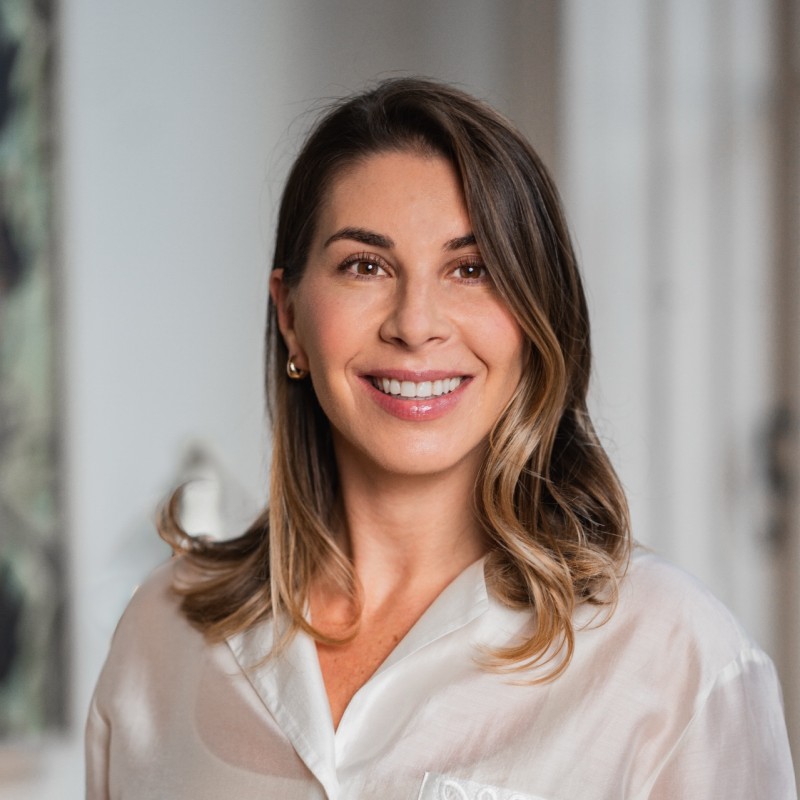
Today's guest is Anastasia Dellis, CEO of Orbisk, a company that uses AI and computer vision to track exactly what's thrown away in commercial kitchens, and then turns that into insights and guidance that cut the waste.
Kitchens are already fast-paced, stretched, and high-pressure places, and a chef doesn't need one more thing to log or check. So Orbisk built their tech to disappear into the background. No scanning, no extra steps, just a camera and scale that works while the kitchen carries on as normal.
The data is then used by multiple different roles. The chef is interested in what is wasted and ways to change that, a CFO is interested in margin impact, and the Sustainability Team are interested in food, carbon, and water saved, for example. The same bin, but three different data stories.
In our conversation, we get into how Orbisk designed for that zero friction, what it takes to align these different stakeholders, and how regulation is helping in some places.
And also Anastasia's own path into food waste and personal connection to the mission.
As always, full Show Notes and all the links at happyporchradio.com.
[00:01:23] Anastasia Dellis: My name is Anastasia Dellis. I'm the CEO of Orbisk, and what Orbisk exactly is - we use AI and computer vision to help commercial kitchens reduce their food waste. And how we do that is - it's a camera that fits over a waste bin connected to a scale that just captures absolutely everything that is discarded in a commercial kitchen.
So our AI computer vision camera captures above-the-bin waste, so we can capture the container type, whether it's a big tray or plate waste, and then we can capture over 800 ingredient labels above the bin. So very high-quality waste data images. And then we have a dashboard whereby we tell chefs exactly what is happening in their operation.
So we say, "Hey, Chef, on a Monday, you've got X kilograms of bread waste." And with applied AI, we take it one step further where we say, "Hey, Chef, with this five kilograms of bread waste, here's a recipe to change that bread waste into croutons." So, very practical and tangible way of applying AI into their operations.
The focus for our brand is within the hospitality food service sector. We have operations in over 55 different countries, and we work with brands like Marriott, Accor, Hilton, IHG, Carnival Cruise Lines globally. We operate, as I mentioned, across 55 markets. So very strong brand presence globally, very strong adoption of our technology.
All of these brands have very stringent and strong auditing requirements, ESG requirements, and then most importantly, it's a no-brainer business case. From an efficiency perspective, there's very clear margin gains once you deploy an Orbi monitor within an operation.
[00:03:07] Barry O'Kane: That sounds amazing. It's so perfect for what I love to geek out about a little bit, is that, is the role of technology in, as you're describing, and having that kind of impact in circularity generally, specifically here in waste. So I'm really excited for this conversation.
Just as a reminder for the listener as well, the season title for this season of the podcast is "Technology Isn't Magic." So what I'm really looking to explore, partly with this conversation with you, is that role of, like you say, making the data actionable and the human, and I assume, behavioral change and that kind of training and that kind of conversation in the kitchen.
But before we get into that, let's quickly step back and talk a little bit about you and what led you on this journey and how come you ended up working in food waste?
[00:03:48] Anastasia Dellis: Of course. Amazing question. I have an unconventional background and story. So I have over two decades of working experience, which is an amalgamation of having worked both in corporate and scale-up environments.
As I mentioned to you previously, I am South African, as you can hear from my accent. So my mother is South African, my father is Greek, and very cliché, my father, an immigrant from Greece in South Africa, owned a corner café that I basically grew up in.
So every weekend, school holidays, I was in my father's shop. And then after my studies at Stellenbosch University, went on to work for Africa's largest retailer and then later on in my career, China's largest retailer.
However, over the last eight years, I really found my sweet spot in startup and scale-up environments. I made the change of moving out of corporate, I'd say midway through my career now, where I really wanted to be in more entrepreneurial environments that are fast-paced, that I had more autonomy in, and faster decision-making.
And I organically joined Gorillas where, if you are familiar with Gorillas, but basically one of Europe's fastest-growing startups back in 2020, 2021. We raised over a billion euros, opened up nine markets within six months, and basically pioneered the quick commerce industry within the European market.
So it was a very natural and organic shift from working in retail corporate to a startup environment where we scaled. I then went on to work in clean tech, and then was approached by the investors of Orbisk, now almost a year and a half ago. And they mentioned that they were looking for new leadership for the next season of Orbisk, and the current CEO and founder wanted to continue staying in the business.
So it was a little bit of a red flag, if I'm completely honest. But I was blown away by the technology, and I was blown away by the problem that Orbisk was solving.
Having grown up in environments like South Africa and in Greece, specifically South Africa, where socioeconomic disparity is so prevalent and food scarcity is top of mind, in parallel with a very rich, natural, abundant environment, I've always had a very deep passion for nature, for preserving the planet. And being able to find this intersection in my career where I can use my professional experience as well as find that alignment and purpose of what brings me joy felt like this perfect sweet spot at Orbisk. And then when I met Olaf, who was in the role of CEO previously, it was an instant match, complete alignment.
We have very complementary skill sets, and I immediately bought into his vision, which is to become the global category leader within food waste intelligence, and then also longer term become the intelligence layer within a kitchen. So if you can imagine a moonshot vision of a fully automated zero-waste operation within the future, and super excited and inspired by the work that he's done as well as together with the Orbisk team.
For me, it felt like a no-brainer to step into this role and use my experience from corporate and scaling to really help this next phase of Orbisk.
So I've been here now for almost a year, have brought on additional leadership, have made some changes in the team, and we are scaling and growing really nicely.
We opened up in the APAC region in the beginning of this year, have strengthened our presence in North America, and we continue to add yeah, marquee logos and brands in our portfolio. And Olaf is now in the role of Chief Impact and Innovation Officer, and his responsibility is unlocking new frontiers.
So instead of just focusing on the hospitality and food service segment, he is focusing on new verticals, which is very exciting for us.
[00:07:35] Barry O'Kane: Yeah, and that's pretty exciting, especially for, as you say, somebody who started the business. He gets to continue working on that innovative new stuff, which I'm sure must have been what drove the whole startup in the first place, the whole concept in the first place.
I'm really interested, just to quickly explore a little bit of what you talked about there in your background and feeling like you're connected to the mission because you have seen disparity and what you described in South Africa. And I know that Orbisk is a B Corp and so are we, and I'm just really interested in how important you see that sort of alignment of mission to something like, which is, a technology and a very technical business?
[00:08:08] Anastasia Dellis: Yeah. Personally, my values are completely aligned with the founders' values, which is having the mission at the center of what we do is absolutely fundamental. And so the investors that we attract into our ecosystems, the team members that attract into our ecosystems are equally as obsessed with solving this problem and the mission as what we are, the founders and leadership of Orbisk.
And, ultimately, it's safe to say that the customers that we're selling to and the users that we're selling to, may not be as mission-aligned. So I don't want to stereotype, but there are certain markets that don't have scalability as a number one agenda. And that is completely okay for us because we know the consequence of still deploying an Orbi monitor in their environment, it will have a positive impact on the planet and it will have a positive impact in the value chain.
So whether they are investing in an Orbi monitor only for an efficiency gain and margin gain still is totally fine with us. We're very intentional about who we include in our immediate ecosystem. As I mentioned from investors, team members, it's really critical for us all to be mission-aligned and then non-negotiable though about talent that are as obsessed with solving the problem and really taking what is now an early adopter technology to becoming a commoditised product within every single commercial kitchen.
[00:09:41] Barry O'Kane: Yeah, that makes a lot of sense. And you've sort of, segued nicely into where I was thinking next is that alignment of incentives. And for me, for somebody very obsessed with circular economy and circularity as a concept, I think it's so key that you have those aligned incentives, as you said the impact or mission outcomes that you're looking for along with the business model and the approach. Because if those things are aligned, that's obviously gonna lead to success in both rather than potentially them being in conflict.
So can you talk a little bit about that, and what the business looks like, and as you said, the sort of efficiency and other benefits beyond that we're having an impact on the waste that the folks who use the technology gain?
[00:10:17] Anastasia Dellis: Yeah. So what you'll see on a Orbisk dashboard is a very clear insight to what is happening in your operation, as I previously mentioned.
So what we want to do is make it very visible to the right user what is important to them. So, for example, a CFO wants to see their efficiency gain. A chef wants to understand exactly the amount of food waste or food cost associated with that waste on a category level, on an ingredient level. Someone operating within the sustainability department would like to see beyond the food waste, what is the carbon emissions, the water waste that was mitigated. So we can get really specific and, I did not come up with the saying, but it goes, "You can't manage what you don't measure."
So we make the invisible visible for all of these various stakeholders that can prioritise their specific agendas of actually shifting the needle and making impact. So all the way from cost to carbon emissions to water to food, all the way down to “Is this a spinach leaf or a lettuce leaf and how much of it is being wasted?” we make that visible so that management can actually implement specific changes. So that is exactly what we bring visible to all of the various stakeholders that use the Orbisk device, the monitor, as well as our software. Yeah.
[00:11:44] Barry O'Kane: Yeah. And that's really interesting because , as you described, there are multiple different roles or different types of interests in not just the data. And you brought that up really clearly at the start when you described the not just here's the data or the measurement, but here's some suggestions about ways to handle that or reduce that. I'm really interested in that beyond just, “Okay, here's some interesting data and here's some, graph or something.”
And I assume that's an important part aligning the mission again, but also from that efficiency value that the client sees.
[00:12:12] Anastasia Dellis: Definitely. So we really understand our user. We really understand that a chef is incredibly busy and operating in a fast-paced environment and doesn't always have time to sit in front of their laptop or computer discerning different reports and looking deep into data or having calls with customer success managers.
So a very unique differentiator about Orbisk compared to anyone else within the food waste intelligence space is a completely frictionless and seamless solution, and we want to augment a chef's life. So we don't want to add and pile up on their to-do list. We ultimately want to free up headspace and provide optionality in terms of creative solutions.
So I mentioned the solution of offering bread waste into croutons. Super simple example, but we have machine learning operating in the background from every single monitor deployed. We machine learn our computer vision camera and models from every single time something is thrown away. There is some kind of behavior that is trained that we can then offer to a chef.
So we have an AI culinary assistant that provides recipe changes, production changes, training changes to their team, and all a chef has to do is accept or reject those AI culinary advices. That's basically what I'm trying to verbally demonstrate how effortless it is for a chef to augment their day-to-day lives through the recipe suggestions, the changes in production, the changes in how something is presented, the changes in training for their staff, all while taking into account the different brand standards.
So a tier one luxury hotel chain has different brand standards that need to be upheld compared to a mid-scale economy hotel. And our model trains all of those different brand standards and behaviors across the globe of different locations that we already service.
[00:14:24] Barry O'Kane: That's really interesting. What are the pushbacks may be the wrong word, but what are the challenges that you see? I assume there's a kind of behavior change. People are used to working in a certain way, and now there's a change coming in, and that's always difficult no matter how keen people are, especially in a busy role like a busy kitchen.
What are the challenges in those environments that you've seen and that maybe you found ways to overcome or that you're still working on?
[00:14:45] Anastasia Dellis: Yeah, it's a great question, and I touched on it earlier that Orbisk's real differentiator is that it's a seamless and frictionless technology. And again, we understand that these operations are busy, fast-paced environments.
So our technology is plug and play. The hardware arrives in a box in a kitchen. Immediately, you can open the box, add the monitor to the scale, immediately plugs in, connects to Wi-Fi. There's no installation required. And immediately, you can start using the hardware and create a baseline within three to six weeks. Historically, where there was challenge and friction was that you had some kind of interaction with the hardware device, which is still the reality for many of these different monitoring device.
However, with Orbisk, we have a solution or feature in place called “no pause dispose.” So it's, if you can imagine an iPhone video stream. If something is being thrown away, it is captured like an iPhone live photo. There's no interaction with the hardware. You don't need to scan anything. You don't need to press any buttons. You can just continue in your operation. All the chef has to do is make sure that everyone uses that exact bin. So there's zero friction.
So to answer your question, historically, there used to be challenges with adoption where a lot of times individuals would think, "Oh am I being watched? Am I being monitored? Am I going to get into trouble for throwing this away?"
And I think the first part is making sure that everyone has an understanding that we all have the same goal. We're all on the same team, and that agenda is ultimately to minimise, reduce food waste. And then explaining why we're reducing food waste, again, beyond working towards net zero, that it's literally money in the bin.
And chefs are creating beautiful experiences for their guests, not for the bin. And once that awareness and educational layer takes place, you then go into... there's zero friction. You don't need any training required. There's no interaction with the technology. All you have to do is continue using this one particular bin.
It's then really about driving that engagement with the chef, exec chef, sous chef team, whoever's looking at the dashboard, and then together with the right stakeholders. CFO agenda is efficiency margin gains, making sure that we provide the right information to the right finance team and then sustainability team.
We have integrations live, so we pull through the data from the Orbisk dashboard directly into auditing environments for the sustainability team, which is incredibly important from an auditing and reporting perspective for them.
So we've been in operation for almost seven years, and we've learned really to understand how we mitigate those challenges. So we've really found solutions for all of the challenges we've had.
And I think over time, more from a business perspective is making sure that we sell to a customer where there's a very clear business case. So they have to have a magnitude of waste of X amount before they can actually invest in an Orbi monitor.
For example, a small restaurant in the heart of Paris or Amsterdam may not be able to invest in a full Orbi monitor. However, they would be able to invest in an Orbi Light, our app-based solution which is a completely different solution whereby you can use an app-based take photos of the waste, and you don't get the full amount of AI culinary advices, but there's a different way of tracking your waste and what is happening in your operation.
But it's not a computer vision camera and doesn't give over 800 ingredient labels associated with the training model.
[00:18:34] Barry O'Kane: That's really interesting, and I'd love to come back to what you described there on the app thing.
One, as I mentioned earlier, we have this title of "Technology Isn’t Magic," and as somebody who builds software and lives in this space, I think what you're describing there is really powerful because so often the technology, particularly when it's a change or a process change like that, comes with extra steps, which as you hinted at there might engender or might, encourage or facilitate frustration or resentment even. But it will almost definitely be, "Oh, I need to do this extra step," or extra multiple steps and complicating the process, and you've got problems with that process not being followed and so on. So being able to approach that from a technology point of view and say, "Let's remove that friction as much as possible," and I always describe technology should be enabling these things, not becoming a barrier or you know, something you have to force to happen. So what you're describing there is really good.
I'm really interested to know if you are aware what that journey looked like? I guess this is before your time in early stages in Orbisk, but if that was always a mission or if that was a kind of “we've learned this and adapted the technology.”
[00:19:34] Anastasia Dellis: No, the founders were really intentional about that. Olaf actually specifically worked in kitchen and hospitality environments before. And when A/B testing and piloting our hardware in operations, all of us, myself included, are very intentional about spending time on the ground with our user in the kitchen.
We don't pretend to just create a solution and for the sake of trying to understand. We have been on the ground and very much incorporating the voice of the customer into the product. And Olaf and Bart and Richard, the founders, understood the magnitude of the problem that we're solving and really understood the environment and that in order to solve this problem, you need mass adoption in as many kitchens as possible.
And generally, kitchen environments are also quite, when it comes to employees, staff, talent, transient, people move around and don't always stay in one place. So it was a very intentional move in order to make the product as seamless, frictionless, and from the feature of “no-pause dispose” to the way that the technology arrives or hardware arrives within the kitchen, the fact that you can connect via Wi-Fi or eSIM because sometimes kitchens are connectivity nightmares because they're in awkward spaces and basements, so it's been very intentional from the founders to create a technology that is going to, as I mentioned, augment a chef and user's day-to-day life and not another process step as a checkbox from an auditing department or from the operations department of “No, you have to follow this process."
It is, we all have this problem to solve. What is going to be the best way to really get buy-in from as many people as possible? The same way how a fridge or an oven is commoditised and so effortlessly used, we want the Orbi monitor to be commoditised within every single commercial kitchen.
[00:21:44] Barry O'Kane: That analogy really helps actually to just, as you said, describe that vision. Not an easy thing to solve technology because it's a little bit more complicated than a fridge. But I think that's an interesting analogy. You mentioned the term buy-in. You described earlier that sometimes the mission alignment then is not what motivates people to be, or the companies, the larger businesses especially, to be looking at this technology. And maybe you have some numbers to share as well in what the impact is when it's rolled out. Like, how does that sales pitch go basically? What are the real things, the real hooks that get these potential clients interested?
[00:22:14] Anastasia Dellis: Yeah. So it all depends on who you're speaking to, right? So as I mentioned previously, different agendas or different priorities for different stakeholders. Generally, we're pitching to GMs, F&B operators or Exec-chefs who all generally have a similar agenda. So number one, I think all of these stakeholders can agree that no one wants food waste and no one can almost stand the concept of having food waste, whether it is that food was meant for the guest and not for the bin, whether that money was meant for your P&L and not for the bin.
Everyone can agree that we're all solving or optimizing for the same problem. And ultimately, if there's a very clear business case for a GM and a CFO, it's then an absolute no-brainer to get it in front of an Exec-chef. And if an Exec- chef is, " Oh, wow, this technology is genuinely going to augment my day-to-day life or create visibility to something that has been invisible in my operation for a really long time," it is then a very smooth, effortless sales cycle, and we don't need to convince any of these stakeholders around investing in an Orbi monitor or investing in the technology.
And I must say, within the hotel brands and chains that we operate in, you have brands like Accor and Hilton and Marriott that have made pledges of reducing food waste by 2030, and very clear public statements around their commitment to investing in solutions and technology to really help solve this problem.
So they are very vocal about their support around solving food waste. And then we have alignment in values about what we're working towards, and we have a very clear solution in place.
Where I think it becomes interesting is if you go from the chain's perspective, you can then go down into a geographical positioning.
Geographies like Europe have very interesting laws in place. Specifically in Spain at the moment, it's mandated that every single commercial kitchen have a food waste monitoring solution in place from Q1 of this year. We're getting regulatory tailwinds and markets as well that's definitely supporting the adoption of this technology and helping, again, that vision of commoditising.
So I'd say together with the priorities and agendas of the chains, solving food waste specifically, I'd say from a sustainability efficiency gain and then, regulatory tailwinds is definitely supporting that adoption.
[00:24:51] Barry O'Kane: That I think summarises where I was going with that question really nicely, so thank you. And the regular tailwinds is an interesting, as you said a sort of follow-up I guess, very geography specific.
But what I was interested in is, again, tying this back to the technology, even when we as humans set a goal of like we want to reduce waste and we have a target and so on, there's still barriers to achieving that, cost, complexity and time, that kind of thing.
And so I think that ties back again to the technology, being able to say, "Okay, this is easy to roll out." That's a huge barrier removed. And you also then touched on cost, so obviously it's complex technology. It does a lot and so it's only gonna work at a certain scale, I assume. And you've preempted this question already.
Talk a little bit about the light version that you mentioned and the app-driven one for folks who have a smaller operation for which something like that isn't a sensible investment.
[00:25:37] Anastasia Dellis: Yeah. Today , I would say the Orbi lite solution is, as I mentioned, for much smaller kitchens, restaurant kitchens or kiosk environments that can't justify investing in a hardware solution like an Orbi monitor, and it's an app-based solution that doesn't obviously have computer vision technology and does create friction in your operation because you have to take a picture every single time something is wasted.
But imagine at the end of the day, you have a full waste bin and you take a picture and you identify that this is X kilograms of... You're at least starting to track and to measure. And to my previous statement, you can't manage what you don't measure. If you are just walking with a blindfold on your operation, you never know if you're actually making incremental changes and shifts.
So we wanted a solution for environments that are smaller, that can't justify the investment of the technology right now, but do want a measuring option in place. To take it one step back, every single commercial kitchen in the world does track their food waste. They do it manually, though.
They do it with a pen and a paper and a scale.
They then have to take that pen and paper and upload it into a system. So then there's a data capturing element to it, whereby if you can just quickly snap a photo or even upload a voice note of what you're seeing, that can automatically be uploaded into a dashboard, into the Orbisk dashboard, and then integrated into the auditing or reporting environment required for sustainability reporting.
So it's again, an effortless way of tracking something that is done very manually right now. But making it accessible or providing a solution that makes it accessible for even small locations to actually start tracking and understanding how much waste is within the operation.
[00:27:38] Barry O'Kane: That comparison is valuable I assume going from, “Oh, I have this clunky manual process 'cause I want to track the waste anyway” is it “And okay, now here's a technology which is a bit of a friction, but it's less friction.” That's a different journey than going from, “Okay, here's a whole new friction, a whole new effort” and crucially, going back to something else which we've said multiple times is like just collecting data is like, what's the point? But being able to make that either actionable in terms of reporting, but even more importantly, actionable in terms of me, I can use it to make a change
[00:28:09] Anastasia Dellis: Yes. Yes, most definitely. The thing is, if you don't have insights, you have no idea where to even begin. And oftentimes that intel or knowledge is sitting with a chef and only one influencer. And I think if we think about how AI is augmenting our day-to-day lives, it's revolutionized everyone's life over the last two, three years.
Why not augment a chef's or F&B operator's life as well? They can't think of absolutely every little element, so this is a very practical way of providing those solutions. So think of it as a ChatGPT or Claude Cowork, applying it into a kitchen environment.
[00:28:56] Barry O'Kane: That's a nice little segue to, as we start to run out of time in this conversation, unfortunately, thinking about the future. And you touched on, you have this clear vision or the company and the organization has this clear as you said, moonshot vision. But now as you've been in the role for a little while, how do you see that?
And connecting that back to your own mission again as well, and just to complicate the question in the context of this like the rate of change of technology, how does that fit? How are you seeing the future?
[00:29:18] Anastasia Dellis: I'm really confident that Orbisk technology is probably the best within the industry just because of the investment that we've made on our capture method, on the frictionless on the technology, and the traction that we have within hospitality brands, marquee logos, as I already mentioned. So that near-term vision of becoming the global category leader is very clear to myself as well as the rest of the business and all of our stakeholders, as well as partners and customers around the world.
And then longer term, because of our capture method and because of the liquid gold, this data that we're capturing, we want to ultimately take it one step further and become the intelligence layer. So instead of augmenting a chef's day-to-day life today, we want to completely automate the process. So take this data and integrate it into a forecasting and purchasing environment, so really become that intelligence layer within the kitchen.
So instead of a chef having to augment and take the insights from the Orbisk dashboard, that is automatically integrated into where it all begins, what you buy, how much you buy of.
So working towards becoming that intelligence layer and commoditising the Orbi monitor within every single kitchen is our moonshot vision, and we're working incredibly hard to make that happen.
[00:30:40] Barry O'Kane: Thank you so much. That's a really fun conversation. Thank you for sharing all of that so much.
Just as a final question, for those listening who want to learn more about Orbisk or reach out to you, where should they go?
[00:30:48] Anastasia Dellis: Of course. You can find us on www.orbisk.com or find Orbisk on LinkedIn, or you can reach out to me directly, Anastasia Dellis, on LinkedIn as well.
[00:31:00] Barry O'Kane: Thank you. And for those listening, that's Orbisk, O-R-B-I-S-K. And as usual, full transcript, all the links and everything we mentioned, including some demo links of the Orbisk technology, we'll share in the Show Notes and on happyporchradio.com.
Thank you so much. I really enjoyed that conversation.
[00:31:15] Anastasia Dellis: Thanks, Barry. Thanks for your time.
[00:31:18] Barry O'Kane: Thanks for listening. We're celebrating season 10 in person in September this year, both in London and in Edinburgh. So watch this space or join the email list at happyporchradio.com for your own invite. And also on there is a full transcript on all the links and more from this conversation.
See you next time!